

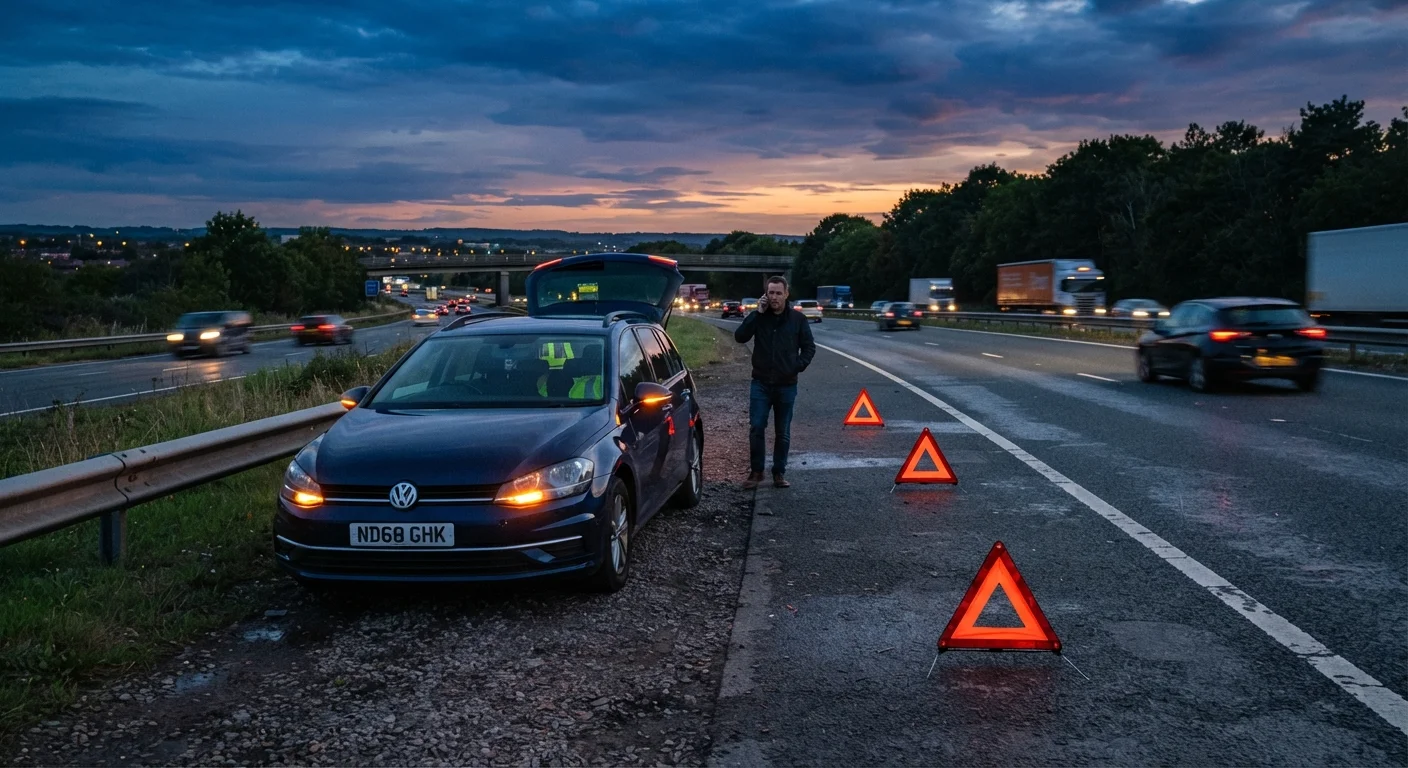
Why Breakdown Position Is Life or Death
A stopped vehicle on or near a travel lane is one of the most hazardous situations a driver can face. Studies by the AAA Foundation for Traffic Safety have found that roadside workers and stranded motorists are struck by passing vehicles far more often than most drivers realize. Speed, low visibility, and driver inattention all compound the danger.
The good news is that a clear, practiced response — one you think through before a breakdown ever happens — can dramatically cut your exposure to those risks. This guide walks you through exactly what to do, in order, from the first warning sign to the moment help arrives. For a broader look at emergency readiness on the road, see A Driver's Complete Guide to Road Safety.
What you will need
What You Need Before You Drive
Preparation happens before the breakdown, not during it. Keeping the right items in your vehicle means you won't be improvising under stress.
Reflective warning triangles or road flares
Alert approaching drivers to your stopped vehicle, especially around curves or at night.
Reflective safety vest
Makes you visible to passing traffic when you must exit the vehicle.
Portable phone charger (power bank)
Ensures your phone stays operational long enough to call for help and wait for it to arrive.
Flashlight with fresh batteries
Illuminates the scene after dark without draining your phone battery.
First aid kit
Addresses minor injuries that may occur during or after the breakdown.
Jumper cables or a jump starter pack
Allows a battery restart if a passing motorist or your own backup unit can provide power.
Bottled water and a light snack
Sustains you during a long wait in heat or cold while help is en route.
Make Emergency Prep a One-Time Task
Assemble your emergency kit and store it in the trunk now, before you need it. Check it once a year — typically when you rotate your tires — to replace expired flares, recharge the power bank, and refresh water. Five minutes of annual upkeep can make a critical difference during a roadside emergency.
Step-by-Step: What to Do When Something Goes Wrong
Follow these steps in sequence. Skipping ahead — especially to inspecting the vehicle before you've secured the scene — is where drivers get hurt.
Activate your hazard lights immediately
The moment you notice a warning light, unusual sound, or loss of power, press the hazard button — even before you've fully assessed the situation. Hazard lights give drivers behind you critical advance warning that something is wrong.
Steer to the safest available spot
Aim for the rightmost shoulder, a parking lot, a highway exit ramp, or any paved surface away from the travel lanes. Do not stop in a live lane if there is any possibility of coasting further. On a highway, the farther past the white fog line you can get, the better.
Exit the vehicle safely — and on the right side
Once stopped, put the vehicle in park (or in gear for a manual transmission) and set the parking brake. If you must exit, do so from the passenger side, away from traffic. Never open your driver's door into a travel lane.
Place warning devices behind your vehicle
Once you and any passengers are clear of the vehicle, place reflective triangles or light flares in a line behind it. On a highway, the first device should go at least 200 feet back — roughly 70 adult paces. On surface streets, 50–100 feet is generally sufficient. Always walk along the shoulder, never in the lane, when placing these markers.
Call for roadside assistance and stay visible but protected
Contact your roadside assistance provider, insurance company hotline, or emergency services. Give your precise location — mile markers, exit numbers, or a cross street. While you wait, stand behind the guardrail or well away from the vehicle on the far side of the shoulder. Do not stand between your car and oncoming traffic under any circumstances.
Interact cautiously with anyone who stops to help
While most people who stop have good intentions, keep a safe distance until you've assessed the situation. You are not obligated to accept a ride or let a stranger handle your vehicle. A politely declined offer of a lift in favor of waiting for your roadside provider is a reasonable decision, especially when traveling alone.
Never Stand Between Your Car and Traffic
The area directly beside or behind a vehicle stopped on a shoulder is statistically the most dangerous position on a roadway. Distracted drivers drifting onto the shoulder rarely brake before impact. Always move to the far side of a guardrail or as far from the travel lane as terrain allows while you wait for help.
After the Incident: Preventing the Next One
Most roadside breakdowns stem from deferred maintenance: worn tires, neglected fluids, or an aging battery that finally gives out on the worst possible stretch of road. A consistent maintenance schedule is the single most effective breakdown-prevention strategy available to any driver. The Seasonal Car Maintenance Checklist covers what to check and when, season by season.
If you're new to owning a vehicle or unsure where to start, Keeping Up with Car Maintenance When You Have No Mechanical Experience offers a practical entry point. And it's worth reviewing your auto insurance policy to confirm it includes roadside assistance coverage — for guidance on evaluating coverage options, see Choosing Coverage.
Finally, make the pre-trip safety checklist part of your routine. Catching a low tire or a flickering warning light in the driveway is far better than discovering it at highway speed.
This article provides general safety information for educational purposes. Always follow the instructions of law enforcement or emergency responders on scene, and consult a qualified mechanic for any vehicle inspection or repair.
The content on this site is for informational purposes only and is not a substitute for professional advice. Always consult a qualified professional for guidance specific to your situation.