

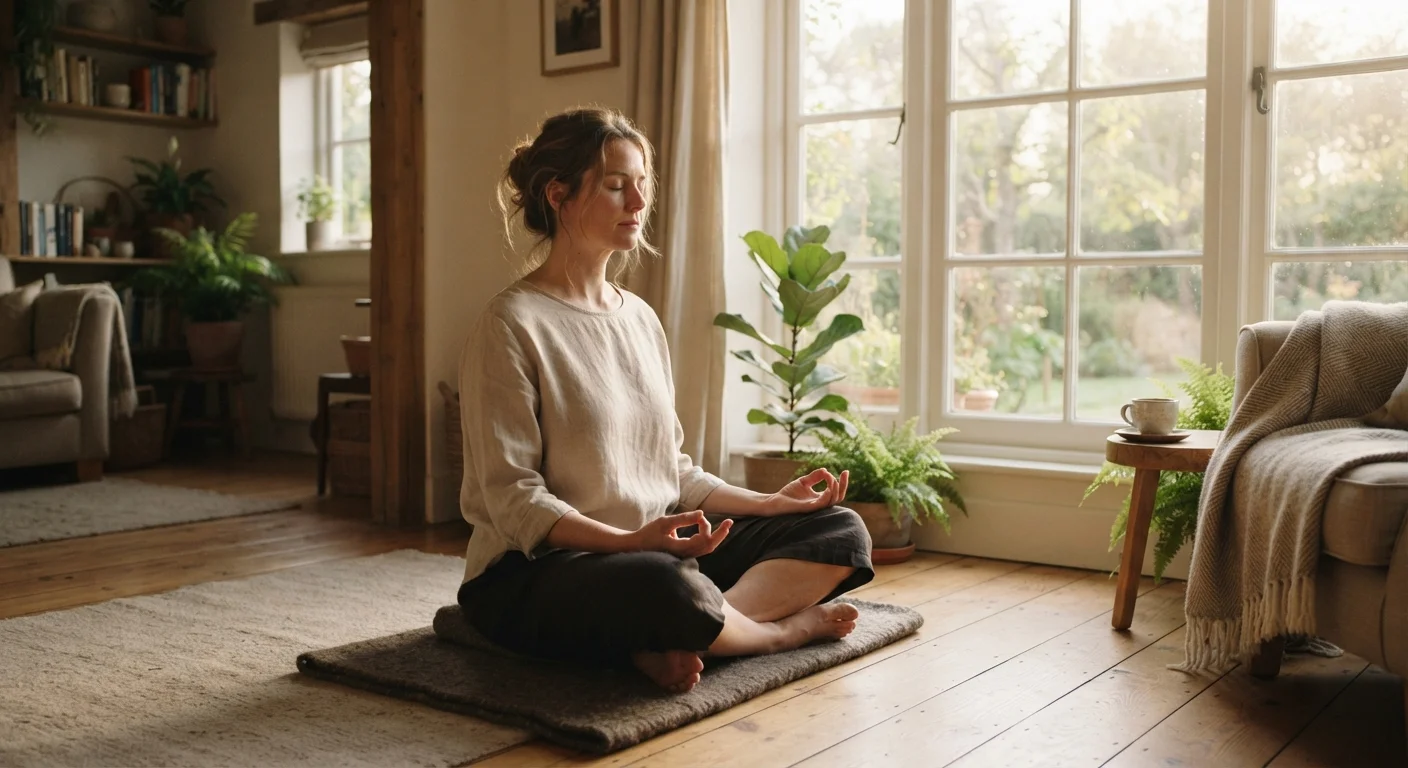
Option A
Mindfulness
The always-available awareness practice.
Best for: People who want to reduce stress and stay grounded throughout the demands of daily life.
Option B
Meditation
The structured, intentional training session.
Best for: People seeking a dedicated, consistent practice to build focus, calm, and self-awareness over time.
Defining the Terms: What Each One Actually Means
Mindfulness and meditation are genuinely related — but treating them as synonyms leads to confusion about how to actually use them. Understanding the distinction gives you a clearer map for your own mental wellness toolkit.
Mindfulness is a quality of attention: the capacity to notice what's happening in the present moment — thoughts, feelings, physical sensations, surroundings — without immediately judging or reacting to it. It's a mental stance, not a technique. You can be mindful while eating, commuting, or having a conversation.
Meditation is a formal practice — a deliberate set of exercises you sit down (or lie down) to do. Many styles of meditation use mindfulness as their primary tool, but meditation can also involve visualization, loving-kindness cultivation, breathwork, or body scanning. Think of mindfulness as the ingredient and meditation as one method of cooking with it.
This mirrors a distinction well recognized in clinical and research settings. Programs like Mindfulness-Based Stress Reduction (MBSR) blend both: they train mindfulness through structured meditation sessions that participants then carry into daily life.
| Criterion | Mindfulness | Meditation |
|---|---|---|
| What it is | A quality of present-moment attention | A structured, formal mental exercise |
| When you do it | Anytime, woven into daily life | Scheduled, dedicated sessions |
| Time required | No set time — even seconds count | Typically 5–45 minutes per session |
| Equipment needed | None | None required; guides optional |
| Learning curve | Low — can start immediately | Moderate — benefits grow with practice |
| Clinical program examples | Informal mindfulness exercises in DBT, ACT | MBSR, MBCT structured programs |
| Primary mechanism | Noticing without reacting | Deliberate attention training |
How Each Practice Works — and What the Research Shows
Both practices have a meaningful body of peer-reviewed research behind them, though the quality and depth of evidence varies by outcome and population.
Mindfulness in daily life works largely through what psychologists call cognitive defusion — creating a small but powerful gap between a stimulus and your response to it. Noticing "I'm feeling anxious right now" rather than being swept along by anxiety gives you a moment of choice. Studies suggest regular mindfulness practice is associated with reduced rumination and improved emotional regulation, though individual results vary.
Meditation — particularly breath-focused and body-scan practices — has been studied extensively in clinical populations. Research published in journals such as JAMA Internal Medicine and Psychological Science indicates that consistent practice is associated with reductions in self-reported anxiety and stress. Neuroimaging research has observed structural differences in the brains of long-term meditators, particularly in regions linked to attention and self-awareness, though causality and magnitude remain active areas of study.
Equally important: both practices are generally low-risk for most adults. They are not replacements for professional care. If you're navigating significant mental health challenges, see when self-care tools reach their limits before relying solely on either.
~47%
Of waking hours spent mind-wandering
Harvard researchers found the human mind wanders nearly half the time, suggesting significant room for mindfulness practice to improve present-moment focus.
8 weeks
Typical MBSR program duration
Mindfulness-Based Stress Reduction, developed by Jon Kabat-Zinn, is an eight-week structured program studied extensively in clinical populations for stress and anxiety.
~14%
Of U.S. adults who meditate
CDC National Health Interview Survey data indicate a meaningful rise in meditation use among American adults over the past decade.
Practical Ways to Incorporate Both Into Real Life
The good news: neither practice requires a retreat, an app subscription, or a perfectly quiet room. Here are grounded starting points.
For mindfulness throughout the day:
- Anchor moments: Choose one recurring activity — your morning coffee, a daily walk, the first minute at your desk — and commit to being fully present during it. Notice sensory details rather than mentally rehearsing the day.
- Pause before responding: When stress spikes, take one slow, intentional breath before reacting. This brief gap is mindfulness applied.
For a meditation practice:
- Start small: Five to ten minutes of breath-focused sitting is enough to build the habit. Consistency over duration matters more, especially early on.
- Use guided sessions: Audio guides or apps can provide structure for beginners, though the underlying technique is straightforward: focus, notice when the mind wanders, gently return.
Mindfulness and other self-reflection tools can complement each other well. If you enjoy writing, what the research says about journaling offers another evidence-informed layer to explore.
Similarly, movement practices support mental wellness alongside these tools. The Fitness & Movement hub provides practical guidance on building sustainable physical activity habits that pair well with mindfulness work.
This article is for general informational and educational purposes only and is not a substitute for professional medical or mental health advice. If you are experiencing persistent or distressing symptoms, please consult a qualified healthcare professional.
Mindfulness-Based Therapy and Professional Care
Structured mindfulness programs such as Mindfulness-Based Cognitive Therapy (MBCT) are delivered by trained clinicians and are distinct from self-guided practice. If you're considering a clinical program — particularly for depression, anxiety disorders, or chronic pain — consult a qualified healthcare provider to determine whether it's appropriate for your situation. See the differences between therapy, counseling, and psychiatry for guidance on what type of professional support may fit your needs.
The content on this site is for informational purposes only and is not a substitute for professional advice. Always consult a qualified professional for guidance specific to your situation.