

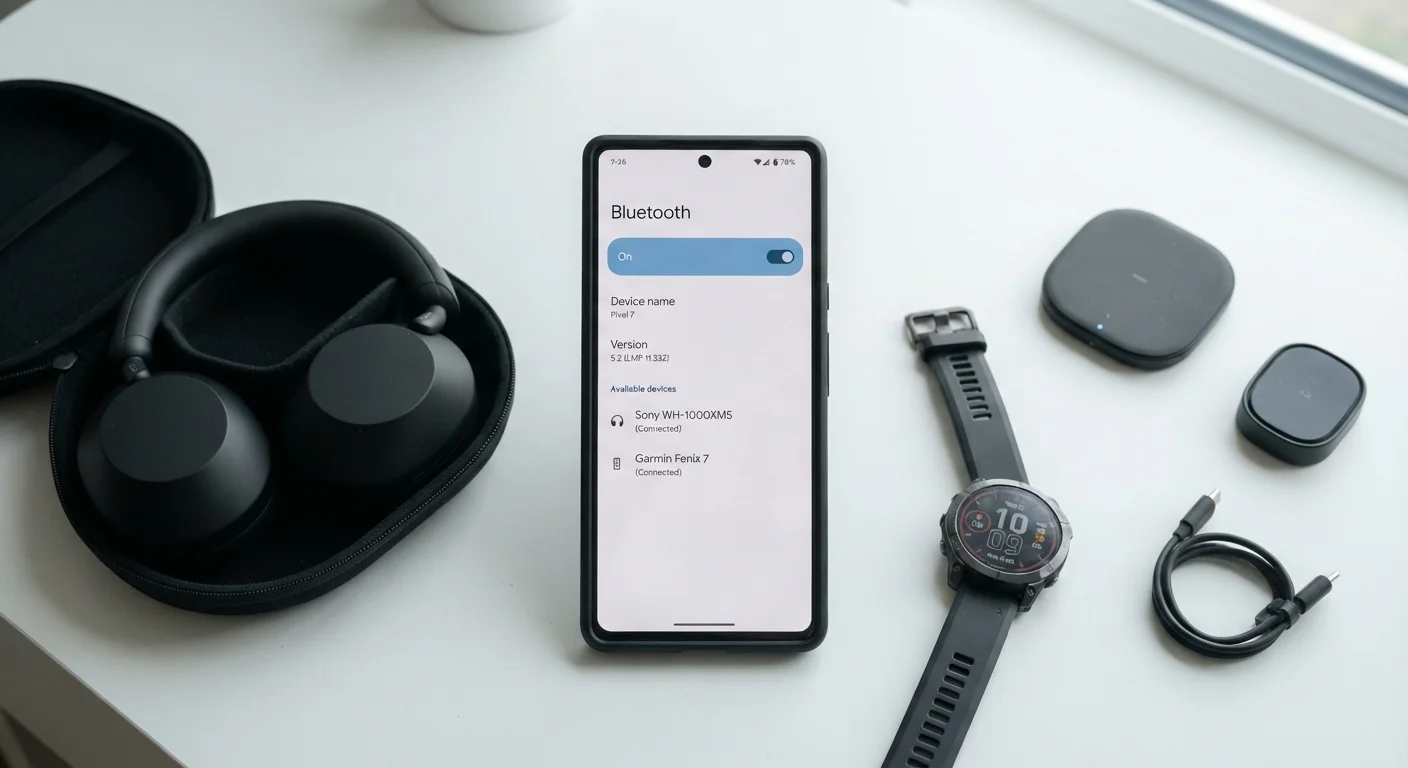
Why Version Numbers Don't Tell the Whole Story
When you scan a product listing for wireless earbuds or a laptop, you'll often see a Bluetooth version listed — 5.0, 5.2, 5.3 — as if each number is a straightforward quality indicator. In reality, Bluetooth version numbers describe a set of available capabilities, not a guaranteed performance level. Manufacturers choose which features from a version spec they actually build into their hardware. Two devices both labeled Bluetooth 5.0 can behave quite differently depending on those choices.
Think of it like a building code revision: contractors must meet the standard, but the finished houses can still vary considerably. This is similar to how processor generation numbers work — the label sets a baseline, but real-world performance depends heavily on implementation.
The Versions That Actually Introduced Big Changes
Not every Bluetooth revision is equal. A few versions represent genuine generational shifts worth understanding.
Bluetooth 4.0 — The LE Foundation
Bluetooth 4.0, released in 2010, introduced Bluetooth Low Energy (LE) — a separate, lower-power radio mode designed for devices like fitness trackers, sensors, and smartwatches that prioritize battery life over bandwidth. Classic Bluetooth remained for audio and file transfer. This split architecture still defines the standard today.
Bluetooth 5.0 — Range and Speed
Released in 2016, Bluetooth 5.0 quadrupled the theoretical maximum range (up to 800 feet in open space) and doubled the data speed of LE connections versus 4.2. It also improved coexistence with other 2.4 GHz signals like Wi-Fi. Real-world range gains are more modest than the spec suggests, but 5.0 was a meaningful upgrade in practical wireless stability.
Bluetooth 5.2 — The Audio Revolution
Bluetooth 5.2 introduced LE Audio, the most significant audio overhaul in years. LE Audio uses the LC3 (Low Complexity Communication Codec), which achieves better perceived sound quality at lower bitrates than the older SBC codec. It also enables Auracast broadcast audio — one source streaming to many receivers simultaneously — and multi-stream audio, which can independently manage audio to each earbud. These features require both devices to support 5.2.
Bluetooth 5.3 and 5.4 — Refinements, Not Revolutions
Versions 5.3 and 5.4 focused on connection efficiency, reduced power consumption in specific scenarios, and improved reliability for LE connections. These are meaningful engineering improvements, but unlikely to be noticeable in typical day-to-day use for most people.
What This Means When Buying a Device
For most everyday uses — pairing headphones, a keyboard, or a fitness tracker — any device running Bluetooth 5.0 or later will perform reliably. The version number becomes more relevant when specific newer features matter to you.
- Better audio quality and Auracast: Look specifically for Bluetooth 5.2 and LE Audio support. The spec alone isn't enough; confirm the device supports LE Audio explicitly.
- IoT sensors and smart home devices: These often use Bluetooth LE and can work well even on 4.2. The Matter smart home standard also leverages Bluetooth LE for device setup, so compatibility matters more than version recency here.
- Long-range outdoor use: 5.0 and above is preferable, but remember that walls, interference, and antenna design have more day-to-day impact than the version number.
This article is for general informational purposes only. Specifications and features vary by product and manufacturer; always verify capabilities directly with the device's official documentation before purchasing.
Frequently Asked Questions
Not necessarily. Version numbers signal which features a device is capable of supporting, but manufacturers can choose which features to implement. A 5.3 device that skips certain features may perform similarly to a well-implemented 5.0 device in everyday use.
Yes. Bluetooth is designed to be backward-compatible. When two devices with different versions pair, they communicate using the capabilities of the older device, which may limit speed or range.
LE Audio is a major audio framework introduced with Bluetooth 5.2. It enables the LC3 audio codec, which delivers better sound quality at lower bitrates, and supports features like Auracast broadcast audio. Both devices in a pair must support LE Audio to benefit from it.
Not necessarily. For common use cases like streaming music or connecting a keyboard, Bluetooth 4.2 or 5.0 devices work reliably. If specific features like Auracast or multi-stream audio matter to you, look for 5.2 or later.
On Android, look under Settings > About Phone > Software Information. On iPhone, Apple doesn't display the Bluetooth version directly, but it's listed in the device's official tech specs on Apple's website. For Windows PCs, check Device Manager under Bluetooth adapter properties.
The content on this site is for informational purposes only and is not a substitute for professional advice. Always consult a qualified professional for guidance specific to your situation.