

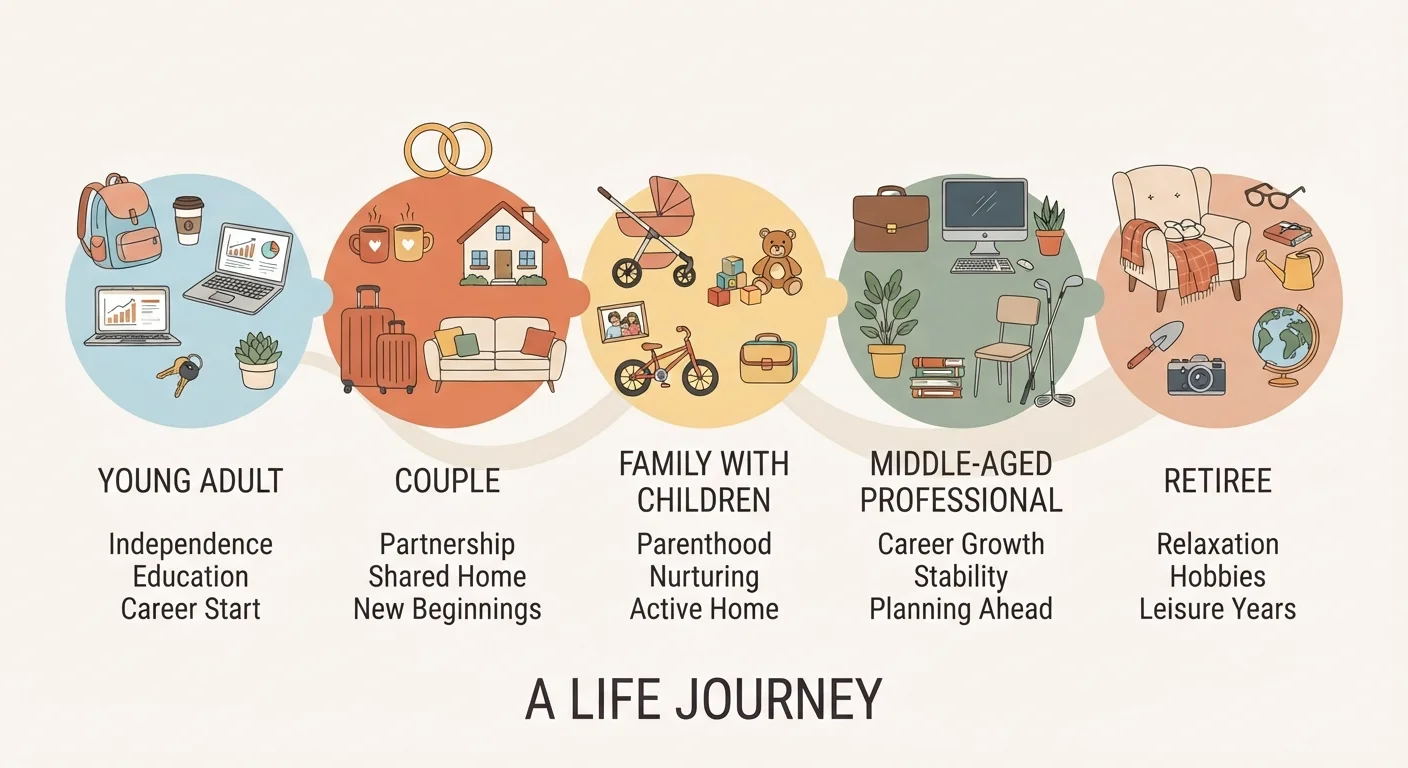
Why Life Stage Matters More Than Age
Insurance is not a product you set up once and forget. The coverage that made sense when you were 25 and renting a studio apartment may leave serious gaps when you're 42 with a mortgage, two children, and a decade of accumulated savings. Yet many households carry policies they selected years ago and haven't meaningfully revisited since.
The driving factor isn't really your age — it's your circumstances. Dependents, assets, income, debt, and health status all shape what risks you genuinely need to protect against. Asking the right questions before choosing a plan is a foundation for getting this calibration right at any stage.
The five coverage profiles below map common life stages to the insurance considerations most relevant to each. Treat them as a framework, not a prescription — your situation may differ, and a licensed agent can help you apply these principles to your specific circumstances.
Early Adulthood (20s): Start Lean, But Don't Skip the Essentials
In your twenties, you're likely healthy, may be renting, and might be starting your first salaried job. It's tempting to minimize insurance costs — and for some coverage types, that's reasonable. But skipping essentials creates real exposure.
At this stage, health insurance is non-negotiable. A single emergency room visit without coverage can create debt that takes years to recover from. If your employer offers a plan, enroll. If not, explore marketplace options. Renters insurance is also frequently overlooked but is typically low-cost and covers personal property and liability — a smart early habit.
Auto insurance at state-required minimums may feel sufficient, but if you're financing a vehicle, lenders will require comprehensive and collision coverage. Life insurance is often unnecessary unless someone depends on your income.
Skipping health insurance in your twenties is one of the costliest financial gambles young adults make.
Partnership and Cohabitation (Late 20s–30s): Shared Lives, Shared Risk
Moving in with a partner or getting married changes your financial exposure in meaningful ways. If one partner earns significantly more, losing that income — through illness, disability, or death — becomes a household-level risk, not just a personal one.
This is a good moment to revisit life insurance and disability insurance. Term life policies purchased younger tend to carry lower premiums, since you're locking in rates while healthy. Short-term and long-term disability coverage, sometimes available through employers, replaces a portion of income if you're unable to work.
If you've purchased a home together, your homeowners policy should reflect the full replacement cost of the dwelling — not just the market value. Bundling home and auto policies can sometimes reduce administrative complexity, though terms vary widely by provider.
Disability insurance is often the most underused protection for working couples in their thirties.
Young Families (30s–40s): Dependents Change Everything
Having children fundamentally shifts your insurance calculus. You are now financially responsible for others who cannot support themselves. This is the life stage where coverage gaps carry the steepest consequences.
Life insurance coverage amounts should generally scale with your income replacement needs — how many years of earnings would your family require to maintain stability? Health coverage choices become more complex too: a plan with lower monthly premiums but a high deductible may cost more overall if your household has regular pediatric visits, orthodontics, or chronic conditions.
Consider whether your auto policy liability limits are high enough. If you cause a serious accident and your limits are inadequate, your personal assets — including savings set aside for your children — could be exposed. An umbrella policy (additional liability coverage above your auto and home limits) becomes worth examining at this stage. For more on coverage gaps that catch families off guard, it's worth a focused review.
Life insurance needs should scale with how many years of income your family would need to stay stable.
Mid-Career and Peak Earning Years (40s–50s): Protect What You've Built
By your mid-career years, you may have accumulated significant assets — home equity, retirement savings, business interests. The insurance priority shifts from income protection toward asset protection.
Liability exposure grows as net worth grows. An umbrella policy, often purchased in $1 million increments, provides an additional layer of protection above auto and homeowners limits. Long-term care insurance also enters the conversation: policies purchased in your 50s are generally more affordable than those purchased after health conditions develop.
Health insurance choices matter more as chronic conditions become more prevalent with age. Understanding the difference between plan types — HMO, PPO, HDHP — and how each interacts with your preferred providers becomes critical. The key policy concepts worth understanding include how deductibles, copays, and out-of-pocket maximums work together.
As assets grow, liability coverage limits that once felt adequate can quickly become insufficient.
Pre-Retirement and Retirement (60s+): Rebalancing Toward Health and Income
Approaching and entering retirement changes the insurance landscape significantly. Life insurance needs may decrease if your children are independent and your spouse has sufficient assets or income. But health coverage becomes central.
The transition from employer-sponsored health insurance to Medicare involves important decisions about supplemental coverage (Medigap) and Part D prescription plans. Gaps in Medicare — including most dental, vision, and hearing coverage — often surprise new enrollees. Long-term care insurance, if not already in place, becomes a more pressing conversation, though costs increase substantially with age.
Auto coverage needs may also shift: if you're driving less, some insurers offer lower-mileage adjustments. Homeowners coverage should be revisited if you've made major renovations or if your home has appreciated significantly, to ensure the policy reflects current replacement costs.
This article provides general insurance education and is not personalized insurance, legal, or financial advice. Coverage terms, eligibility, and regulations vary by provider and state. Always read your policy documents carefully and consult a licensed insurance agent or adviser for guidance specific to your situation.
Medicare gaps — especially dental, vision, and hearing — catch many new retirees off guard.
Keeping Your Coverage Current
No coverage profile is permanent. The goal is to keep your policies in step with your real life — neither overinsured in areas that no longer apply, nor underinsured in areas that have grown in importance. Calibrating coverage to your actual circumstances helps avoid both extremes.
Review Coverage After Every Major Milestone
A good rule of thumb: treat any significant life change as a prompt to review your full coverage picture. The annual insurance coverage review checklist is a useful starting point. Even if nothing feels obviously wrong, gaps often emerge only when you look at your policies against your current circumstances — not your circumstances from three years ago.
Life Events Are Coverage Triggers
Marriage, divorce, the birth of a child, purchasing a home, changing jobs, or losing a spouse are all qualifying life events that typically allow you to update coverage outside of standard enrollment windows. Don't wait for annual open enrollment if a major change has already happened. Check with your insurer or HR department about your adjustment window — it is often 30 to 60 days from the event.
For a comprehensive look at how to work through the full selection process, the complete walkthrough from understanding your needs to selecting a plan covers the end-to-end process in detail. And if you want to understand the terminology that comes up along the way — deductibles, premiums, copays — the coverage types hub is a reliable reference point.
The content on this site is for informational purposes only and is not a substitute for professional advice. Always consult a qualified professional for guidance specific to your situation.