

What Your Standard Policy Quietly Leaves Out
Most homeowners assume their insurance policy covers whatever goes wrong with their home. That assumption is understandable — but it's also one of the most financially dangerous misconceptions in personal insurance. Standard homeowners policies are built around a defined list of covered perils, and several of the most destructive natural and structural events are deliberately excluded from that list.
Understanding why these exclusions exist matters just as much as knowing they exist. Insurers exclude certain perils because the risk is too concentrated, too predictable, or too catastrophic to be absorbed into a standard premium pool. That's not necessarily bad faith — it's how insurance mathematics works. But it does mean the financial exposure falls to you unless you act. As explained in our guide on what insurance exclusions really mean, exclusions aren't loopholes — they're structural features of every policy.
Below are three gaps that consistently catch homeowners off guard, along with what each one actually means for your coverage.
Flood Damage
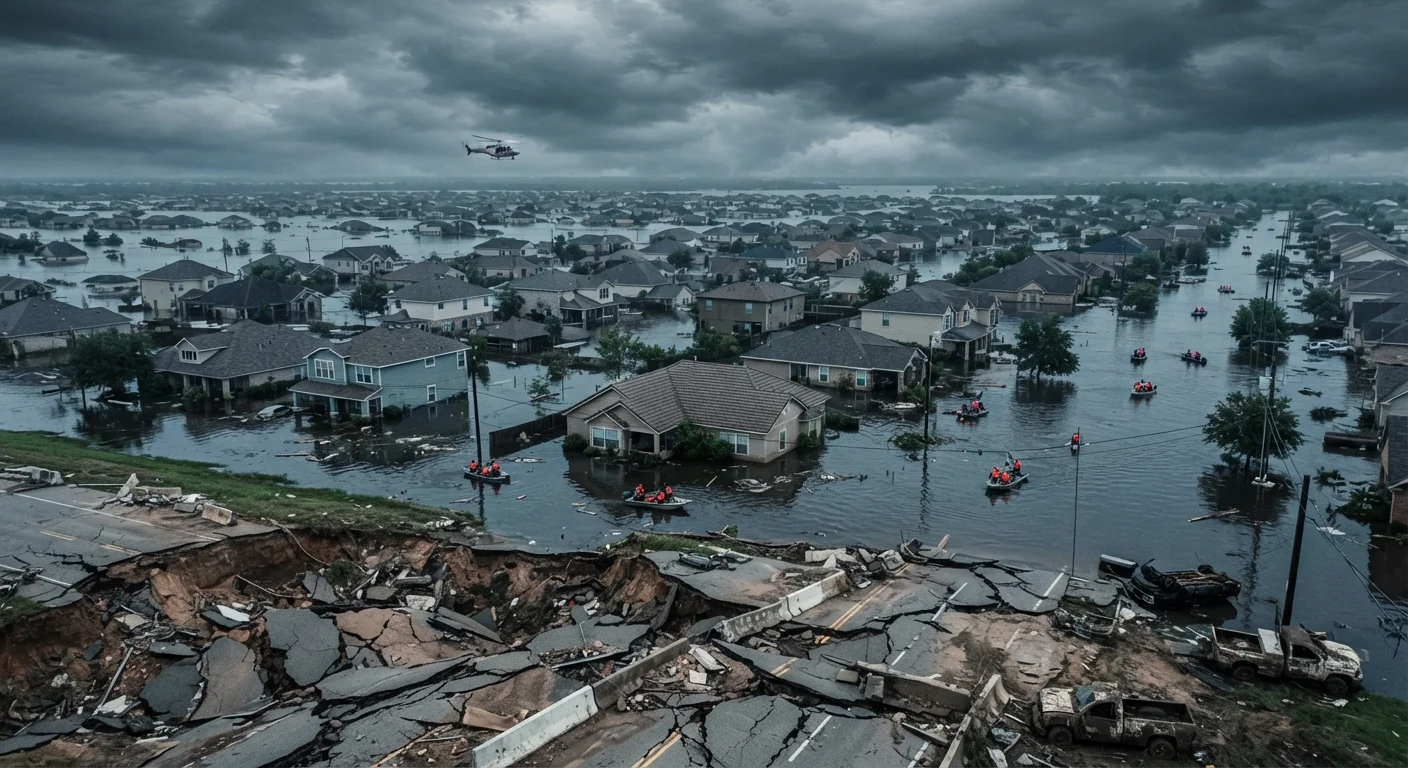
Flood is the single most common natural disaster in the United States, and it is categorically excluded from standard homeowners insurance. This isn't a technicality — it's a firm boundary that applies regardless of whether flooding is caused by a hurricane, prolonged rain, storm surge, or an overflowing river. If water enters your home from the ground up, your standard policy almost certainly won't pay for it.
Separate flood insurance is available through the federally administered National Flood Insurance Program (NFIP) and through a growing number of private insurers. NFIP policies carry limits on both building coverage and contents coverage, and they typically include a 30-day waiting period before coverage becomes effective — meaning you can't purchase a policy the night before a named storm and expect protection.
A widespread misconception is that flood risk is limited to coastal or low-lying areas. In reality, properties outside high-risk flood zones account for a meaningful share of flood claims each year. If your mortgage lender requires flood insurance, that's a signal about your zone designation — but the absence of a lender requirement doesn't mean your risk is zero.
Flood is excluded from every standard homeowners policy, regardless of what causes the water.
Earthquake Damage
Earthquake coverage is absent from standard homeowners policies across the country. Structural damage caused by ground shaking, soil liquefaction, or landslides triggered by seismic activity is not covered — and the costs can be severe. Foundation damage, cracked walls, collapsed chimneys, and broken utility connections are all potential earthquake losses that your existing policy won't touch.
Earthquake insurance is available as a standalone policy or as an endorsement added to your homeowners coverage, depending on your insurer and state. In California, the California Earthquake Authority (CEA) is a major source of this coverage. Policies typically come with higher deductibles than standard home insurance — often expressed as a percentage of the insured dwelling value rather than a flat dollar amount — so it's important to understand your out-of-pocket exposure before a claim occurs.
While the Pacific Coast and the New Madrid Seismic Zone in the central US carry the highest recognized risk, moderate seismic activity has been recorded in many other regions. The insurance coverage myths that leave policyholders underprotected include the belief that earthquake risk is only a West Coast concern.
Earthquake deductibles are often a percentage of dwelling value, not a flat dollar figure — the difference matters.
Sewer Backup and Water Lateral Damage
Sewer backup occurs when wastewater reverses direction through your home's drain system — flooding basements and lower floors with contaminated water. It can be triggered by heavy rainfall overwhelming municipal systems, tree root intrusion into pipes, or blockages in the sewer lateral (the private pipe connecting your home to the city main). Standard homeowners insurance excludes this damage.
Unlike flood and earthquake coverage, sewer backup protection is often available as a relatively affordable endorsement added directly to your existing homeowners policy. Some insurers also offer service line coverage, which addresses damage to underground pipes — including the sewer lateral — that you are responsible for maintaining as a homeowner. Many people are surprised to learn that the section of pipe running from their home to the street is their financial responsibility, not the municipality's.
This gap is especially relevant in older homes, where aging cast-iron or clay pipes are more susceptible to root intrusion and deterioration. If your home was built several decades ago and the lateral has never been inspected or replaced, that's a meaningful risk factor worth discussing with your agent. See how structure-related coverage works in our overview of dwelling coverage vs. personal property coverage.
The sewer pipe from your home to the street is your responsibility — and your standard policy won't cover it.
Closing the Gaps Before You Need To
None of these three exclusions are obscure fine print — they appear in nearly every standard homeowners policy in the United States. Yet year after year, homeowners file claims only to learn their loss isn't covered. The pattern is consistent enough that it shows up repeatedly in our article on coverage gaps most people don't discover until they file a claim.
Evaluating your exposure doesn't require expert knowledge — it requires asking the right questions. What is my home's flood zone designation? When was my home built relative to my region's seismic history? How old is the sewer lateral connecting my home to the municipal line? Your answers will shape which supplemental coverages are worth exploring.
Review Your Policy's Declarations Page
Your declarations page summarizes what is and isn't covered at a glance. Pull it out and look for any mention of flood, earthquake, or water backup — their absence confirms you need supplemental coverage. Bring specific questions to a licensed agent who can walk through your policy language in detail.
This article is general educational information and is not personalized insurance advice. Coverage terms, availability, and costs vary by provider and location. Always read your actual policy documents carefully and consult a licensed insurance agent before making coverage decisions.
For a broader look at how policy language shapes what's actually protected, see our overview of named perils vs. open perils coverage and explore the Choosing Coverage hub for additional guidance on building a complete protection plan.
The content on this site is for informational purposes only and is not a substitute for professional advice. Always consult a qualified professional for guidance specific to your situation.