

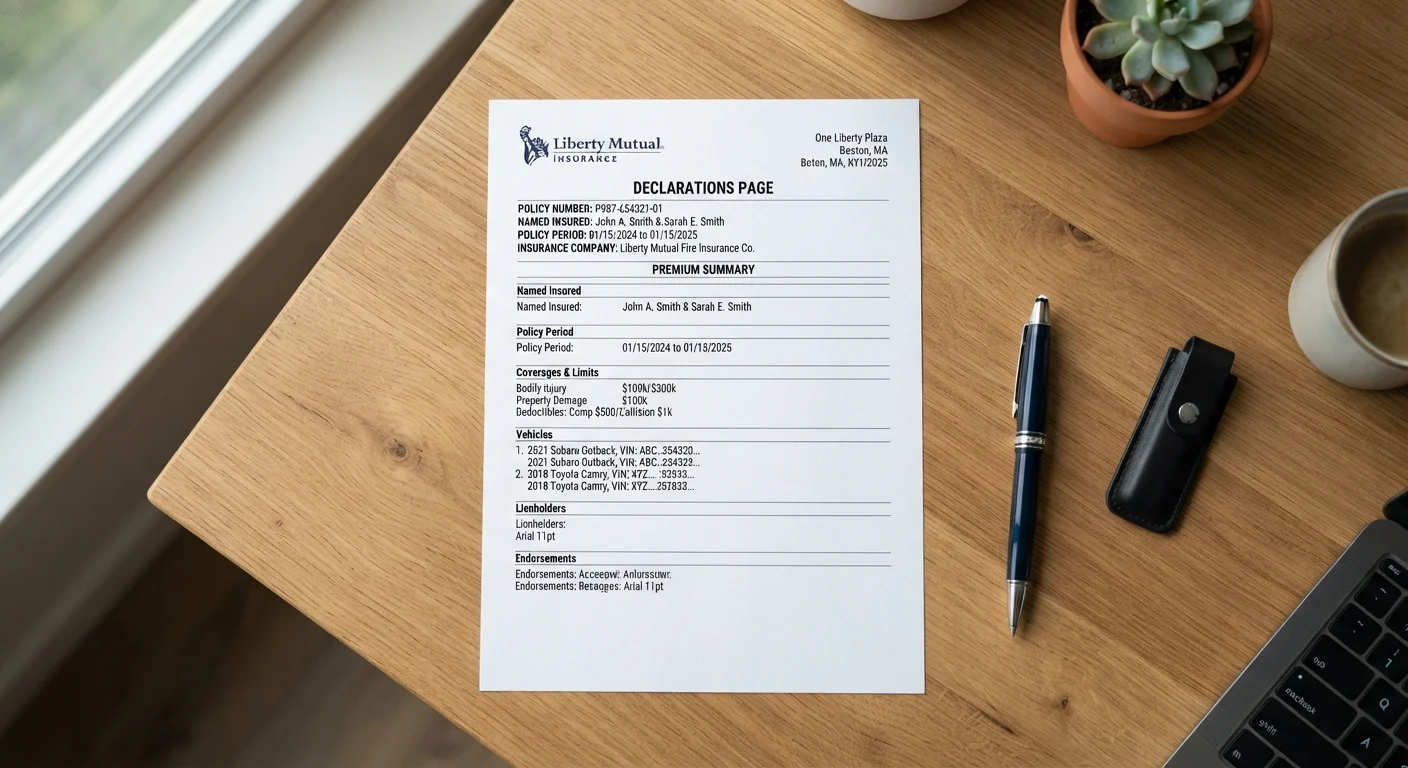
What the Declarations Page Actually Is
Every insurance policy — whether it covers your home, car, health, or life — comes with a declarations page, often called the "dec page" by insurance professionals. Think of it as the cover sheet of your entire policy: a condensed, one-to-two-page summary that captures the most critical details of your coverage at a glance.
Unlike the main policy document, which can run dozens of pages of legal language, the declarations page is designed to be readable. It tells you who is covered, what property or risk is insured, for how long, and under what financial terms. Importantly, it does not contain the full details of what is and isn't covered — those live in the policy body, endorsements, and exclusions sections. For a deeper look at how those pieces fit together, see The Anatomy of an Insurance Policy.
Getting comfortable with the declarations page is the first step toward understanding any policy you hold. It's also the document you'll reference most often — when filing a claim, updating coverage, or simply confirming that your insurer has your information right.
Key Sections Found on Every Declarations Page
While formatting varies by insurer and policy type, virtually every declarations page contains the same core sections:
- Named Insured and Additional Insureds: The person or entity the policy is issued to, plus anyone else explicitly covered. On an auto policy, this might include a spouse or co-owner. On a homeowner's policy, a mortgage lender may appear as an additional interest.
- Policy Number: Your unique identifier for this policy — essential when contacting your insurer or filing a claim.
- Policy Period: The exact start and end dates of your coverage. Coverage does not exist outside this window.
- Coverage Types and Limits: A line-by-line list of each coverage included and the maximum dollar amount your insurer will pay. For example, a homeowner's policy might show dwelling coverage at $300,000 and personal liability at $100,000.
- Deductibles: The amount you pay out of pocket before the insurer pays on a claim. Higher deductibles typically correspond to lower premiums. If you're unfamiliar with how deductibles work alongside other cost-sharing terms, Insurance Terms Every Policyholder Should Know offers a plain-language reference.
- Premium: The total cost of the policy, often broken down by coverage type and shown as an annual or semi-annual figure.
- Insured Property or Risk Description: The specific vehicle, address, or person being insured. Always verify this is accurate.
- Endorsements or Riders Listed: Optional add-ons to the base policy. These modify or expand coverage and are summarized here, though the full terms appear elsewhere in the policy.
Health Insurance Declarations Pages Differ Slightly
Health insurance plans often use a Summary of Benefits and Coverage (SBC) instead of a traditional declarations page. The SBC serves a similar purpose — outlining your plan's costs and coverage — but follows a standardized federal format. For a detailed walkthrough of that document, see How to Read an Insurance Summary of Benefits.
How to Read Your Declarations Page Step by Step
What you will need
Locate Your Most Recent Declarations Page
Your declarations page is typically mailed or emailed when your policy is issued or renewed. It may also be available in your insurer's online portal under "Policy Documents" or "My Coverage." If you can't find it, contact your agent or insurer directly and request a copy — you're entitled to one.
Confirm the Named Insured and Policy Period
Start at the top of the page. Verify that your full legal name is spelled correctly and that all intended insureds are listed. Check that the policy period dates are current — a lapsed policy provides no coverage, even if you've been paying premiums.
Review Each Coverage Type and Its Limit
Work through every line item under coverage types. For each one, note what it covers and the maximum the insurer will pay. Ask yourself: if I faced a worst-case scenario in this category, would this limit be sufficient? Common coverage lines include liability, property damage, medical payments, and loss of use, depending on your policy type.
Note Your Deductibles for Each Coverage
Deductibles are often listed separately for different coverage categories. A homeowner's policy, for example, may have one deductible for standard claims and a higher separate deductible specifically for wind or hail damage. Know what you'd owe out of pocket before any insurer payment kicks in.
Identify Any Endorsements or Riders
The declarations page will list any endorsements (add-ons that modify the base policy). Note each one and then locate the corresponding endorsement form in your full policy documents for the complete terms. Endorsements can expand coverage — such as adding flood protection — or restrict it.
Flag Anything That Doesn't Match Your Expectations
If a coverage type is missing, a limit seems lower than what you agreed to, or a named insured is incorrect, contact your insurer or agent promptly. Discrepancies are best resolved before a claim arises, not during one. Keep a written record of any corrections requested and confirmed.
Once you've worked through your declarations page, consider going a step further. The Policy Review Checklist is a practical tool for verifying that what you expect from a policy is actually what you're getting — especially before renewal or when switching providers.
This article is for general informational and educational purposes only and does not constitute personalized insurance, financial, or legal advice. Coverage terms, limits, exclusions, and regulations vary by insurer and state. Always read your actual policy documents and consult a licensed insurance agent or adviser for guidance specific to your situation.
The content on this site is for informational purposes only and is not a substitute for professional advice. Always consult a qualified professional for guidance specific to your situation.