

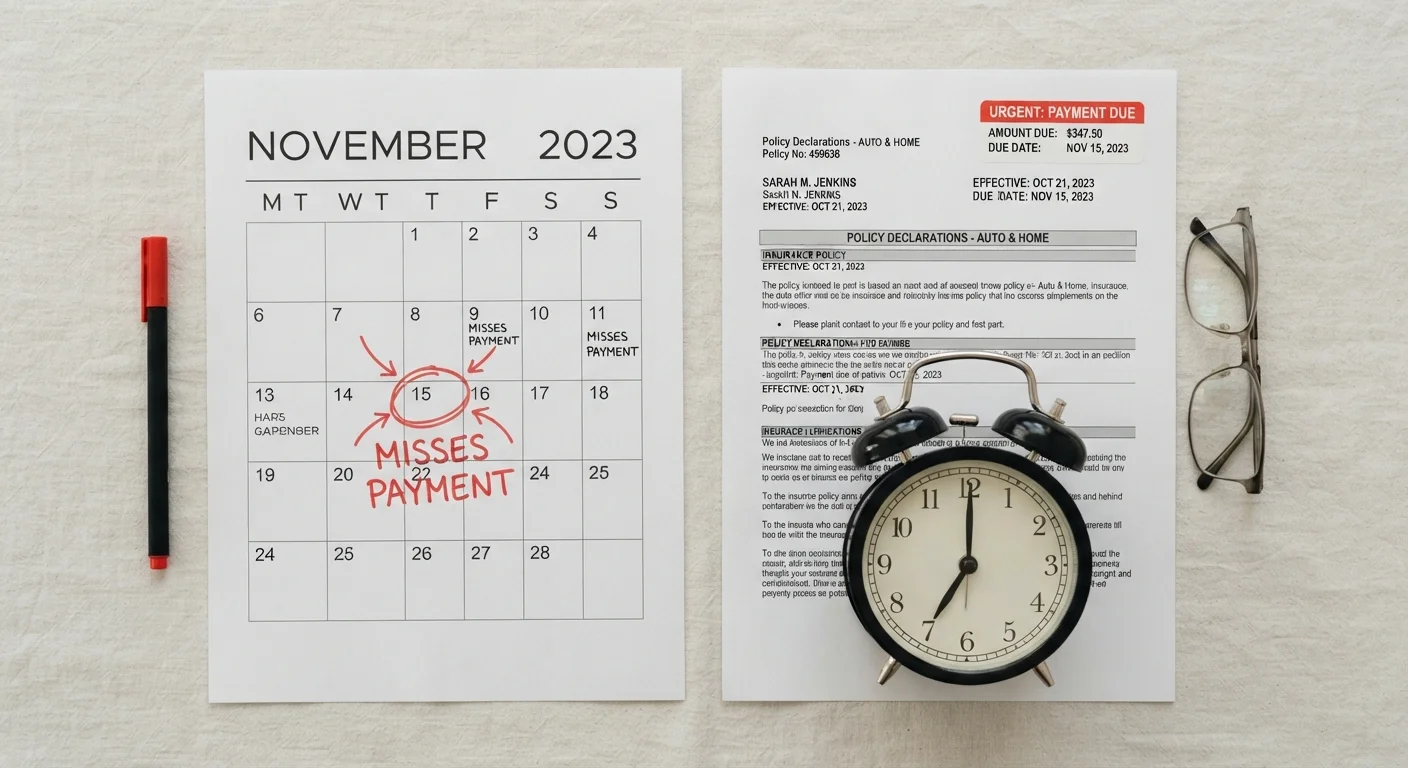
What a Grace Period Actually Gives You
When a premium payment is missed, most policyholders assume the worst — that coverage is gone immediately. In reality, insurance contracts almost universally include a grace period: a defined number of days during which coverage remains in force even though payment hasn't arrived yet.
During this window, you can pay the overdue balance and your coverage will be treated as continuous — no gap, no penalty on your claims history. The grace period isn't a favor the insurer is doing you; in most states, it's a legal requirement built into the policy contract.
Grace period length depends on both the type of insurance and your state's rules. As a general guide:
- Life insurance: Typically 30 to 31 days, often mandated by state law.
- Health insurance (ACA marketplace plans): Up to 90 days for enrollees receiving premium tax credits, though coverage of claims may be limited after the first 30 days.
- Auto and homeowners insurance: Commonly 10 to 30 days, varying widely by insurer and state.
Understanding how premiums work is the foundation here — a grace period only buys you time to make that payment, not an extension of free coverage.
Set Up Automatic Payments as a Safety Net
The simplest way to avoid a lapse is to enroll in automatic premium payments through your insurer or bank. If autopay isn't an option, set a calendar reminder at least five business days before each due date to allow for processing time. Even if cash flow is tight, contacting your insurer proactively — before the due date — may open options like a short extension or payment plan.
What Happens When a Policy Lapses
If the grace period expires without payment, the policy lapses. This means coverage ends — and the consequences depend on the type of insurance involved.
For auto insurance, a lapse creates immediate legal exposure. Most states require continuous coverage; driving uninsured — even for a single day — can result in fines, license suspension, or liability for any accident costs. Insurers also flag coverage gaps when you apply for a new policy, which often translates to higher premiums. See the hidden costs inside auto insurance for more on how gaps affect what you pay.
For health insurance, a lapse means any medical expenses incurred after the lapse date are entirely out of pocket. There's no retroactive coverage if you pay late. You'd also need to wait for open enrollment or a qualifying life event to re-enroll.
For life insurance, a lapse means beneficiaries would receive nothing if the insured died after the lapse date. Policies with accumulated cash value may use that value to extend coverage for a limited time — a feature called extended term insurance or reduced paid-up insurance — but this varies by policy type and must be specified in your contract.
These lapses are also a key source of coverage gaps people discover too late.
~14%
U.S. drivers estimated to be uninsured
According to the Insurance Research Council, roughly 1 in 7 drivers on American roads carries no auto insurance, often following an unmanaged lapse.
30 days
Most common life insurance grace period
Most U.S. state insurance codes mandate a minimum 30-day grace period for life insurance policies before lapse can occur.
3–5 years
Typical life insurance reinstatement window
Many life insurance contracts allow policyholders to apply for reinstatement within three to five years of lapse, subject to proof of insurability.
Reinstatement: Getting Coverage Back After a Lapse
If your policy has lapsed, you're not necessarily locked out forever. Most insurers offer a reinstatement process — a way to reactivate the policy without applying for entirely new coverage. However, reinstatement comes with conditions.
Typical reinstatement requirements include:
- Payment of all overdue premiums — usually including any interest or fees that accrued during the lapse period.
- A reinstatement application — a formal request to the insurer to restore the policy.
- Proof of insurability — most common for life and health policies, this may involve a health questionnaire or medical exam. If your health has changed during the lapse, the insurer may decline reinstatement or adjust your terms.
Reinstatement windows are limited. Life insurance policies commonly allow reinstatement within three to five years of lapse, though the exact timeframe is spelled out in your policy. Auto and homeowners policies often have much shorter windows — sometimes just 30 to 60 days — before the insurer simply closes the account.
Unfamiliar with some of the terminology in your policy documents? The insurance terms glossary covers the vocabulary you'll encounter across policy types.
Reinstatement Is Not the Same as a New Policy
Reinstating a lapsed policy preserves your original policy terms, coverage history, and — in the case of life insurance — the original policy date and any accumulated cash value. Applying for a brand-new policy after a lapse means starting fresh, which can mean higher premiums based on your current age or health. Reinstatement, when available, is generally the more cost-effective path.
This article provides general insurance education and is not personalized insurance, legal, or financial advice. Coverage terms, grace periods, and reinstatement rules vary by insurer, policy type, and state. Always read your actual policy documents and consult a licensed insurance agent or your state's insurance commissioner for guidance specific to your situation.
Frequently Asked Questions
Grace periods vary by insurance type and state law. Health insurance through the ACA marketplace typically allows a 90-day grace period for subsidized enrollees. Life and auto policies often provide 10 to 31 days. Check your policy documents for the exact timeframe that applies to you.
It can. A lapse on your record may lead insurers to view you as a higher risk, which can result in higher premiums or, in some cases, denial of coverage. For auto insurance specifically, a coverage gap is flagged when you apply for a new policy.
Generally yes — if a covered event occurs during the grace period and you subsequently pay the overdue premium, most insurers will honor the claim. However, this varies by insurer and policy type, so confirm the terms in your specific policy.
Reinstatement is the process of reactivating a lapsed policy after the grace period has passed. Insurers may require payment of all overdue premiums, a reinstatement application, and sometimes proof of insurability — particularly for life and health policies.
Grace periods exist across most major insurance types — health, life, auto, and homeowners — but the length and conditions differ. Some policies are more strictly governed by state law than others. Always verify the terms in your own policy documents.
Contact your insurer as soon as possible. Some carriers offer hardship arrangements, payment plans, or premium deferral options. For health insurance, a qualifying life event or open enrollment period may allow you to switch plans. A licensed insurance agent or state insurance commissioner's office can also provide guidance.
The content on this site is for informational purposes only and is not a substitute for professional advice. Always consult a qualified professional for guidance specific to your situation.