

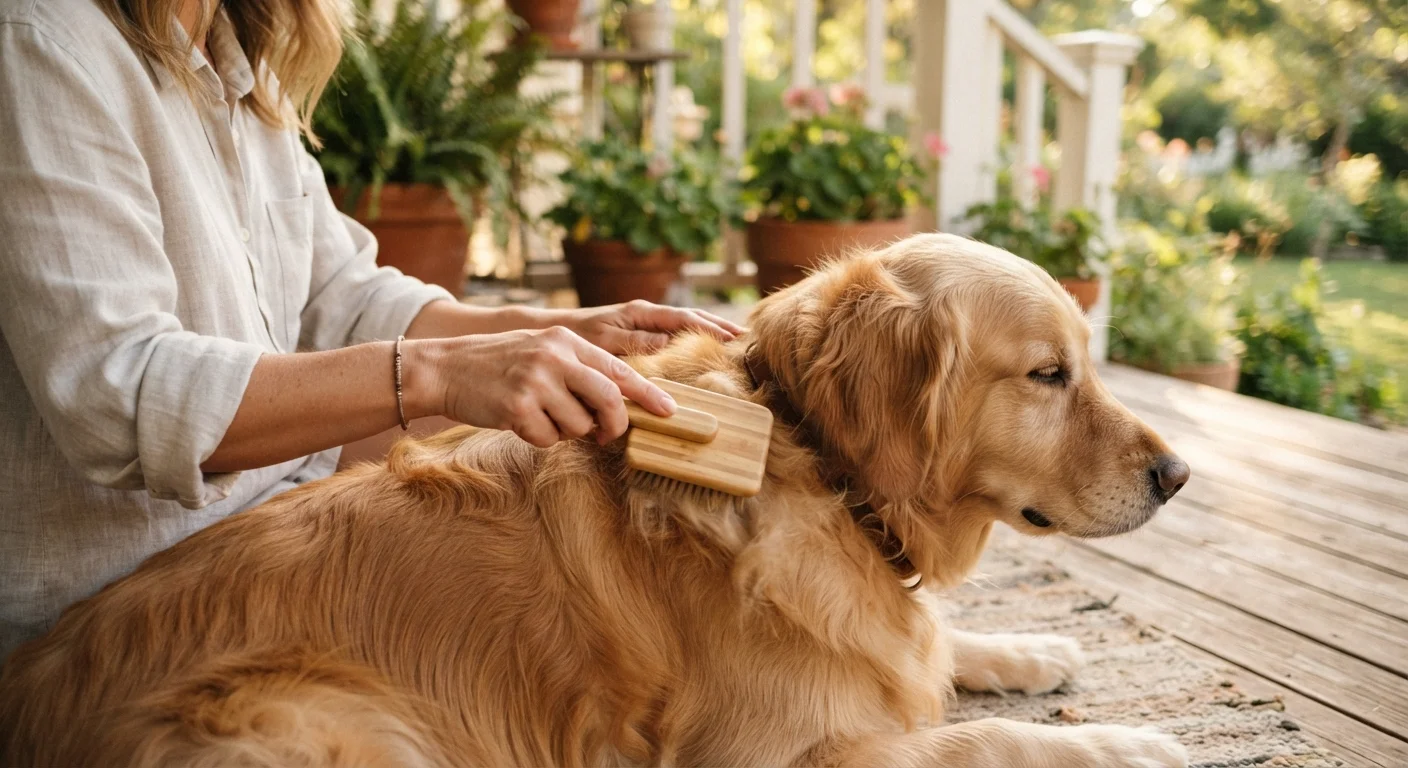
Why Grooming Is a Health Practice, Not Just Cosmetic
For many dog owners, grooming means a clean-smelling pet. But veterinarians view it differently: a consistent grooming routine is one of the most reliable ways to monitor your dog's physical health over time. Brushing, bathing, ear care, and nail trimming aren't separate chores — they're connected parts of a preventive care framework.
During each session, you're running your hands across your dog's entire body. That contact gives you the opportunity to notice changes — new lumps, tender spots, hair thinning, skin redness, or the early presence of fleas and ticks — before they become harder to manage. Grooming is, in that sense, a form of hands-on health surveillance.
Folding grooming into a broader care system makes it easier to maintain. See our practical dog care routine guide for a checklist approach that helps these habits stick.
Bathing, Ears, and Nails: The Details That Matter
Bathing frequency is one of the most misunderstood aspects of dog grooming. Most healthy dogs need a bath roughly every four to six weeks, though this varies by coat type, activity level, and skin condition. Bathing too frequently strips the skin's natural sebum layer, which protects against moisture loss and environmental irritants. Always use a shampoo formulated specifically for dogs — human products are pH-incompatible and can disrupt the skin barrier.
Ear care is essential and often overlooked. Dogs with floppy ears or those that swim regularly are especially prone to moisture retention and yeast or bacterial overgrowth. A gentle weekly inspection — looking for redness, odor, or dark discharge — helps you catch problems early. Clean only the visible outer ear with a vet-recommended solution; never insert anything into the ear canal.
Nail trimming should happen approximately every three to four weeks for most dogs. Overgrown nails alter gait mechanics and can cause discomfort or joint strain over time. If you can hear the nails clicking on hard floors, they're overdue. If you're uncertain about trimming technique, a groomer or veterinary technician can demonstrate the correct angle and pressure — and show you where the quick (the blood vessel inside the nail) is located.
For dogs entering their later years, grooming needs shift. Skin becomes thinner and more sensitive, coat texture may change, and joints may make certain positions uncomfortable. Our guide on senior dog care and routine adjustments covers what to expect and how to adapt.
Putting It All Together: Breed, Life Stage, and When to Seek Help
Grooming needs are not universal. A double-coated breed like a Siberian Husky requires very different brushing frequency and technique than a short-coated Beagle or a curly-coated Poodle mix. Working with a professional groomer familiar with your breed — especially for initial guidance — can prevent common mistakes like matting from improper drying or coat damage from incorrect brush types.
Life stage also matters. Puppies benefit from brief, positive grooming sessions early on, even before their grooming needs are significant — the exposure builds tolerance and reduces anxiety long-term. Adult dogs thrive on predictable schedules. Senior dogs may need gentler handling and shorter sessions.
If you notice persistent skin flaking, significant hair loss, chronic ear infections, or behavioral resistance to grooming that seems pain-related, those are signals to consult your veterinarian rather than adjust your technique. Skin and coat changes can reflect nutritional gaps, allergies, hormonal imbalances, or underlying medical conditions. Grooming is a meaningful preventive tool, but it doesn't replace veterinary care.
This article is for general informational purposes only and does not constitute veterinary advice. Always consult a licensed veterinarian for guidance specific to your dog's health, breed, or condition.
The content on this site is for informational purposes only and is not a substitute for professional advice. Always consult a qualified professional for guidance specific to your situation.