

Our Verdict
Most dogs benefit from a flexible combination of indoor enrichment and outdoor physical activity rather than one approach exclusively. The ideal balance is shaped by breed characteristics, life stage, and individual health — not by a one-size-fits-all rule. Consulting your veterinarian about your specific dog's exercise requirements is always the most reliable starting point.
| Best for | Recommended |
|---|---|
| High-energy working or sporting breeds | Outdoor exercise as the primary focus |
| Brachycephalic, senior, or mobility-limited dogs | Indoor enrichment as the primary focus |
| Most adult dogs in moderate health | A balanced blend of both environments |
| Extreme weather days or recovery periods | Indoor activity as a temporary substitute |
Why Exercise Environment Matters
Exercise keeps dogs physically fit, behaviorally balanced, and mentally engaged — but where and how they exercise matters as much as how much. A Border Collie confined to indoor fetch sessions may develop frustration behaviors, while a flat-faced Bulldog pushed through a summer run risks serious heat-related illness. Matching the exercise environment to your dog's actual needs is a core part of responsible care.
The indoor-versus-outdoor question rarely has a single correct answer. Instead, it hinges on a cluster of factors: breed energy level, age, health conditions, weather, and the resources available to you. Understanding the strengths and limitations of each environment lets you build a routine that genuinely serves your dog rather than simply checking a box. For a fuller framework, see building a consistent daily care routine.
The Case for Outdoor Exercise
Outdoor environments offer things that interior spaces simply cannot replicate: variable terrain, novel scents, exposure to other animals and people, and the kind of sustained cardiovascular challenge that genuinely taxes a working breed's body. Activities such as leashed walking, off-leash fetch in a fenced area, hiking, and structured play with other dogs all engage muscle groups and sensory systems in ways that support long-term physical health.
For high-drive breeds — retrievers, herding dogs, terriers, and hounds — outdoor exercise isn't a luxury; it's a behavioral necessity. Dogs that don't receive adequate physical output often redirect that energy into destructive or anxious behaviors at home. Paying attention to how your dog signals readiness or exhaustion is essential; reading your dog's body language can help you recognize when to push forward or pull back.
Know Your Dog's Outdoor Risk Profile
Dogs that spend time outdoors are exposed to ticks, fleas, heartworm-carrying mosquitoes, and leptospirosis bacteria at higher rates than dogs kept primarily inside. Discuss appropriate parasite prevention and vaccination schedules with your veterinarian before significantly increasing outdoor activity. This is especially important if you're moving from an urban environment to trails, dog parks, or rural settings.
Outdoor activity does carry environmental risks including parasite exposure, extreme temperatures, and contact with other animals. These factors affect your dog's preventive care needs — for a detailed breakdown, see how outdoor access shapes preventive care.
The Case for Indoor Enrichment
Indoor exercise is frequently underestimated. Structured mental and physical engagement inside the home can meaningfully satisfy a dog's daily needs — particularly for seniors, dogs recovering from injury, brachycephalic breeds (such as Pugs, French Bulldogs, and Boston Terriers), and small companion breeds with lower activity requirements.
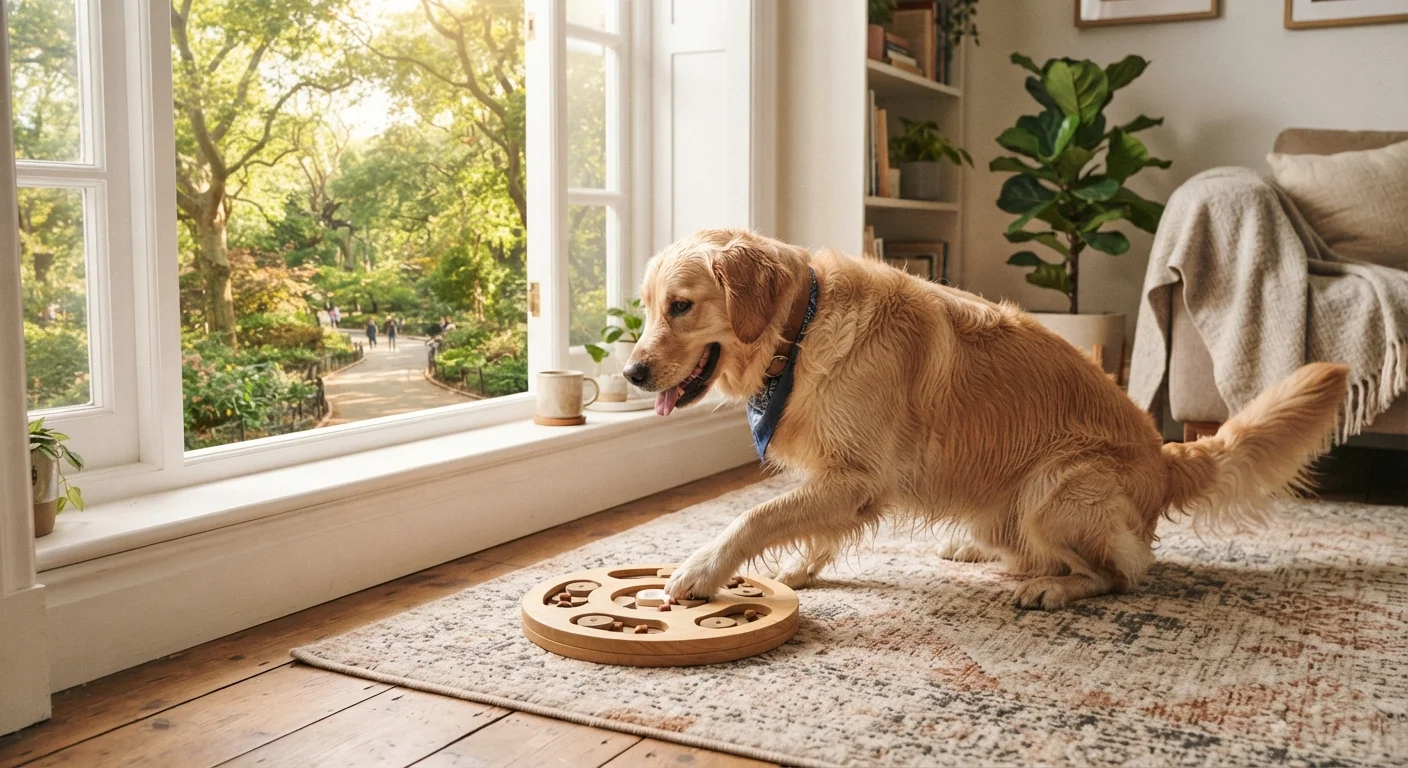
Effective indoor options include scent-work games, food puzzle toys, staircase fetch, hide-and-seek with treats or toys, and short obedience training sessions. These activities target cognitive engagement as much as physical output, which research in animal behavior increasingly recognizes as a key component of canine wellbeing. On days when heat, ice, air quality alerts, or illness make outdoor activity inadvisable, a well-planned indoor session is a responsible substitute rather than a compromise.
Make Indoor Sessions Count
A ten-minute scent-work game — hiding small treats around a room and cueing your dog to find them — can tire a moderately active dog more effectively than a short, uninspiring walk. Rotate puzzle types regularly to prevent boredom and keep the cognitive challenge fresh. Training a new cue or trick sequence is another efficient way to deliver both mental and mild physical engagement without stepping outside.
Comparing the Two Approaches
The table below summarizes how indoor enrichment and outdoor exercise compare across the criteria most relevant to dog owners making daily decisions.
| Indoor Enrichment | Outdoor Exercise | |
|---|---|---|
| Physical conditioning | Moderate — limited space constrains intensity | High — supports cardiovascular and muscular fitness |
| Mental stimulation | High — puzzle and scent work engage cognition | Moderate — novel environment provides natural stimulation |
| Weather dependency | None — usable year-round | High — heat, cold, and ice limit safe access |
| Best life stage fit | Seniors, puppies, recovery, brachycephalic breeds | Healthy adults, working and sporting breeds |
| Parasite and pathogen risk | Minimal | Higher — requires preventive care protocols |
| Socialization opportunity | Limited without structured classes | High — exposure to people, dogs, environments |
| Equipment needed | Puzzle toys, training treats, small play items | Leash, waste bags, water, weather gear |
Neither column represents a complete program on its own. Most veterinary and animal behavior guidance supports a combined approach — outdoor activity for physical conditioning and socialization, indoor enrichment for cognitive stimulation and flexibility across life stages and weather conditions.
Tailoring the Balance to Your Dog
Breed group is a useful starting point but not the whole story. A six-year-old Labrador with early hip dysplasia needs a very different routine than a healthy two-year-old of the same breed. Life stage, weight, cardiovascular condition, and any chronic health issues all shape what exercise looks and feels like safely.
Senior dogs generally benefit from shorter, more frequent outings paired with low-impact indoor enrichment rather than prolonged outdoor sessions. Puppies require careful management of high-impact exercise to protect developing joints — your veterinarian can advise on age-appropriate intensity. Dogs managing anxiety or reactivity may find structured indoor training sessions more productive than unpredictable outdoor environments, at least initially.
If you're uncertain where your dog falls, a wellness exam with your veterinarian is the most reliable way to establish an exercise baseline. General information — including insights on pet wellness and preventive care — can support your thinking, but it doesn't replace individualized guidance.
This article is for general informational purposes only and does not constitute veterinary medical advice. Always consult a licensed veterinarian regarding your specific dog's health and exercise needs.
The content on this site is for informational purposes only and is not a substitute for professional advice. Always consult a qualified professional for guidance specific to your situation.