

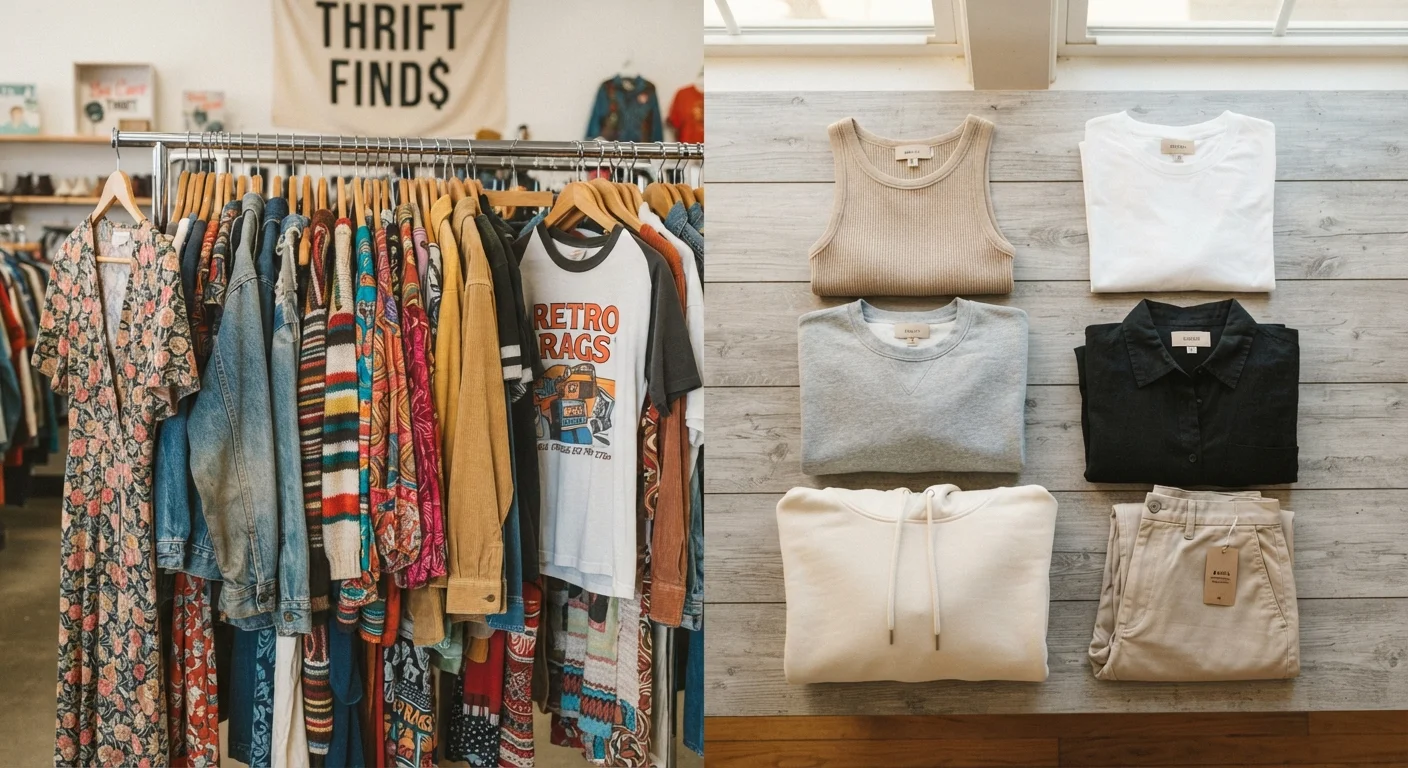
Our Verdict
Neither thrift shopping nor fast fashion is a clear winner for every shopper. Thrifting offers real financial and environmental advantages for those with the time and flexibility to search, while fast fashion provides sizing consistency and convenience that some shoppers genuinely need. Knowing what each option actually costs — in money, time, and environmental terms — helps you make a more intentional choice.
| Best for | Recommended |
|---|---|
| Budget-conscious shoppers with flexible time | Thrift Shopping |
| Those who need consistent sizing or specific fit standards | Fast Fashion |
| Shoppers building a versatile everyday wardrobe on a tight budget | Hybrid approach (thrift + selective new purchases) |
| Those prioritizing reduced textile waste and environmental impact | Thrift Shopping |
What Each Option Actually Offers
The debate between thrift shopping and fast fashion often gets framed in moral terms, but the practical differences matter just as much. Thrift shopping — buying secondhand from consignment stores, charity shops, or resale platforms — puts pre-owned clothing back into use. Fast fashion refers to inexpensive new clothing produced quickly in high volume, typically reflecting current trends at accessible price points.
Both serve the same core need: building a functional wardrobe without spending a fortune. But the experience of shopping each route is genuinely different. Thrift stores offer unpredictability — some days yield great finds, other days nothing useful. Fast fashion retailers offer reliability: consistent sizing, predictable stock, and easy returns. Understanding those differences honestly is more useful than treating one as inherently superior. For a grounded look at why spending more doesn't automatically mean better results, see why 'invest in quality' isn't always the right advice.
Cost, Time, and Convenience Compared
On raw price per item, thrift stores typically win — a secondhand blazer or pair of jeans often costs a fraction of a new equivalent. But price-per-item isn't the full picture. Thrifting demands a time investment: browsing disorganized racks, checking garment condition, and sometimes visiting multiple locations to find something specific. That time has real value.
Fast fashion, by contrast, is efficient. You can filter by size, color, and style online in minutes and receive items at the door. Returns are usually straightforward. For shoppers with demanding schedules, that convenience is a genuine advantage — not a moral failing.
| Thrift Shopping | Fast Fashion | |
|---|---|---|
| Typical cost per item | Lower — often significantly | Low to moderate, price-consistent |
| Time required | High — browsing and searching | Low — filter and order quickly |
| Sizing consistency | Unpredictable, varies by era and brand | Standardized, predictable |
| Item condition | Variable — inspect carefully | New, uniform quality |
| Environmental impact | Lower new production demand | Higher production and waste footprint |
| Return/exchange ease | Rare — most sales final | Generally easy, especially online |
One underappreciated cost of thrift shopping: alterations. Secondhand finds rarely fit perfectly off the rack, and tailoring adds both expense and time. Fast fashion, while often lower-quality construction, at least starts from standardized sizing. Understanding what fabric labels are really telling you can help you evaluate garment quality regardless of where you shop.
Environmental Considerations
Textile production is resource-intensive — water use, dye chemicals, and transportation all carry environmental costs. Fast fashion's model of rapid production and planned obsolescence amplifies these impacts. Garments designed for short trend cycles often end up in landfill within months.
Thrifting extends a garment's life cycle, reducing demand for new production. That's a real environmental benefit. However, thrift shopping isn't zero-impact: donated clothing that doesn't sell can still end up in landfill or shipped overseas, sometimes disrupting local textile markets in receiving countries. The secondhand industry has its own logistics footprint.
Inspect Before You Buy Secondhand
When thrifting in person, check seams, zippers, fabric pilling, and any signs of staining or odor before purchasing. Many thrift store sales are final, so a two-minute inspection prevents a wasted purchase. Hold items up to natural light to spot fading or thin spots that aren't obvious under store lighting.
The honest framing: buying less overall — whether new or secondhand — tends to have a greater environmental impact than the channel you buy through. Shoppers interested in reducing clothing-related spending and waste may also find value in shopping their own closet first before purchasing anything.
Building a Practical Wardrobe With Both Approaches
Many experienced shoppers use a hybrid strategy rather than committing exclusively to one channel. The logic is straightforward: thrift for items where fit flexibility exists — outerwear, scarves, bags, structured pieces with forgiving cuts — and buy new when precise sizing matters most, such as swimwear, undergarments, or tailored trousers.
Before adding anything to a cart or basket, a wardrobe audit helps clarify what you actually need versus what would simply add clutter. Thrift stores reward shoppers who arrive with a specific gap to fill rather than browsing without direction. Similarly, fast fashion purchases tend to hold more value when chosen deliberately to fill a documented wardrobe need rather than chasing a trend.
~92M tons
Textile waste generated globally per year
The United Nations Environment Programme has cited figures in this range when describing the fashion industry's annual textile waste contribution.
~$20B
U.S. secondhand apparel market value
The resale clothing market in the United States has grown substantially over the past decade, with industry analysts tracking its expansion across both in-store and online channels.
Seasonal transitions are another opportunity to be strategic. Shifting your wardrobe between seasons without starting from scratch applies equally whether your closet is built from thrift finds or new purchases — the principles of versatility and intentionality remain the same. For broader guidance on aligning clothing spending with a personal budget, budgeting basics offers practical frameworks worth reviewing.
This article is for general informational purposes only and does not constitute financial, legal, or environmental advice. Readers should evaluate their own circumstances when making purchasing decisions.
The content on this site is for informational purposes only and is not a substitute for professional advice. Always consult a qualified professional for guidance specific to your situation.