

Why the Owner's Manual Beats Generic Maintenance Advice
Generic maintenance guides - including well-meaning advice from family, forums, or quick-lube shops - are built around averages. Your owner's manual is built around your exact engine, transmission, cooling system, and emissions setup. Manufacturer engineers determined those intervals through testing on your specific powertrain, which means the manual's schedule reflects actual engineering tolerances, not a one-size-fits-all approximation.
This matters because intervals vary significantly between vehicles. One manufacturer may specify an oil change every 5,000 miles; another may extend that to 10,000 miles or more for the same type of driving. Oil change intervals vary more than most drivers realize - and blindly following outdated rules like the 3,000-mile standard can mean unnecessary spending or, in the other direction, trusting an interval that doesn't match your vehicle's actual design.
If you're newer to car ownership and the manual feels overwhelming, keeping up with maintenance without mechanical experience is a practical starting point before diving into the schedule itself.
What you will need
How to Read and Apply the Schedule
Follow the steps below to turn your maintenance schedule from a document you ignore into one you actively use. Before you begin, gather your manual, your current mileage, and any prior service records you have on hand.
Owner's Manual
Contains the official maintenance schedule, fluid specifications, and service interval tables for your exact vehicle.
Maintenance Log or App
Used to record completed services with dates and mileage, providing a running history of your vehicle's upkeep.
Calendar or Reminder App
Helps you set future service reminders based on mileage projections or elapsed time intervals.
Locate the Maintenance Schedule Section
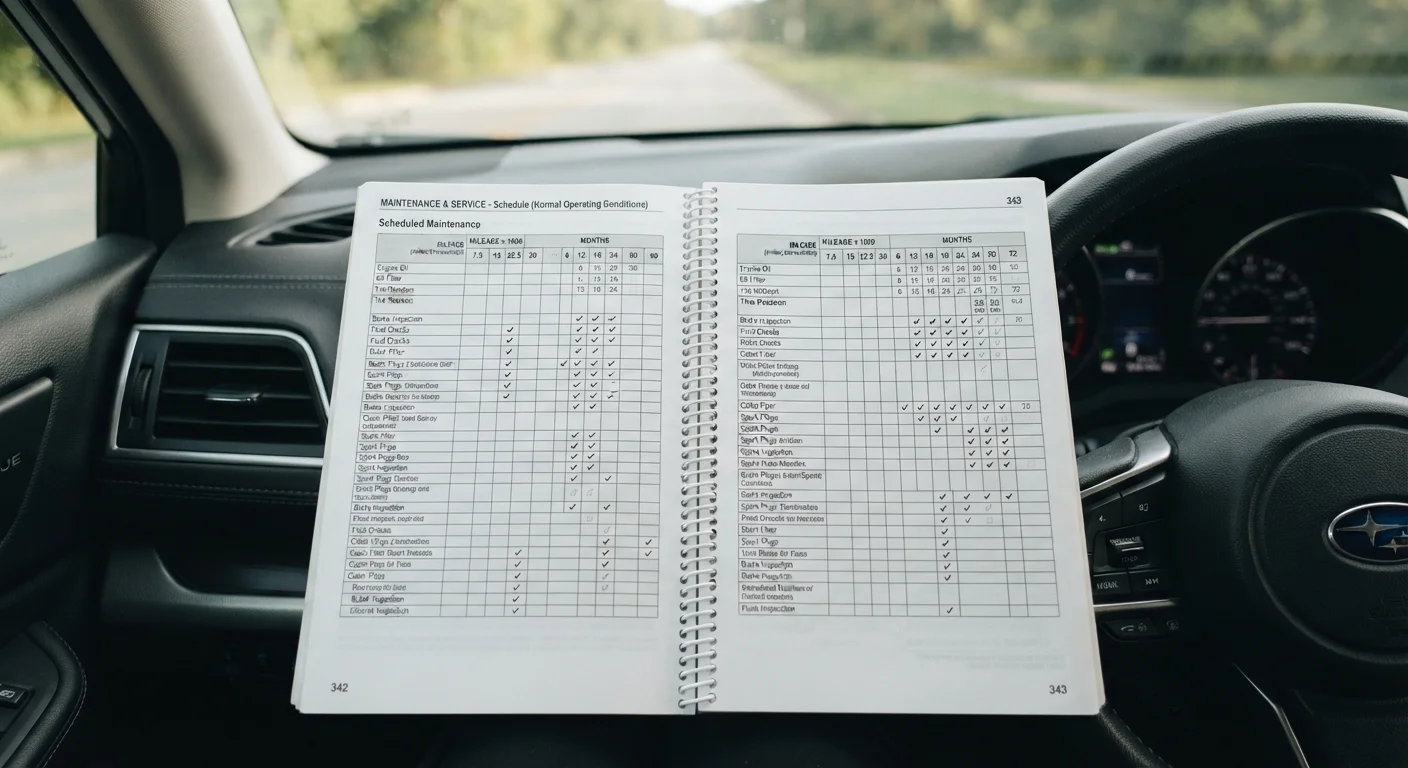
In most owner's manuals, the maintenance schedule appears in its own dedicated chapter - often titled "Maintenance and Care," "Scheduled Maintenance," or something similar. Check the table of contents rather than skimming page by page. The schedule is typically presented as a mileage-based table (for example, every 5,000, 15,000, or 30,000 miles) with rows for each service item.
Identify Whether You Drive Under Normal or Severe Conditions
Most schedules present two tracks: Normal and Severe (sometimes called "Special Operating Conditions"). Severe driving includes frequent short trips under five miles, stop-and-go urban traffic, towing or hauling loads, dusty or unpaved roads, and extreme temperature climates. Many drivers who consider themselves average actually qualify for the severe schedule. Check the specific definitions in your manual - they vary by manufacturer.
Note Both Mileage and Time Intervals
Every service item lists two triggers: a mileage milestone and a time interval (e.g., "every 7,500 miles or 12 months, whichever comes first"). Low-mileage drivers often overlook the time component. Coolant, brake fluid, and rubber components degrade with age regardless of how few miles are driven. Follow whichever threshold you reach first.
Map Your Current Position in the Schedule
Using your current odometer reading and last service date, find exactly where you are in the schedule. Mark which services are upcoming in the next 5,000-10,000 miles. This gives you a concrete to-do list rather than a vague sense that "maintenance is probably due." For a broader view of what each milestone typically involves, see routine maintenance intervals every driver should know.
Note Fluid Specifications and Part Standards
The maintenance section references specific fluid grades (engine oil viscosity, transmission fluid type, coolant formulation) and part standards (spark plug gap, air filter type) that are unique to your vehicle. Using the wrong fluid - even a close substitute - can cause compatibility issues. These specs are usually consolidated in a separate "Specifications" appendix as well. Cross-reference both sections.
Create and Maintain a Service Log
After each service - whether performed by a shop or yourself - record the date, odometer reading, service performed, and who did the work. A simple notebook works; so do free apps designed for vehicle tracking. A complete log supports warranty claims, helps a new mechanic understand your vehicle's history, and adds credibility at resale. For a broader look at how maintenance fits into overall ownership costs, visit car ownership costs.
Don't Rely Solely on Dashboard Reminder Lights
Maintenance reminder systems (like oil-life monitors) are useful, but they don't track every service your car needs - spark plugs, transmission fluid, and coolant flushes are rarely included. Always cross-reference the dashboard alert against the full schedule in your manual.
Can't Find Your Manual? Check the Manufacturer's Website
Most automakers publish free PDF versions of owner's manuals on their official websites - searchable by model year and trim level. If your vehicle is used and the manual is missing, a printed copy can often be ordered directly from the manufacturer or a licensed parts supplier.
Warranty Coverage Depends on Documented Maintenance
Skipping or delaying manufacturer-specified services can void portions of your powertrain or bumper-to-bumper warranty. Keep dated receipts or a service log as proof that scheduled maintenance was performed on time. When in doubt, consult your dealership's service department about what documentation they require.
Once you've worked through those steps, pair your manual's schedule with a seasonal maintenance checklist to catch items - like tire pressure changes and wiper condition - that shift with climate and temperature rather than mileage alone. For a comprehensive view of everything from routine oil changes to major milestone services, see the full picture of car ownership upkeep.
The content on this site is for informational purposes only and is not a substitute for professional advice. Always consult a qualified professional for guidance specific to your situation.