

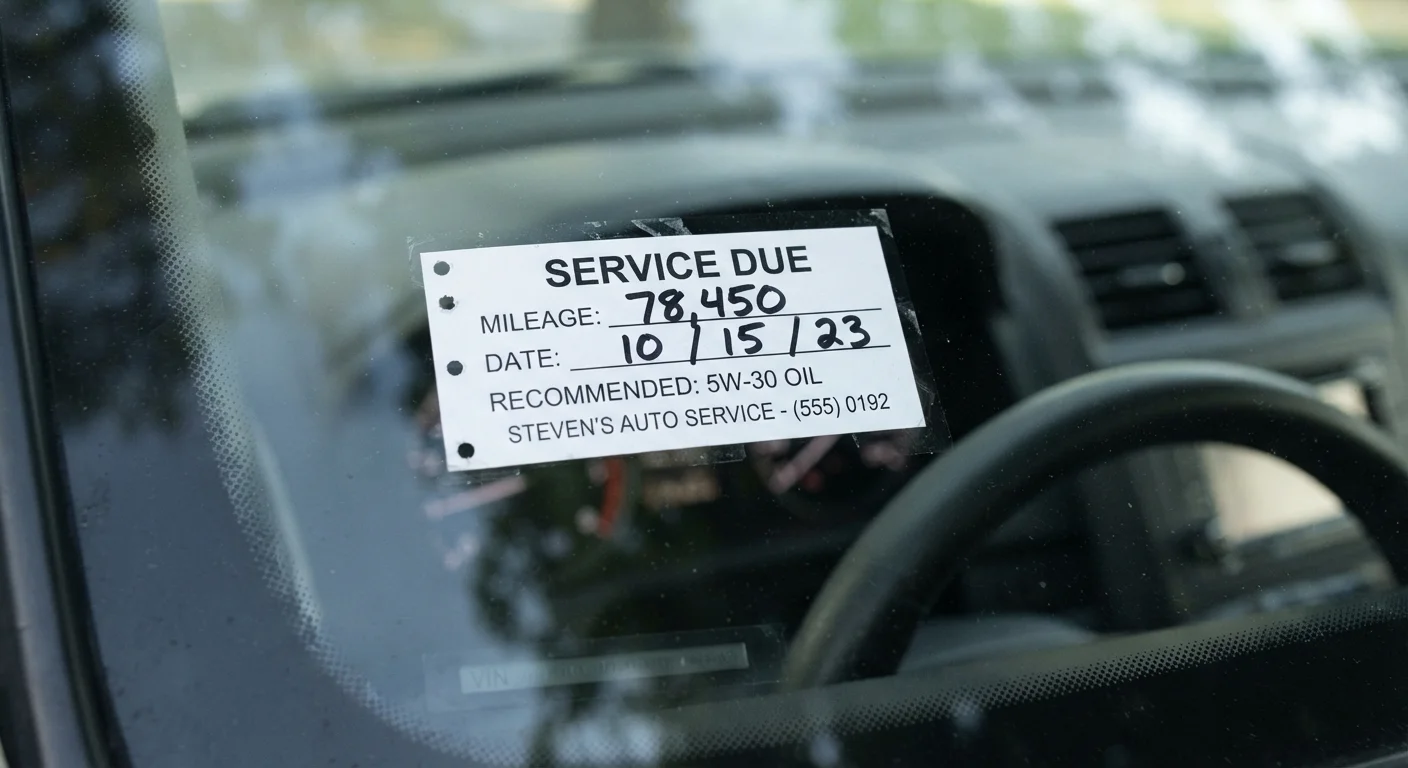
Where the 3,000-Mile Myth Came From
For decades, drivers were told to change their oil every 3,000 miles - full stop. That figure made reasonable sense for the engine designs and conventional oil formulations common before the 1990s. Engines had looser tolerances, seals were less refined, and oil chemistry broke down faster under operating heat.
What changed is everything else. Modern engines are precision-machined to tighter tolerances, oil additives have improved dramatically, and full-synthetic lubricants resist thermal breakdown far longer than their predecessors. The 3,000-mile number stuck around largely because it was a conservative, easy-to-remember rule - and because quick-lube businesses had a financial interest in keeping it alive.
According to the California Department of Resources Recycling and Recovery, tens of millions of gallons of motor oil are changed prematurely each year, contributing to unnecessary waste. The 3,000-mile rule is one of the most persistent maintenance myths in automotive culture - and for most drivers today, it leads to unnecessary expense without any protective benefit.
How to Actually Read Your Oil Change Needs
The single most reliable source for your oil change interval is your owner's manual. Manufacturers specify an interval based on the engine's design, required oil viscosity, and whether conventional or synthetic oil is used. That figure is the result of engineering testing - the sticker a quick-lube shop puts on your windshield is not.
Most owners' manuals also list two schedules: a normal service interval and a severe service interval. Normal service applies to most highway-heavy commuters. Severe service applies when your driving regularly includes:
- Frequent short trips under five miles (the engine never fully warms up, causing moisture buildup in the oil)
- Sustained stop-and-go city traffic
- Towing, hauling, or carrying heavy loads regularly
- Driving in extreme heat or sustained sub-freezing temperatures
If your driving fits the severe category, use that shorter interval - your engine is working harder, and the oil reflects it. See how to read your owner's manual maintenance schedule for a full breakdown of how to interpret those pages correctly.
Cross-Check Your Sticker Against the Manual
After your next oil change, flip open your owner's manual and confirm the interval on the sticker matches what the manufacturer actually recommends. If the shop set the reminder conservatively short, you can note your own target mileage on the sticker. This one step can save you one to three unnecessary oil changes per year.
Oil Life Monitors: What the Percentage Actually Measures
Many vehicles built since the mid-2000s include an Oil Life Monitoring (OLM) system. When your dashboard shows something like "Oil Life: 42%," that number isn't a dipstick reading - it's a calculated estimate generated by the vehicle's engine control module.
OLM systems track variables like engine starts, revolutions per minute, operating temperature, and load cycles. They use algorithms developed by the manufacturer to estimate how much protective life remains in the oil based on how this specific engine has been running. It's a more precise method than a fixed mileage countdown.
7,500-10,000 mi
Typical full-synthetic oil change interval
Most major automakers specify full-synthetic oil intervals between 7,500 and 10,000 miles for modern engine designs under normal driving conditions.
~40%
Drivers still using the 3,000-mile rule
Industry surveys have consistently found a substantial share of American drivers still change oil at 3,000 miles despite manufacturer recommendations allowing longer intervals.
2x
Extra oil changes per year at 3,000-mile rule
A driver following the 3,000-mile rule on a vehicle rated for 7,500-mile intervals performs roughly twice as many oil changes annually as the manufacturer requires.
When the system alerts you - typically at 15% or lower - that's your cue to schedule the service, not an emergency warning. But don't let it reach zero and keep driving. The alert exists precisely so you have a comfortable window to act. For a broader look at what engine oil does alongside your vehicle's other fluids, see Car Fluids 101.
Conventional vs. Synthetic: The Interval Difference
The type of oil in your engine has a direct impact on how long it lasts. Here's how they compare in general terms:
| Oil Type | Typical Interval Range | Common Use Case |
|---|---|---|
| Conventional | 3,000-5,000 miles | Older vehicles, low-mileage drivers |
| Synthetic Blend | 5,000-7,500 miles | Trucks, SUVs, moderate driving |
| Full Synthetic | 7,500-15,000 miles | Modern engines, manufacturer-specified |
These are general ranges. Your manufacturer's specification overrides all of them. Some manufacturers require full synthetic and set intervals at 10,000 miles or longer; using conventional oil and changing it at 3,000 miles in such a vehicle doesn't make it more protected - it just costs more money for no engineering benefit.
Viscosity Grade Also Matters
Your owner's manual specifies an oil viscosity grade - such as 5W-30 or 0W-20 - in addition to the change interval. Using the wrong viscosity can reduce fuel efficiency and, in some cases, affect engine protection. Always use the grade your manufacturer specifies, not simply whatever is on sale or stocked by the shop.
For a complete picture of maintenance costs - including oil changes alongside other scheduled services - see routine maintenance intervals every driver should know.
Frequently Asked Questions
For most vehicles built after 2000, no. The 3,000-mile rule was developed for older engines and conventional oil. Today's engines and synthetic lubricants routinely support intervals of 7,500 to 10,000 miles or more. Check your owner's manual for the figure that applies to your specific vehicle.
Quick-lube shops place that sticker as a service reminder, and they often set it conservatively - sometimes at 3,000 miles regardless of what your manufacturer recommends. Treat it as a prompt to check your owner's manual or Oil Life Monitor, not as a definitive deadline.
Generally, yes. Full-synthetic oil is engineered to resist breakdown at higher temperatures and over longer mileage. Many manufacturers specify full-synthetic for intervals of 7,500 to 15,000 miles. However, the exact interval still depends on your vehicle and driving conditions.
Severe conditions typically include frequent short trips under five miles, stop-and-go city traffic, towing or hauling heavy loads, driving in extreme heat or cold, and sustained high-speed highway driving. Under these conditions, your oil degrades faster and the interval should be shortened accordingly.
Engine oil deteriorates chemically over time regardless of how the car feels or performs. Degraded oil loses its ability to protect internal components, and the damage from running dirty oil accumulates silently. Sticking to your manufacturer's interval is one of the simplest ways to protect long-term engine health.
Your owner's manual is the definitive source - look for the maintenance schedule section. If your vehicle has an Oil Life Monitoring system, it will alert you when a change is due based on actual driving data. Your manufacturer's website or a certified dealer can also confirm the correct interval.
The content on this site is for informational purposes only and is not a substitute for professional advice. Always consult a qualified professional for guidance specific to your situation.