

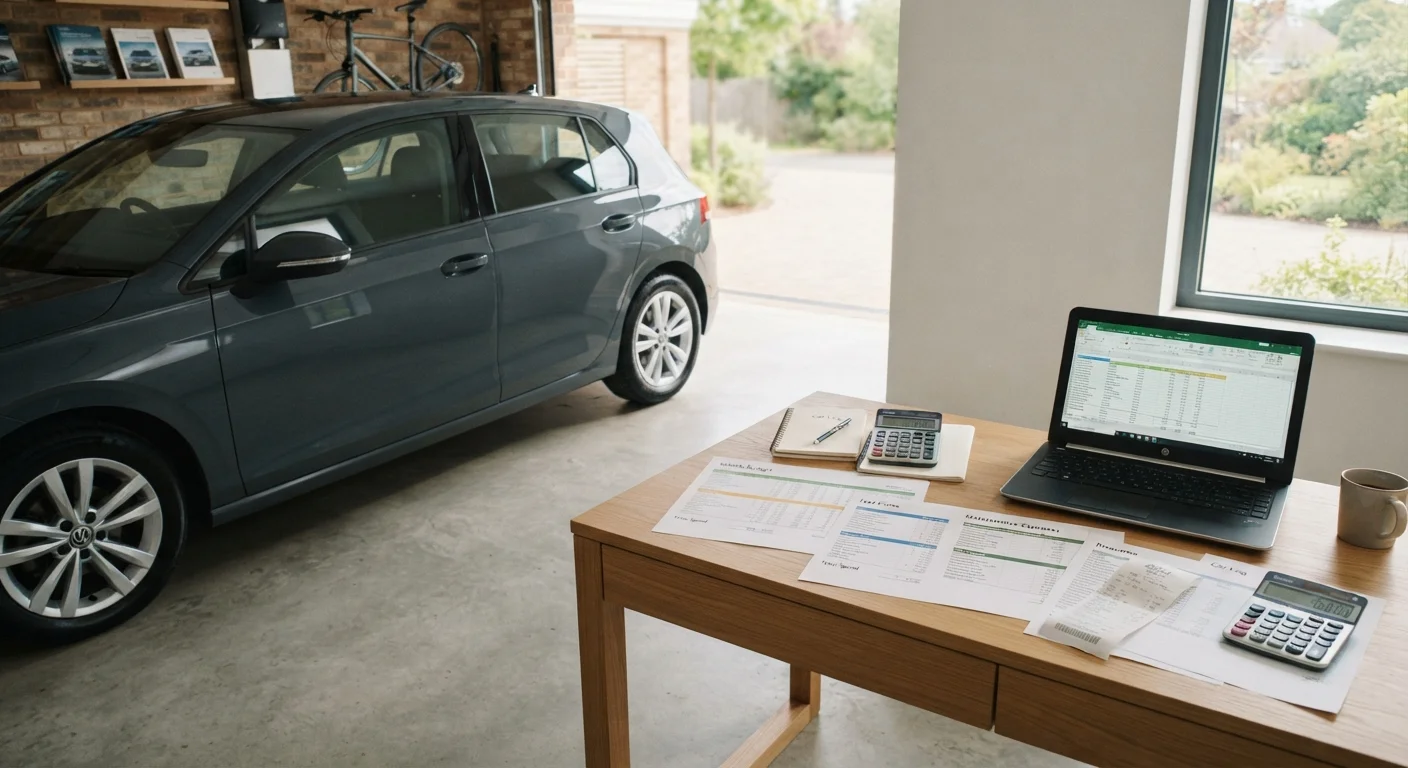
Why the Sticker Price Is Just the Beginning
When most drivers shop for a vehicle, the number they focus on is the purchase price. It's visible, negotiable, and concrete. But purchase price typically represents only a fraction of what that vehicle will cost you over five years of ownership. The remaining costs — depreciation, fuel, insurance, maintenance, repairs, taxes, and loan interest — accumulate quietly in the background, and they can easily double or triple what you thought you were spending.
That full picture is what Total Cost of Ownership captures. It's a framework used by financial analysts, fleet managers, and savvy consumers to evaluate what a vehicle truly costs — not at the point of sale, but across the entire period of ownership. For the average American driver, thinking in TCO terms is one of the most practical ways to avoid financial surprises and make a more informed choice at the dealership.
For a broader view of every cost category drivers face, see the full financial picture of car ownership in America.
~$12,000
Average annual cost to own and operate a vehicle
AAA's vehicle ownership studies have consistently estimated total annual ownership costs (including depreciation, fuel, insurance, and maintenance) in this range for a typical new sedan.
~50%
Share of TCO often attributed to depreciation alone
Industry analyses frequently find that depreciation accounts for roughly half of a vehicle's five-year total cost of ownership, making it the dominant expense category.
15–25%
Typical first-year value loss on a new vehicle
Most new vehicles lose between 15% and 25% of their purchase value within the first year, according to widely cited automotive valuation data.
The Five Core Components of TCO
Every vehicle's total cost of ownership can be broken into a handful of recurring categories:
- Depreciation: The value your vehicle loses over time. New vehicles can lose 15–25% of their value in the first year alone. Over five years, depreciation is often the single largest cost driver. Learn how depreciation works and what speeds it up.
- Fuel: Calculated by annual mileage, local fuel prices, and the vehicle's rated fuel economy. A difference of 10 MPG between two vehicles can add up to thousands of dollars over five years of typical driving.
- Insurance: Premiums depend on vehicle type, your driving record, location, and chosen coverage level. Sports vehicles and luxury models often carry significantly higher premiums than economy alternatives — a cost gap that compounds annually.
- Maintenance and repairs: Scheduled routine maintenance (oil changes, tires, brakes) is predictable; unplanned repairs are not. Older vehicles or those with expensive parts tend to increase this line item substantially.
- Financing costs: If you borrow to purchase, interest paid over the loan term is a real expense. A five-year loan at a higher rate can add several thousand dollars to total outlay beyond the vehicle's actual price.
Build Your Own Quick TCO Estimate
Take the purchase price, subtract the estimated resale value after your planned ownership period, then add projected annual fuel, insurance, and maintenance costs multiplied by the number of years. Don't forget loan interest if you're financing. Even a rough estimate is far more useful than purchase price alone when comparing two vehicles.
TCO in Practice: Making It Work for Your Budget
TCO thinking doesn't require a spreadsheet to be useful — even a rough estimate changes how you evaluate a purchase. The key is shifting the comparison question from "What does this car cost?" to "What will this car cost me per year or per mile?"
Consider two vehicles with a $5,000 purchase price difference. If the less expensive option has lower fuel economy, higher insurance rates, and a less favorable depreciation curve, it may end up costing more over five years than the pricier alternative. This is a scenario that surprises many buyers — and one that TCO analysis is specifically designed to prevent. Common ownership cost myths covers several related misconceptions worth reading before you buy.
This article provides general financial information for educational purposes and is not personalized financial or purchasing advice. Costs vary significantly by region, vehicle, driver profile, and market conditions. Consult a qualified financial professional for guidance specific to your situation.
Frequently Asked Questions
TCO typically includes depreciation, fuel, insurance premiums, routine maintenance, unplanned repairs, registration and taxes, and financing interest if you carry a loan. Some calculations also factor in parking and tolls. Together these often add up to significantly more than the purchase price alone.
Start with purchase price minus estimated resale value — that's your depreciation. Add annual fuel costs, insurance premiums, maintenance, and any loan interest over the ownership period. Dividing the total by years or miles gives you a per-year or per-mile figure you can use for comparisons.
Not necessarily. A lower sticker price can come with higher fuel costs, pricier parts, or faster depreciation that erodes any upfront savings. TCO is the only reliable way to make an honest comparison between two vehicles at different price points.
Yes. Interest paid over a loan term is a real cost that belongs in any honest TCO calculation. A longer loan term lowers monthly payments but increases total interest, raising your TCO. See <a href="/cars-driving/car-ownership-costs/financing-a-car-what-the-true-cost-of-a-loan-looks-like-over-time">how auto loan costs accumulate over time</a> for a closer look.
Depreciation represents the value your vehicle loses over time — the gap between what you paid and what you can sell it for. It is often the largest single component of TCO, particularly in the first three years. <a href="/cars-driving/car-ownership-costs/vehicle-depreciation-why-your-car-loses-value-and-how-fast">Understanding how depreciation works</a> is essential to estimating TCO accurately.
Yes, in important ways. New vehicles typically have steeper early depreciation but lower repair risk and sometimes lower financing rates. Used vehicles may have slower depreciation but higher maintenance exposure. <a href="/cars-driving/car-ownership-costs/new-car-vs-used-car-comparing-the-real-ownership-costs-over-time">Comparing new and used vehicle costs over time</a> provides a detailed breakdown.
The content on this site is for informational purposes only and is not a substitute for professional advice. Always consult a qualified professional for guidance specific to your situation.