

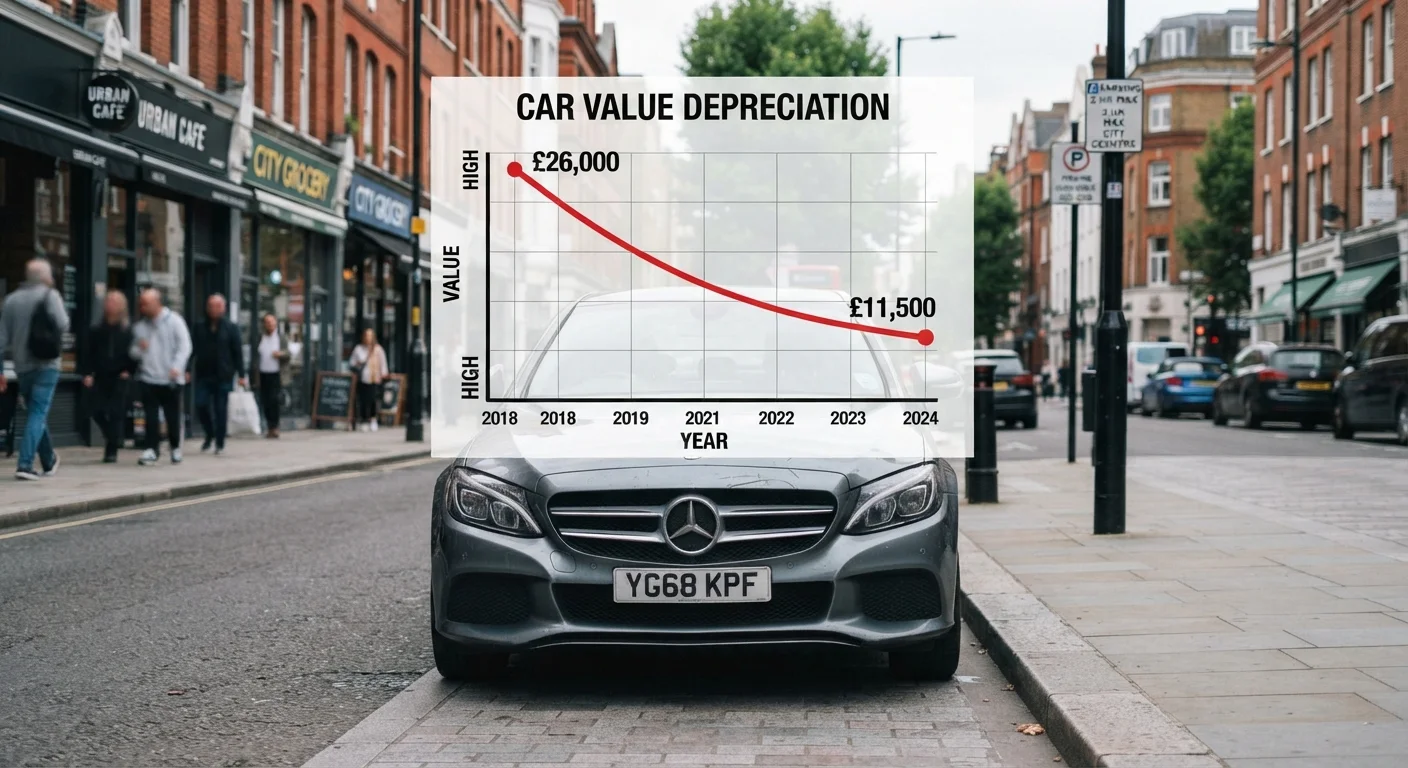
How Depreciation Actually Works
Depreciation isn't a fee or a bill — it's a quiet, ongoing reduction in your vehicle's market value. The moment a new car is driven off the lot, it transitions from "new" to "used" in the eyes of the marketplace, and that distinction immediately affects what a buyer would pay for it.
Over time, several forces compound this decline: the car accumulates miles, newer models with updated features enter the market, and the vehicle moves further from its warranty coverage. The result is a predictable downward curve in value that every owner experiences, whether they're aware of it or not.
For a broader view of where depreciation fits among all the costs drivers face, see the full financial picture of car ownership — depreciation is one of several major cost categories worth understanding before you buy.
~20%
Average new-car value lost in year one
Industry analysts and automotive data providers consistently estimate first-year depreciation at roughly 15–25% for most new vehicles.
40–60%
Value lost by year five of ownership
Most vehicles lose nearly half their original purchase price within five years, making depreciation the dominant ownership cost for many buyers.
$300+
Monthly depreciation cost on a typical new vehicle
On a $35,000–$40,000 vehicle depreciating at average rates, the per-month value loss often rivals or exceeds the insurance premium.
The Depreciation Curve: When Is the Drop Steepest?
Depreciation isn't linear. The steepest losses generally occur in the first one to three years of ownership, when a vehicle sheds the "new" premium fastest. After that initial cliff, the rate of annual loss tends to slow — though it never stops entirely.
By the time a car is five years old, it has typically lost somewhere between 40% and 60% of its original purchase price, depending on the model and market conditions. A vehicle purchased for $40,000 might realistically be worth $18,000–$24,000 at the five-year mark under typical circumstances.
This curve is exactly why the new-versus-used ownership cost comparison is rarely as simple as sticker price. Our article on new vs. used car ownership costs over time explores how these dynamics play out across a full ownership period.
Time Your Purchase Around the Curve
Vehicles that are two to three years old have already absorbed the steepest portion of their depreciation without accumulating the higher mileage and repair risk of older models. If total cost of ownership is a priority for you, this age range often represents a practical middle ground between price and reliability. Always review the vehicle history and have a pre-purchase inspection done by an independent mechanic before buying.
What Drives Depreciation Faster — or Slower
Not all vehicles depreciate at the same rate. Several variables influence how quickly or slowly a specific car loses value:
- Mileage: Higher mileage signals more wear, which buyers discount. Vehicles driven well above average annual mileage typically lose value faster.
- Condition and maintenance history: A well-documented service record and clean body condition support resale value. Neglected maintenance or accident history accelerates the decline.
- Brand reliability reputation: Models from manufacturers with strong long-term reliability track records tend to hold value better because used-car buyers are willing to pay a premium for perceived durability.
- Market demand: Supply, consumer preferences, and fuel prices all shift what buyers will pay. A spike in fuel prices, for instance, can quickly soften demand — and resale prices — for large trucks or performance vehicles.
- Trim level and features: Vehicles with in-demand options often depreciate more slowly than base-trim versions of the same model.
Understanding these factors helps you make smarter decisions at both the point of purchase and when planning to sell. Routine car maintenance is one of the most practical levers owners have to slow the depreciation on their specific vehicle.
Why Depreciation Matters to Your Budget
Because depreciation is invisible on a monthly statement, many owners dramatically underestimate their true cost of ownership. If you own a car for five years and it loses $18,000 in value, that's effectively $300 per month in ownership cost — on top of insurance, fuel, and maintenance — even though you never wrote a check for it.
This matters especially for loan situations. When a vehicle depreciates faster than a loan is paid down, the owner ends up "underwater" — owing more than the car is worth. Selling or trading in the vehicle at that point means covering the gap out of pocket or rolling negative equity into a new loan, compounding future costs.
First-time buyers are particularly vulnerable to this dynamic. If you're new to car ownership, our look at costs first-time drivers rarely anticipate can help you plan more accurately from the start.
Depreciation also connects to how you budget overall. Treating the per-month depreciation figure as a real cost — not just an abstract number — leads to more honest planning. See budgeting basics for frameworks that can help you factor it in.
Depreciation and "Underwater" Loans
When a vehicle's market value drops below the outstanding loan balance, the owner is said to be underwater — or to have negative equity. This situation is most common in the first two years of a loan on a new vehicle, when depreciation is steepest and loan principal payoff is slowest. Gap insurance is designed to cover this difference if the car is totaled or stolen, but it's worth understanding the underlying dynamic before financing. This article is for general informational purposes and is not financial or legal advice; consult a licensed financial professional about your specific situation.
Frequently Asked Questions
Most new vehicles lose between 15% and 25% of their purchase price in the first year of ownership. The exact amount depends on the make, model, and market demand. Luxury vehicles and certain segments tend to depreciate faster, while trucks and SUVs with strong demand can hold value better.
High mileage, poor maintenance history, accident records, low brand reputation for reliability, and weak resale demand all accelerate depreciation. Fuel type also plays a role — changing fuel-economy preferences or EV adoption can shift what buyers will pay for older internal-combustion vehicles.
No. Your monthly payment covers the financed purchase price plus interest. Depreciation is the loss in the vehicle's market value, which occurs regardless of whether you're making payments. A vehicle can depreciate faster than you pay down a loan, leaving you owing more than the car is worth — a situation called being "underwater" on your loan.
Buying used means the previous owner absorbed the steepest portion of the depreciation curve. However, used vehicles don't stop depreciating — they simply do so more gradually. The trade-off often involves higher potential maintenance costs, so it's worth weighing the full picture.
If your car is totaled, most standard policies pay the vehicle's actual cash value — its depreciated market value, not what you originally paid. This is why gap insurance exists: it covers the difference between the insurance payout and the remaining loan balance when a car is worth less than what's owed.
The content on this site is for informational purposes only and is not a substitute for professional advice. Always consult a qualified professional for guidance specific to your situation.