

Our Verdict
Driver assistance technologies deliver genuine, measurable safety benefits in the right conditions — particularly for predictable hazards like rear-end collisions and unintentional lane departures. However, they function within narrow operating envelopes and are not designed to handle the full complexity of real-world driving. Used with clear eyes about their limitations, they are a worthwhile safety layer; treated as autonomous guardians, they introduce new risks.
Drivers who take time to read their owner's manual, understand each system's specific triggers and constraints, and continue practicing defensive driving habits alongside the technology.
What Driver Assistance Systems Actually Do
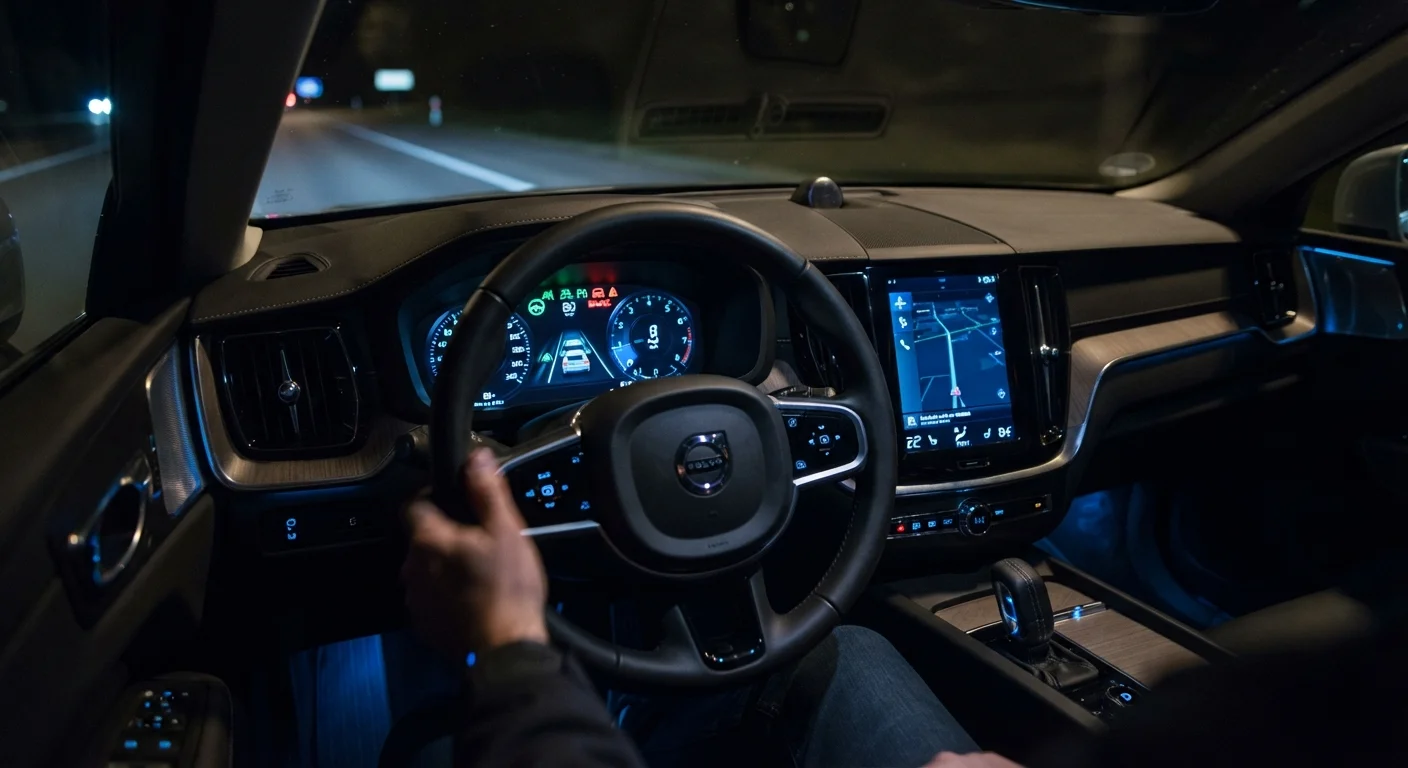
Modern driver assistance technologies — collectively marketed under terms like ADAS — use a combination of cameras, radar, ultrasonic sensors, and software to monitor the vehicle's surroundings and intervene or alert the driver under specific conditions. Common systems include:
- Automatic Emergency Braking (AEB): Detects an imminent forward collision and applies brakes if the driver doesn't respond in time.
- Lane-Keep Assist (LKA): Detects unintentional lane drift and applies gentle steering correction or issues a warning.
- Blind-Spot Monitoring (BSM): Alerts the driver to vehicles in adjacent lanes that may not be visible in mirrors.
- Adaptive Cruise Control (ACC): Maintains a set speed and following distance by automatically adjusting throttle and, on some systems, braking.
- Rear Cross-Traffic Alert: Warns of approaching cross-traffic when reversing out of a parking space.
Each system is engineered for a specific, bounded task. None monitors everything simultaneously the way an attentive driver can — and none is designed to replace the driver's judgment. This is part of the broader picture of road safety skills every driver should understand.
The Real Safety Benefits
Reduces rear-end collision frequency
Automatic Emergency Braking has demonstrated measurable reductions in rear-end crashes in real-world studies. It responds faster than human reaction time in many scenarios.
Addresses genuine blind-spot gaps
Blind-spot monitoring covers areas that mirrors routinely miss, particularly useful during high-speed lane changes on interstates where a vehicle can be obscured briefly.
Reduces lane-drift risk during fatigue
Lane-keep assist can catch subtle drift caused by inattention or early-stage fatigue, providing a corrective nudge before a serious departure occurs.
Eases cognitive load on long highway drives
Adaptive cruise control reduces the constant micro-adjustments required in steady highway traffic, helping drivers manage sustained attention more effectively over long distances.
Parking and reversing hazard detection
Rear cross-traffic alerts and parking sensors address low-speed blind spots that are difficult to manage with mirrors alone, reducing parking-lot incidents.
The safety case for these systems is grounded in data. The Insurance Institute for Highway Safety (IIHS) has found that vehicles equipped with front automatic emergency braking have meaningfully lower rates of rear-end crashes compared to vehicles without it. Blind-spot monitoring has been linked to reductions in lane-change crashes. These aren't marginal improvements — for specific, predictable collision types, the benefits are substantial.
~50%
Reduction in rear-end crash rates with AEB
IIHS research has found vehicles equipped with forward automatic emergency braking show substantially lower rates of rear-end crashes compared to equivalent vehicles without the technology.
~23%
Fewer lane-change crashes with blind-spot monitoring
According to IIHS analysis, blind-spot monitoring with active steering intervention is associated with a notable reduction in lane-change crash rates and injuries.
Lane-keeping systems are particularly valuable on long highway drives, where fatigue can cause subtle drift before the driver notices. And rear cross-traffic alerts address a genuine blind-spot problem that affects drivers of all experience levels, especially in crowded parking lots.
Where These Systems Fall Short
Performance degrades in poor weather
Cameras and radar can be obscured by heavy rain, snow, mud, or frost. A system that works reliably in dry conditions may not function — or may function differently — in the conditions where driver attention is most critical.
Lane-keep systems require visible lane markings
LKA relies on painted lane lines being visible and unambiguous. Faded markings, construction zones, and complex intersections can confuse or disable the system without warning.
AEB cannot prevent all collision types
Automatic Emergency Braking is optimized primarily for forward collisions. It may not detect crossing pedestrians at speed, stationary objects in certain configurations, or swerving hazards.
Automation complacency reduces driver vigilance
Studies have shown drivers who rely heavily on assistance features scan the road less actively and react more slowly when the system reaches its limits and hands back control.
Sensor damage may not trigger a warning light
A dirty, damaged, or misaligned sensor may reduce system effectiveness without triggering an obvious dashboard alert, leading drivers to believe a system is functioning when it isn't. Check the meaning of warning lights regularly.
System behavior varies significantly across vehicles
There is no standardized implementation of ADAS features. A blind-spot alert in one vehicle may activate at different distances or speeds than the same-named feature in another, creating confusion for drivers switching between vehicles.
Understanding the limitations isn't pessimism — it's how you use these tools safely. Many of the gaps below are not flaws so much as design boundaries that manufacturers document in owner's manuals, though those sections often go unread.
Systems Have Specific Operating Conditions
Most driver assistance features include defined minimum speed thresholds, weather conditions, and road-type requirements listed in the owner's manual. For example, many AEB systems are not designed to activate at low parking-lot speeds, and some lane-keep systems only engage above 40 mph. Reading the relevant manual sections for your specific vehicle is the most direct way to know what your system will and won't do.
Common driving safety myths — like the belief that ADAS makes a vehicle nearly autonomous — can lead drivers to disengage mentally at exactly the moments these systems struggle most. Staying engaged isn't optional; it's the point.
The Complacency Problem
Perhaps the most documented concern with driver assistance technology isn't a sensor limitation — it's behavioral. Researchers and traffic safety organizations have identified what's often called automation complacency: the tendency for drivers to reduce their own vigilance when a system appears to be managing a task. This is especially apparent with adaptive cruise control and lane-centering features, where drivers may stop scanning ahead or monitoring their lane position as actively as they would without the system.
The legal and practical reality is unchanged: the driver remains responsible for the vehicle at all times. These systems can be overridden instantly — and in many situations, they need to be. Distraction takes many forms, and over-trusting an assistance feature is one of them. Staying mentally engaged — even when the car seems to be handling things — is a core principle of safe driving, not an optional extra.
This article is for general informational purposes. Always consult your vehicle's owner's manual for system-specific guidance, and follow all applicable traffic laws in your jurisdiction.
The content on this site is for informational purposes only and is not a substitute for professional advice. Always consult a qualified professional for guidance specific to your situation.