

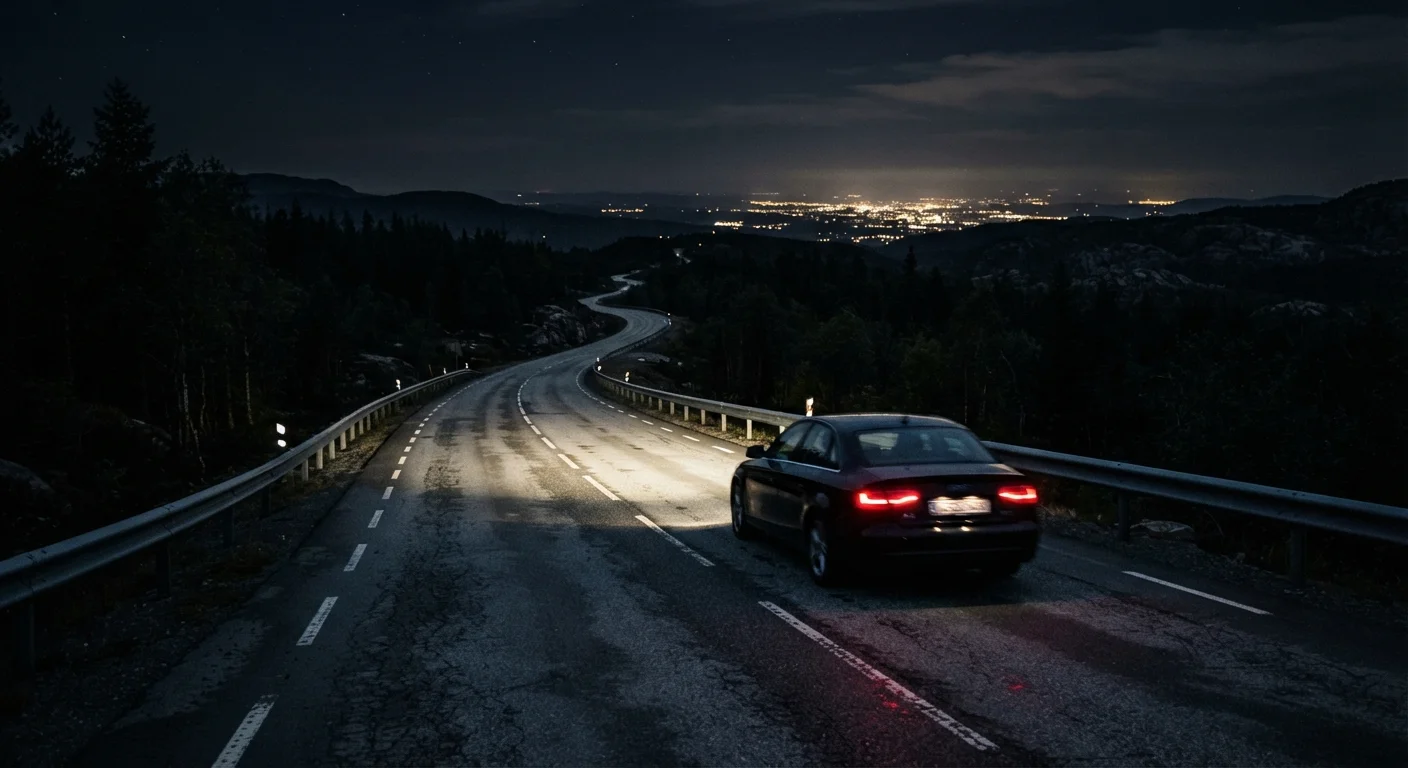
Why Night Driving Is Statistically More Dangerous
Roughly a quarter of all driving occurs after dark, yet nighttime hours account for approximately half of all traffic fatalities in the United States, according to data published by the National Highway Traffic Safety Administration (NHTSA). That disproportionate risk exists even though traffic volume drops significantly after sunset.
The core problem is biological: the human eye is not engineered for high-speed driving in low-light conditions. Depth perception weakens, color recognition fades, and peripheral vision narrows. The average driver can see roughly 250 feet ahead using low-beam headlights — but at 60 mph, a vehicle travels that distance in under three seconds, leaving almost no margin to react to an obstacle. Understanding this gap is the starting point for safer nighttime habits.
~50%
Share of fatal crashes occurring at night
NHTSA data consistently shows nighttime hours account for roughly half of all traffic fatalities despite representing far less than half of total miles driven.
250 ft
Typical low-beam visibility range
At 60 mph, a vehicle covers 250 feet in under three seconds, leaving minimal reaction time for obstacles at the edge of headlight range.
Vehicle Preparation That Makes a Real Difference
Your vehicle's lighting system is your primary safety tool after dark — and it degrades quietly over time. Headlight lenses yellow and cloud with UV exposure, cutting output by 20–40% without any warning light appearing on your dashboard. Bulbs dim gradually before they burn out entirely. Neither failure is obvious until you're already on a dark road.
Before any significant nighttime trip, run through a quick check of your exterior lights. Our pre-trip safety checklist covers this and other visibility essentials worth verifying before every drive. Pay specific attention to headlight aim — improperly aimed beams illuminate the sky or the pavement immediately in front of you instead of the road ahead. Many service shops can inspect and adjust aim inexpensively.
Inside the cabin, dashboard brightness also matters. A brightly lit instrument cluster reduces your eye's ability to adapt to darkness ahead. Dim it to a comfortable minimum at night.
When to Replace Headlight Bulbs
Halogen headlight bulbs typically last 500–1,000 hours but dim noticeably before burning out completely. If one bulb fails, replace both at the same time — the remaining bulb is likely nearing the end of its lifespan too. For lens cloudiness, many auto parts stores sell restoration kits that can meaningfully improve output without replacing the entire assembly. Check your car maintenance resources for guidance on bulb types and replacement intervals specific to your vehicle.
Driving Habits That Reduce After-Dark Risk
Technique adjustments — not just equipment — are what separate capable night drivers from vulnerable ones.
Reduce speed below the posted limit when driving with low beams on unlit roads.
Speed limits are set for ideal conditions, not for the reduced visibility of an unlit rural road at 1 a.m. Slowing down extends your reaction window to match what your headlights actually show you. This is sometimes called driving within your headlight range.
Use high-beam headlights on open roads and switch to low-beams promptly when approaching other vehicles.
High beams extend your visible range dramatically on empty roads, but they blind oncoming drivers and can dazzle the driver ahead of you whose mirrors reflect the light back. Knowing when to switch and doing so consistently is a discipline many drivers neglect.
Increase your following distance to at least four seconds behind the vehicle ahead.
The standard three-second following distance assumes normal reaction times and road visibility. At night, both are reduced. A longer gap gives you additional time to process hazards that appear suddenly in the taillights of the car ahead.
Keep your windshield and mirrors clean, inside and out.
A film of interior grime or exterior road spray scatters oncoming headlight beams into distracting glare. Many drivers experience significantly worse nighttime glare from a dirty windshield and don't identify the cause. Clean glass is one of the cheapest and most overlooked safety upgrades.
Scan further ahead and use the edges of the road as reference points.
At night, the natural tendency is to focus on the small lit patch immediately in front of the hood. Experienced drivers actively push their gaze further down the road and use lane markings and road edges to maintain position — much like a pilot uses instruments rather than looking at the nose of the aircraft.
Fatigue and Glare: Two Compounding Threats
Night driving rarely occurs in isolation from fatigue, and the combination is particularly dangerous. Drowsiness slows reaction time and impairs judgment in ways that can resemble alcohol impairment — even when you feel only mildly tired. Our companion article on how fatigue changes your driving explains why the feeling of being "fine" is often unreliable after dark or during long stretches on the road.
Glare from oncoming high-beams is the other major compounding factor. When a driver fails to dim their high-beams, it can temporarily blind oncoming drivers for several seconds — long enough to miss a hazard or drift from a lane. The standard guidance: shift your gaze to the right edge of the road rather than looking directly at the oncoming light, and reduce speed if visibility is compromised. Do not retaliate by switching your own high-beams on, which creates the same hazard for the other driver.
Glare from Modern Headlights Is Getting Worse
The widespread adoption of high-intensity LED and adaptive headlights has improved forward visibility for the vehicles equipped with them, but also increased glare for oncoming and surrounding drivers. Studies from AAA and other research organizations suggest that a significant share of drivers report being regularly blinded by modern headlight systems. Until regulatory standards catch up, managing your own gaze response — looking toward the right edge line rather than at the light source — remains the most reliable defense.
For a broader look at how distractions and impairments stack up at any hour, see the hidden risks of driving with distractions.
Quick Actions You Can Take Before Your Next Nighttime Trip
Most improvements to nighttime safety don't require expensive equipment — they require habits. The following quick wins cover the highest-impact actions that are also immediately actionable.
For a comprehensive framework that covers nighttime and all other high-risk driving conditions, the complete guide to road safety is a useful companion resource.
This article is for general informational and educational purposes only. Always exercise personal judgment, obey applicable traffic laws, and consult a qualified automotive professional for vehicle-specific maintenance or safety concerns.
The content on this site is for informational purposes only and is not a substitute for professional advice. Always consult a qualified professional for guidance specific to your situation.