

Why Most Workout Plans Fail Busy People
The most common reason exercise schedules collapse isn't lack of willpower — it's that the plan was built around an idealized version of the week rather than the actual one. A template downloaded from the internet assumes free mornings, predictable evenings, and a body that recovers at a fixed rate. Real work weeks don't cooperate.
The fix is to build the schedule from your life outward, not from a fitness ideal inward. That means accounting for commute fatigue, late meetings, and the nights when cooking dinner already feels like an achievement. A plan that acknowledges those realities is one you'll actually follow.
Check With Your Doctor First
Before starting a new exercise program, speak with a qualified healthcare professional — especially if you have a chronic condition, recent injury, or have been inactive for an extended period. The guidance here is general educational information, not personalized medical advice.
For readers who spend most of the day seated, the workout schedule is only part of the picture. Adding movement habits throughout the workday amplifies the benefits of your scheduled sessions significantly.
What you will need
How to Build Your Schedule Step by Step
Weekly calendar or planner
Maps out existing commitments so you can identify genuine open windows for movement.
Fitness tracking app or notebook
Logs completed sessions so you can spot patterns and stay accountable over time.
Timer or interval app
Keeps shorter sessions structured and efficient when time is limited.
Map your non-negotiables first
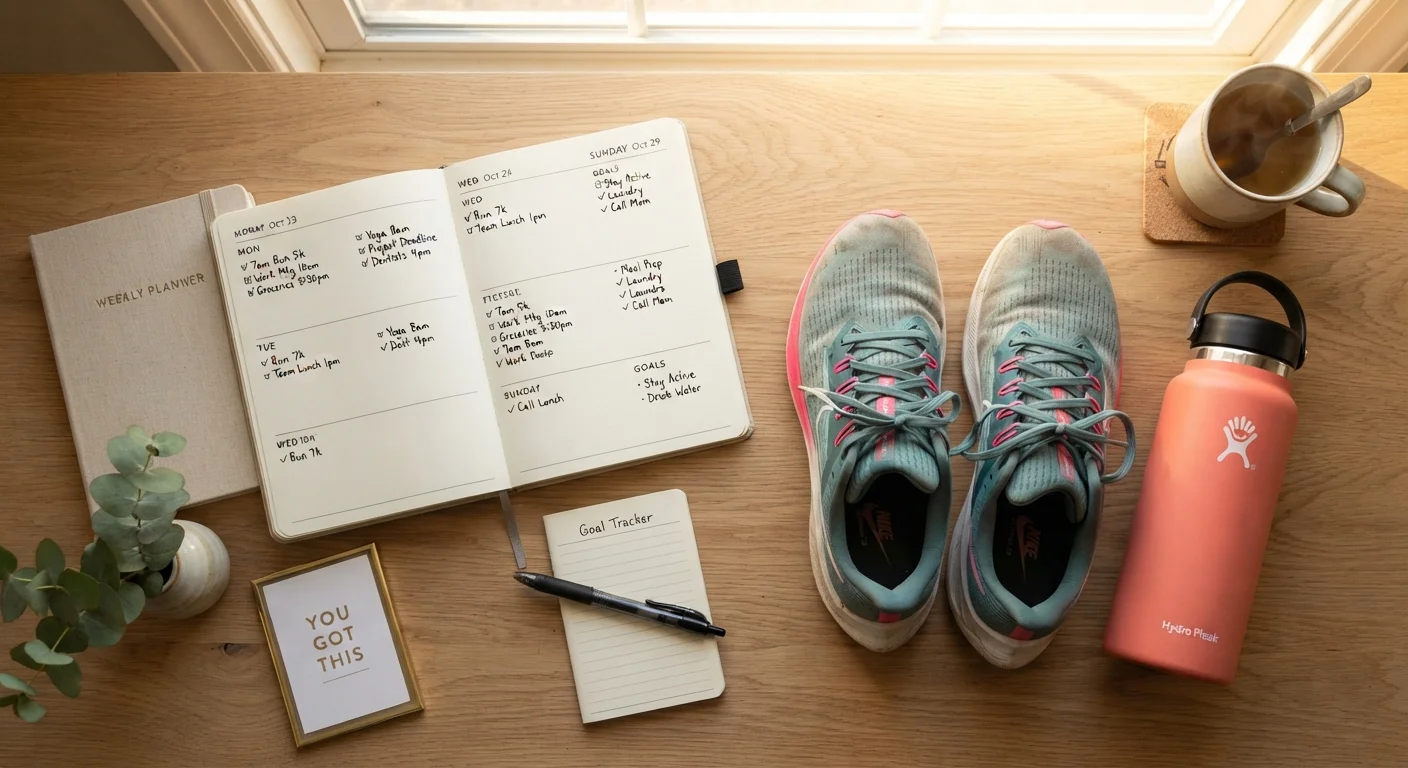
Open your calendar for a typical work week and block every fixed commitment: work hours, commute windows, recurring family obligations, and essential personal tasks. Do this honestly — including the time you realistically need to wind down after work. What remains are your genuine available windows, not an idealized version of your schedule.
Decide on a realistic session frequency
Based on your available windows, choose a weekly movement target you can hit 80–90% of the time. For most working adults, three to five sessions per week is a sustainable starting point. Resist the urge to schedule seven days if your open windows only comfortably support four — an achievable plan you follow beats an ambitious one you abandon. See principles for building a sustainable habit for guidance on setting realistic expectations.
Assign a movement type to each session
Variety across the week supports overall fitness and reduces overuse injury risk. A balanced weekly template might include two strength-focused sessions, one or two cardiovascular sessions, and one session of lower-intensity movement such as walking or stretching. You don't need a gym for every session — weighing home workouts against a gym membership can help you decide what environment suits your schedule and budget.
Deliberately schedule rest and recovery
Rest days are not gaps in your plan — they are a core part of it. Muscle repair, nervous system recovery, and long-term adaptation happen during downtime, not during the workout itself. Mark one to two rest or active-recovery days on your schedule before the week begins. Learn what happens in your body during recovery to understand why this step matters as much as the workouts.
Add micro-movement to your workday
Even a well-structured exercise schedule doesn't fully offset eight or more hours of sitting. Look for small opportunities to move during the workday: standing during calls, a brief walk at lunch, or desk stretches between meetings. These additions compound meaningfully over a week. Explore movement habits that fit into a sedentary work day for practical options that won't disrupt your workflow.
Review and adjust at the end of each week
Spend five minutes at the end of each week noting which sessions you completed, which you skipped, and why. Use that information to refine next week's schedule — not to judge yourself, but to improve the plan's fit with your real life. Schedules that get adjusted regularly tend to stick far longer than rigid ones.
Start Smaller Than You Think You Should
First-time schedulers routinely overestimate how much they can fit in. Beginning with three purposeful sessions per week and building gradually tends to produce far better long-term results than an ambitious schedule that collapses by week two. As research and fitness professionals consistently note, consistency beats intensity every time.
More Is Not Always Better
Scheduling intense workouts every single day without built-in recovery time can increase injury risk and lead to burnout. If you feel persistent soreness, fatigue, or loss of motivation, scale back and allow adequate rest before resuming.
Sustaining the Schedule Beyond the First Month
The first week of a new schedule often feels manageable. Weeks three and four are where most people quietly stop. The research-backed pattern is clear: moderate, regular movement compounds over time in ways that occasional intense sessions don't. If you find your schedule slipping, the answer is almost always to simplify — drop a session, shorten the duration, or swap an intense workout for a walk — rather than abandon the plan entirely.
Think of your weekly exercise schedule as a living document. Seasons change, work demands shift, and your fitness level will evolve. Build in the expectation that you'll revise it regularly, and treat those revisions as a sign the process is working, not failing.
This article is for general informational and educational purposes only and is not a substitute for professional medical advice. Consult a qualified healthcare provider before beginning any new exercise program, particularly if you have existing health conditions or concerns.
The content on this site is for informational purposes only and is not a substitute for professional advice. Always consult a qualified professional for guidance specific to your situation.