

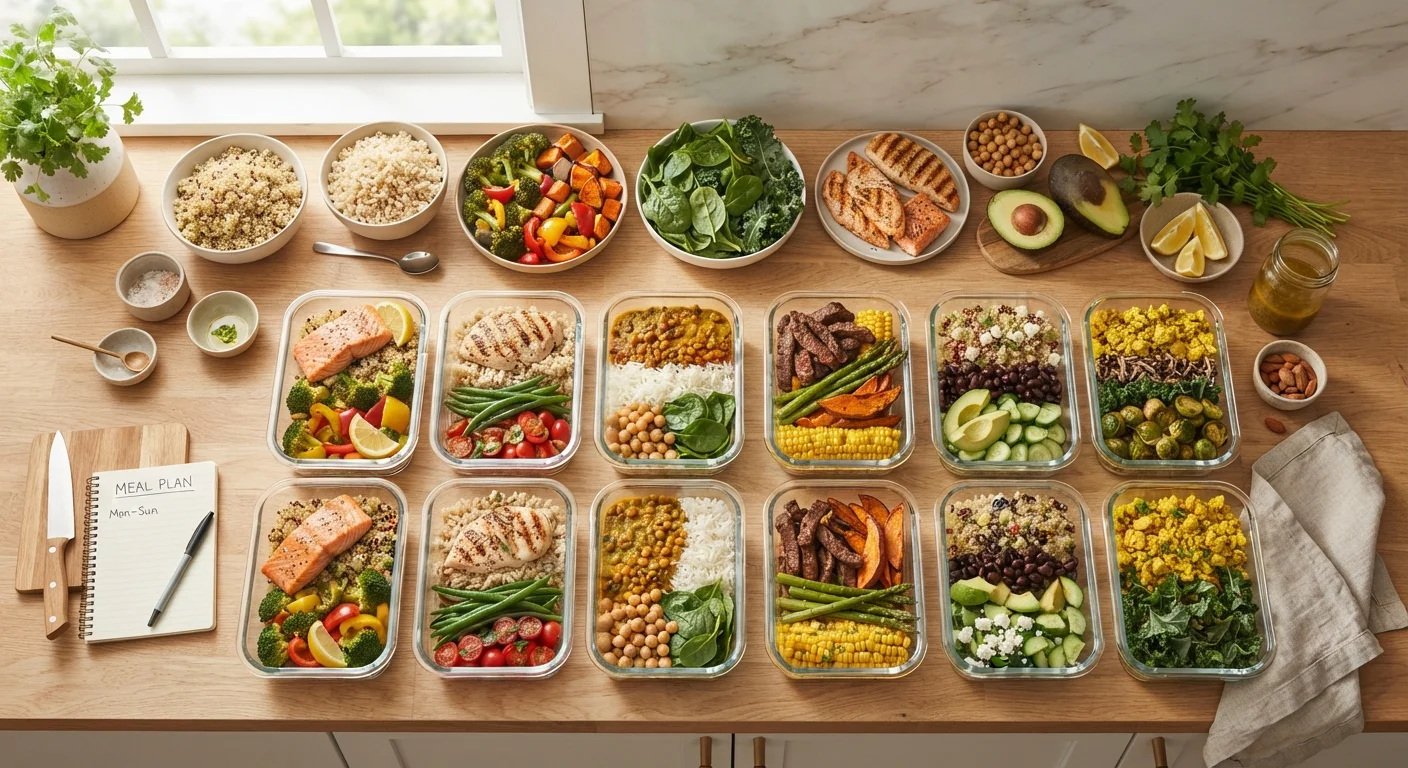
Why Most Meal Plans Fail Within Two Weeks
Most meal plans collapse not because people lack willpower, but because the plans themselves are designed for an idealized version of a week that rarely exists. Unexpected meetings, family obligations, and plain fatigue make rigid schedules unsustainable. Research in behavioral nutrition consistently points to the same culprit: an all-or-nothing mindset that treats any deviation as failure.
Sustainable meal planning works differently. It builds on behavioral principles — habit formation, environmental design, and realistic flexibility — rather than strict calorie targets or complicated prep schedules. Understanding why certain approaches work is what allows you to adapt them when life doesn't cooperate.
Meal Planning Is Not a Diet
Meal planning is a logistical and behavioral tool — it structures when and how you prepare food, but it doesn't prescribe specific diets or eliminate food groups. Any eating pattern, from omnivorous to plant-based, can be organized with a meal plan. The principles here are about the planning process itself, not a particular nutritional philosophy.
The Core Practices That Make Meal Planning Last
The following practices are grounded in nutritional science and behavioral research. None requires professional culinary skills or hours in the kitchen. What they share is a focus on systems over willpower.
Plan around a rotating core of 5–7 versatile ingredients each week.
Decision fatigue is one of the biggest barriers to consistent healthy eating. Anchoring your week to a small, flexible ingredient set reduces the mental load of daily food choices without sacrificing variety. This approach also cuts food waste and simplifies grocery shopping.
Schedule one 45-to-60-minute prep session per week rather than daily cooking.
Batch preparation removes the daily friction that causes people to reach for less nutritious convenience options when they're tired or pressed for time. A single weekly session creates a ready supply of components that can be mixed and matched throughout the week.
Build in at least two planned flexible meals per week.
Strict meal plans that leave no room for spontaneity set up an inevitable conflict between the plan and real life. Intentionally scheduling flexible slots — meals where any reasonable choice is acceptable — prevents the single unplanned restaurant dinner from feeling like a failure.
Shop from a structured list organized by store section.
Unstructured grocery shopping increases the likelihood of impulse purchases and forgetting key items, both of which undermine the week's plan. A list organized by produce, proteins, grains, and pantry staples speeds up the trip and reduces the gap between intention and execution.
Prioritize protein and fiber at each main meal.
These two nutrients have the strongest evidence for promoting satiety — the sense of fullness that keeps you from grazing between meals. Anchoring each meal around a protein source and a fiber-rich vegetable or legume creates a reliable nutritional structure without requiring calorie counting.
Review and adjust your plan at the same time each week.
Regular reflection catches recurring friction points before they become entrenched habits. A brief weekly review — what worked, what didn't, what needs to be swapped — transforms meal planning from a static document into a living system that improves over time.
If you're also working on your physical activity alongside your nutrition, the principles are strikingly similar — see our guide to building sustainable fitness habits for a complementary framework.
Quick Wins You Can Act on This Week
You don't need a complete system overhaul to start building momentum. These immediate actions are low-effort but meaningfully shift your week toward more consistent, nourishing choices.
Pairing smarter planning with smarter food choices compounds the benefit. Understanding which foods support steady energy can help you fill your meal plan with options that actually keep you functional through the day.
Building a Rhythm, Not a Rulebook
“The goal of eating well isn't perfection at any single meal — it's building a pattern that holds over months and years. Consistency, not intensity, is what shapes health outcomes.”
— Walter Willett, Professor of Epidemiology and Nutrition, Harvard T.H. Chan School of Public Health
The most effective meal planners treat their system the way experienced budgeters treat their finances — with regular, honest check-ins rather than sporadic overhauls. Just as consistent budgeters use routine over motivation, consistent eaters rely on repeatable structures, not peak enthusiasm.
A weekly nutrition self-check is one of the most underused tools in sustainable eating. Once your planning habit is in place, auditing it regularly helps you catch drift before it becomes a full backslide. Our weekly nutrition self-check guide gives you a practical checklist to assess variety, hydration, fiber, and timing across your week.
This article is for general informational and educational purposes only and is not a substitute for personalized nutrition or medical advice. Consult a registered dietitian or qualified healthcare professional for guidance tailored to your individual health needs.
The content on this site is for informational purposes only and is not a substitute for professional advice. Always consult a qualified professional for guidance specific to your situation.