

Our Verdict
Steady energy comes from meals built around fiber-rich carbohydrates, lean protein, and healthy fats — not from eliminating any single food group. Highly processed foods and sugary beverages consistently undermine blood sugar stability, while whole, minimally processed foods support it. Small, deliberate shifts in how you build meals can make a meaningful difference in how you feel each day.
| Best for | Recommended |
|---|---|
| Those who experience frequent afternoon energy slumps | Balanced meals with protein, fiber, and complex carbs |
| Those who rely heavily on sugary snacks or energy drinks | Gradual substitution with whole-food snacks and water |
| Those seeking a sustainable, science-based approach to eating | Whole-food dietary patterns (e.g., Mediterranean-style eating) |
Why Your Energy Levels Are Tied to Blood Sugar
Energy fluctuations throughout the day are rarely random. In most cases, they trace back to blood sugar — specifically, how quickly glucose enters your bloodstream after eating and how sharply it falls afterward. When blood sugar rises and drops steeply, you feel the familiar cycle: a short burst of alertness followed by fatigue, brain fog, or irritability.
The foods you eat determine the shape of that curve. Meals heavy in refined carbohydrates — white bread, sugary cereals, pastries — digest rapidly, flooding the bloodstream with glucose and triggering a large insulin response. The result is a fast rise and an equally fast crash. Meals that combine fiber, protein, and fat with carbohydrates slow that process considerably, producing a more gradual glucose rise and a steadier return to baseline.
Understanding this mechanism doesn't require memorizing glycemic index tables. It means paying attention to meal composition — what you put alongside your carbohydrates — rather than simply avoiding carbs altogether. As our myth-busting nutrition guide explains, blanket carbohydrate avoidance isn't supported by current evidence.
Foods That Fuel: What to Build Meals Around
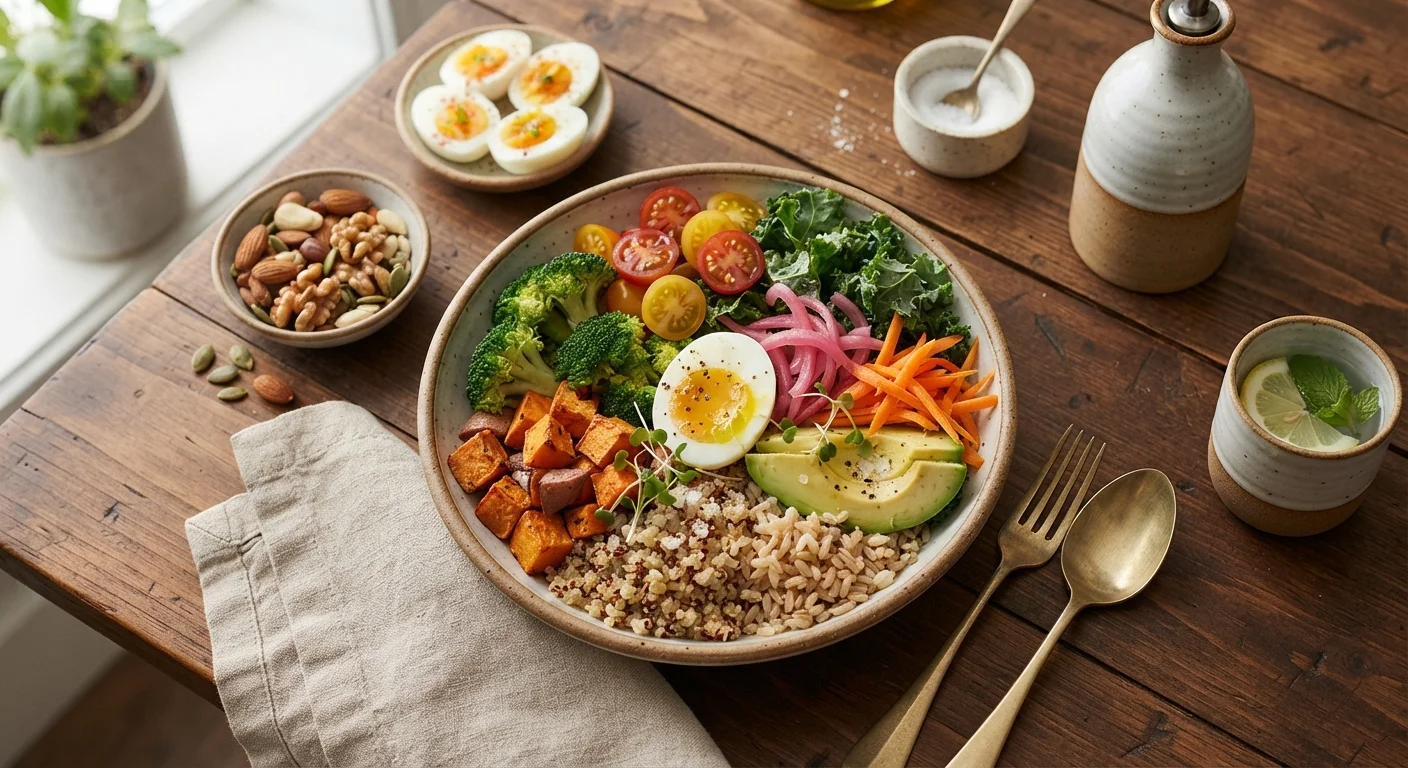
Sustained-energy foods share a few consistent characteristics: they digest more slowly, they carry nutrients your body needs to produce energy at the cellular level, and they don't cause wild swings in blood glucose.
| Sustained-Energy Foods | Energy-Crash Foods | |
|---|---|---|
| Examples | Oats, lentils, eggs, avocado, leafy greens | Soda, white bread, candy, sugary cereals |
| Digestion speed | Slow to moderate | Rapid |
| Blood sugar impact | Gradual rise and stable return | Sharp spike followed by steep drop |
| Fiber content | Moderate to high | Low to none |
| Protein content | Moderate to high (varies) | Low |
| Satiety (fullness duration) | Longer-lasting | Short-lived |
- Whole grains (oats, brown rice, quinoa, barley): The intact fiber and bran slow digestion. Oats, in particular, contain beta-glucan, a soluble fiber with well-documented effects on blood sugar moderation.
- Legumes (lentils, black beans, chickpeas): High in both protein and fiber, legumes have among the lowest glycemic responses of any carbohydrate-containing food.
- Non-starchy vegetables: Leafy greens, broccoli, cucumbers, and peppers add volume and fiber with minimal impact on blood glucose.
- Lean proteins (eggs, chicken, fish, tofu): Protein has virtually no direct effect on blood sugar and helps slow gastric emptying when eaten with carbohydrates.
- Healthy fats (avocado, olive oil, nuts, seeds): Fat further slows digestion and supports satiety without a glucose spike.
Fiber deserves special mention — most Americans consume roughly half the recommended daily amount, and increasing intake is one of the most practical changes people can make for energy stability.
Foods That Crash You: Common Culprits to Recognize
No food is inherently off-limits, but certain patterns reliably produce energy crashes. Recognizing them helps you make trade-offs with clear eyes rather than guilt.
A Simple Rule for Spotting Crash-Prone Foods
Check the nutrition label: if a food has more than 8–10 grams of added sugar per serving and fewer than 2 grams of fiber, it's likely to produce a sharper blood sugar response. Pairing that food with a protein source can help reduce the impact. See our guide to reading nutrition labels for help identifying these values quickly.
- Sugary beverages (sodas, sweetened coffees, energy drinks, fruit juices): Liquid sugar bypasses the digestive slowdown that solid food provides, delivering glucose almost immediately. The resulting spike — and crash — is sharper than most solid foods.
- Refined grain products (white bread, crackers, many breakfast cereals): Stripped of bran and germ, these digest rapidly and offer little protein or fiber to buffer the glucose response.
- Ultra-processed snack foods (chips, cookies, candy bars): Typically high in refined carbs and added sugars with minimal fiber or protein.
- Large portions of starchy foods eaten alone: Even a whole-grain food can produce a sharper glucose response when eaten in large quantities without accompanying protein or fat.
The pattern matters as much as the food type. A small piece of whole-grain bread with nut butter has a very different effect than the same bread eaten on its own in a large serving. See our guide on why skipping meals often backfires for context on how meal patterns interact with energy regulation.
Building Meals That Hold You: Practical Daily Strategies
The practical goal isn't perfection at every meal — it's building a consistent pattern where most meals include at least two of the three energy stabilizers: fiber, protein, and healthy fat.
~16g
Average daily fiber intake for U.S. adults
The Dietary Guidelines for Americans recommend 25–38g per day depending on age and sex — most adults fall significantly short.
~45–65%
Recommended carbohydrate share of daily calories
According to the Dietary Guidelines for Americans, the issue is carbohydrate quality — not total carbohydrate intake — that most influences energy stability.
- Start breakfast with protein and fiber: Eggs with vegetables, Greek yogurt with berries and seeds, or oatmeal with nuts all outperform pastries or sweetened cereals for sustained morning energy.
- Pair your carbs: If you're eating rice, bread, or pasta, include a meaningful protein source and some vegetables in the same meal. This simple habit lowers the overall glycemic response of the meal.
- Choose snacks with structure: An apple with almond butter, hummus with vegetables, or a hard-boiled egg with whole-grain crackers will sustain you longer than pretzels or a granola bar.
- Watch liquid calories: Swap sweetened beverages for water, sparkling water, or unsweetened tea, especially in the afternoon when energy dips are most common.
Building these habits is easier with a structured approach to your week. Our guide on sustainable meal planning covers how to make these patterns stick long-term without overhauling your entire routine at once.
When reading packaged foods, knowing how to interpret labels helps enormously — the nutrition label explainer walks you through identifying added sugars, fiber content, and protein per serving.
This article is for general informational and educational purposes only and is not a substitute for personalized medical or dietary advice. Consult a qualified healthcare professional or registered dietitian before making significant changes to your diet, especially if you have a health condition such as diabetes or a metabolic disorder.
The content on this site is for informational purposes only and is not a substitute for professional advice. Always consult a qualified professional for guidance specific to your situation.