

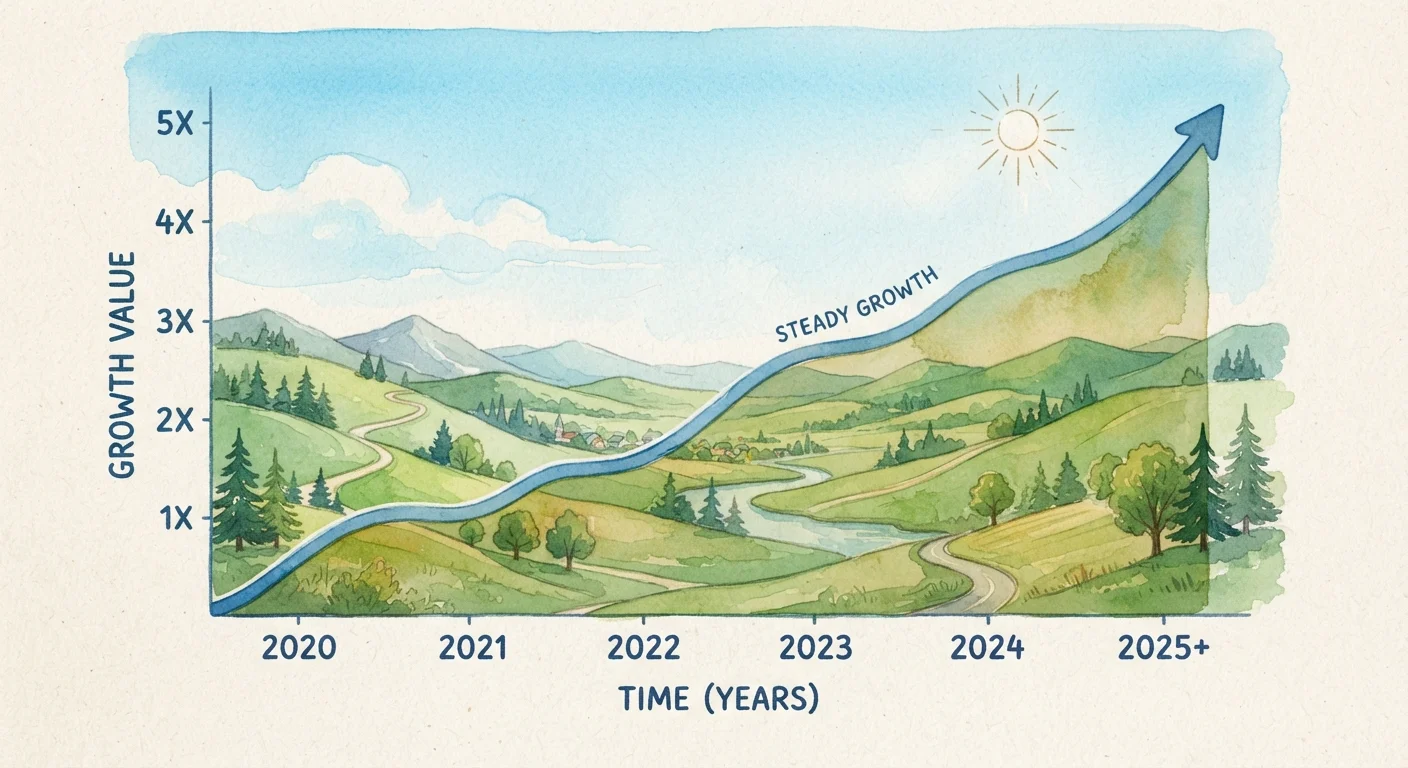
Why Certain Investing Principles Endure
Markets fluctuate, economic cycles turn, and financial headlines shift constantly. Yet certain investing behaviors have shown resilience across decades of varying conditions. The principles outlined here are not predictions or guarantees — they are patterns supported by broad financial research and the observable outcomes of long-term investors over time.
If you are newer to investing, the foundational concepts for everyday investors article offers useful context before diving into these principles. And if you have encountered claims that contradict what you read here, it is worth checking them against common investing myths that frequently mislead new savers.
This Is General Education, Not Personal Advice
The principles discussed here reflect broadly recognized concepts in personal finance and investing. They are intended as general educational information, not as personalized financial, investment, or tax advice. Every individual's financial situation differs. Consult a licensed financial adviser before making decisions about your own investments or retirement strategy.
Core Practices for Long-Term Investors
The following practices reflect widely recognized approaches that financial educators and researchers associate with better long-term outcomes. They are not shortcuts — they are habits. Applied consistently, they tend to reduce costly mistakes and keep portfolios aligned with long-term goals.
Diversify across asset classes, sectors, and geographies.
Concentrating money in a single stock, sector, or country exposes investors to outsized risk. When one area of the market drops sharply, a diversified portfolio may absorb the blow with far less damage. Broad diversification does not eliminate risk, but it reduces the likelihood that any single event wipes out a large portion of accumulated savings.
Minimize investment costs wherever possible.
Fees compound just as returns do — in reverse. Even a difference of 0.5% annually in fund expenses can reduce a portfolio's end value meaningfully over a 30-year horizon. Expense ratios, transaction fees, and advisory costs all subtract from net returns before an investor sees a dollar.
Stay invested through market downturns rather than moving to cash.
Market declines feel alarming, but selling during a downturn locks in losses and risks missing the recovery. Historically, markets have recovered from even severe corrections over time, though past performance does not guarantee future results. Investors who exit and re-enter frequently tend to buy high and sell low — the opposite of sound strategy.
Contribute regularly and automatically, regardless of market conditions.
Consistent contributions take advantage of dollar-cost averaging — buying more shares when prices are low and fewer when prices are high. This disciplined approach to investing removes the pressure to time the market and instills a reliable savings habit.
Give investments time to grow through the power of compounding.
Compounding — earning returns on previous returns — accelerates wealth building the longer money remains invested. Starting earlier, even with smaller amounts, generally produces better long-term outcomes than starting later with larger contributions. Understanding how compound interest works clarifies why time in the market is so frequently emphasized.
Review and rebalance your portfolio periodically, not reactively.
Over time, strong performers grow to occupy a larger share of a portfolio than originally intended, increasing concentration risk. Periodic rebalancing — trimming overweight positions and adding to underweight ones — restores the intended asset allocation. Rebalancing should be driven by a planned schedule or drift thresholds, not by market headlines.
“The stock market is a device for transferring money from the impatient to the patient.”
— Warren Buffett, Investor and Chairman of Berkshire Hathaway
What You Can Do Starting Today
Abstract principles become meaningful only when they translate into specific actions. The steps below are designed to be completed within a single sitting — each one moves you closer to applying these principles in your own accounts.
1%
Annual fee difference that erodes long-term returns
Research from investment analysts has consistently shown that a 1% annual fee difference can reduce a portfolio's ending value by tens of thousands of dollars over a 30-year period, depending on account size.
10 years
Extra compounding time gained by starting at 25 vs. 35
Financial education resources widely illustrate that beginning contributions a decade earlier — even at modest amounts — can meaningfully outperform larger contributions started later, due to compounding's time-sensitive nature.
Small, consistent steps — like reviewing fees or automating contributions — tend to have outsized effects over long time horizons. That is the nature of compounding: early actions carry the most weight. For a deeper look at how that mechanism works, see our overview of compound interest and long-term wealth building.
Build Your Investing Foundation First
Before applying these principles, make sure you have a working budget and a short-term emergency fund in place. Investing without a financial floor can force you to sell at the worst time. See budgeting basics for practical frameworks that help set that foundation.
This article is for general informational and educational purposes only and does not constitute personalized financial, investment, tax, or legal advice. Individual circumstances vary significantly. Please consult a qualified, licensed financial professional before making decisions specific to your situation.
The content on this site is for informational purposes only and is not a substitute for professional advice. Always consult a qualified professional for guidance specific to your situation.