

How Compound Interest Actually Works
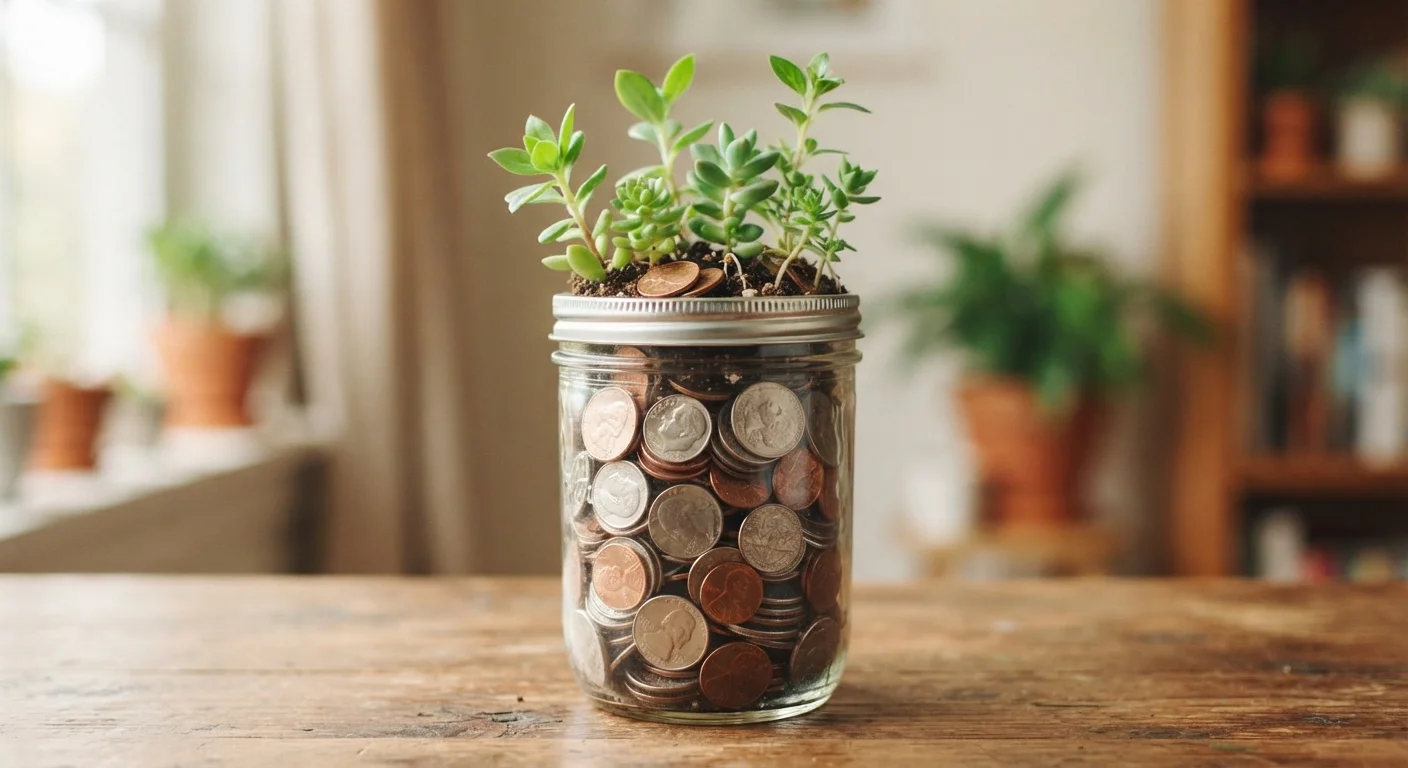
Think of compound interest as a snowball rolling downhill. It starts small, but as it picks up more snow — which itself picks up more snow — it grows at an accelerating rate. The same logic applies to money.
Here's a simplified illustration: suppose you deposit $1,000 in a savings account earning 5% interest per year, compounded annually. After year one, you have $1,050. In year two, the 5% is applied to $1,050 — not the original $1,000 — giving you $1,102.50. By year ten, that $1,000 has grown to roughly $1,629 without a single additional deposit.
The formula behind this is: A = P(1 + r/n)nt, where P is the principal, r is the annual interest rate, n is compounding frequency per year, and t is time in years. You don't need to memorize the formula — the principle is what matters: returns generate returns.
72
Years to double money — Rule of 72
Divide 72 by your annual interest rate to estimate doubling time; at 6% annual growth, money doubles roughly every 12 years, illustrating compounding's long-run power.
~$1,629
Growth of $1,000 at 5% over 10 years
A single $1,000 deposit compounding annually at 5% grows to approximately $1,629 after 10 years — with no additional contributions required.
10 years
Early start advantage window
Financial educators frequently note that contributing for 10 years in your 20s can produce outcomes comparable to contributing for 30 years starting in your 30s, due to compounding's time sensitivity.
Why Time Is the Most Critical Variable
Of all the factors involved in compounding — rate, frequency, principal — time carries the most weight. Starting early gives interest more cycles to build on itself. Delaying by even a few years can meaningfully reduce your ending balance, even if you contribute more money later to compensate.
Consider two hypothetical savers. The first begins contributing $200 per month at age 25 and stops at 35 — contributing for just 10 years. The second starts at 35 and contributes the same amount every month until age 65 — contributing for 30 years. Assuming similar average annual returns, the early starter often ends up with a comparable or larger balance despite contributing far less total money. That's the compounding time advantage at work.
This is why financial educators consistently emphasize that time in the market tends to matter more than timing the market. See our guide on common investing myths for more on that distinction.
Start Before You Feel Ready
Many people wait until they have a larger sum before beginning to save or invest. In reality, starting with a small, consistent amount almost always outperforms waiting for the 'right moment.' The compounding clock starts the day you make your first contribution — not when your balance feels significant.
Compounding Works Against You With Debt
Compound interest is not always on your side. When you carry high-interest debt — particularly revolving credit card balances — compounding works in the lender's favor. Interest accrues on your unpaid balance, and if you only make minimum payments, a portion of each payment goes toward interest rather than principal, meaning your balance shrinks slowly while interest keeps accumulating.
This is why managing and reducing debt is closely tied to building long-term financial health. The same mechanism that grows savings can quietly erode progress when it's attached to a high-rate liability.
Not All Compounding Rates Are Equal
The stated annual interest rate on a debt or savings product doesn't tell the full story. The Annual Percentage Yield (APY) accounts for compounding frequency and gives a more accurate picture of what you'll actually earn or owe. When comparing financial products, APY is the more useful number — though remember that terms, eligibility, and actual outcomes vary by institution and individual circumstances.
Putting Compound Interest to Work in Practice
Understanding the concept is one thing; applying it is another. A few foundational habits help you harness compounding effectively:
- Start early and stay consistent. Even small, regular contributions add up significantly over decades. See our guide for new investors for a practical starting point.
- Reinvest earnings. In investment accounts, returns that are reinvested rather than withdrawn become part of the compounding base. Dividends or interest distributions that go back into the account accelerate growth.
- Pair compounding with disciplined contributions. A strategy like dollar-cost averaging — investing a fixed amount at regular intervals — complements compounding by consistently enlarging the principal base.
- Minimize unnecessary fees and taxes. Costs reduce the principal on which interest compounds. Tax-advantaged accounts, like 401(k)s and IRAs, allow compounding to continue uninterrupted by annual tax obligations on gains.
For a broader view of how savings habits interact with investment returns, this comparison of savings rate vs. investment returns explores which factor tends to have the bigger impact in different life stages.
This article is for general informational and educational purposes only and does not constitute personalized financial or investment advice. Consult a licensed financial adviser for guidance tailored to your specific situation.
Frequently Asked Questions
Simple interest is calculated only on the original principal. Compound interest is calculated on the principal plus all previously earned interest, so your balance grows at an accelerating pace rather than a steady, flat rate.
It varies by institution and account type. Many savings accounts compound interest daily or monthly. The more frequently interest compounds, the faster your balance grows, assuming the same annual rate.
Yes. Credit cards, student loans, and other debts often compound interest against you. Carrying a balance means you owe interest on previously unpaid interest, which can significantly inflate total repayment costs over time.
The Rule of 72 is a mental shortcut: divide 72 by your annual interest rate to estimate how many years it takes for money to double. For example, at a 6% annual rate, money roughly doubles every 12 years. It illustrates the long-term power of compounding in a memorable way.
No. Even modest, regular contributions benefit from compounding. What matters most is starting as early as possible and staying consistent — the amount can grow over time as your financial situation improves.
No. Savings accounts and CDs with fixed rates provide predictable compounding, but investment returns vary and are not guaranteed. Markets can decline, meaning compounding in investments depends on actual performance over time. This is general information, not financial advice — consult a licensed financial adviser for decisions specific to your situation.
The content on this site is for informational purposes only and is not a substitute for professional advice. Always consult a qualified professional for guidance specific to your situation.