

Why the Scale Doesn't Tell the Whole Story
When owners think about their dog's weight, the number on the scale is often the first thing that comes to mind. But that single figure can be misleading. A muscular 70-pound Boxer and a flabby 70-pound Labrador are in very different health situations, even though they weigh the same.
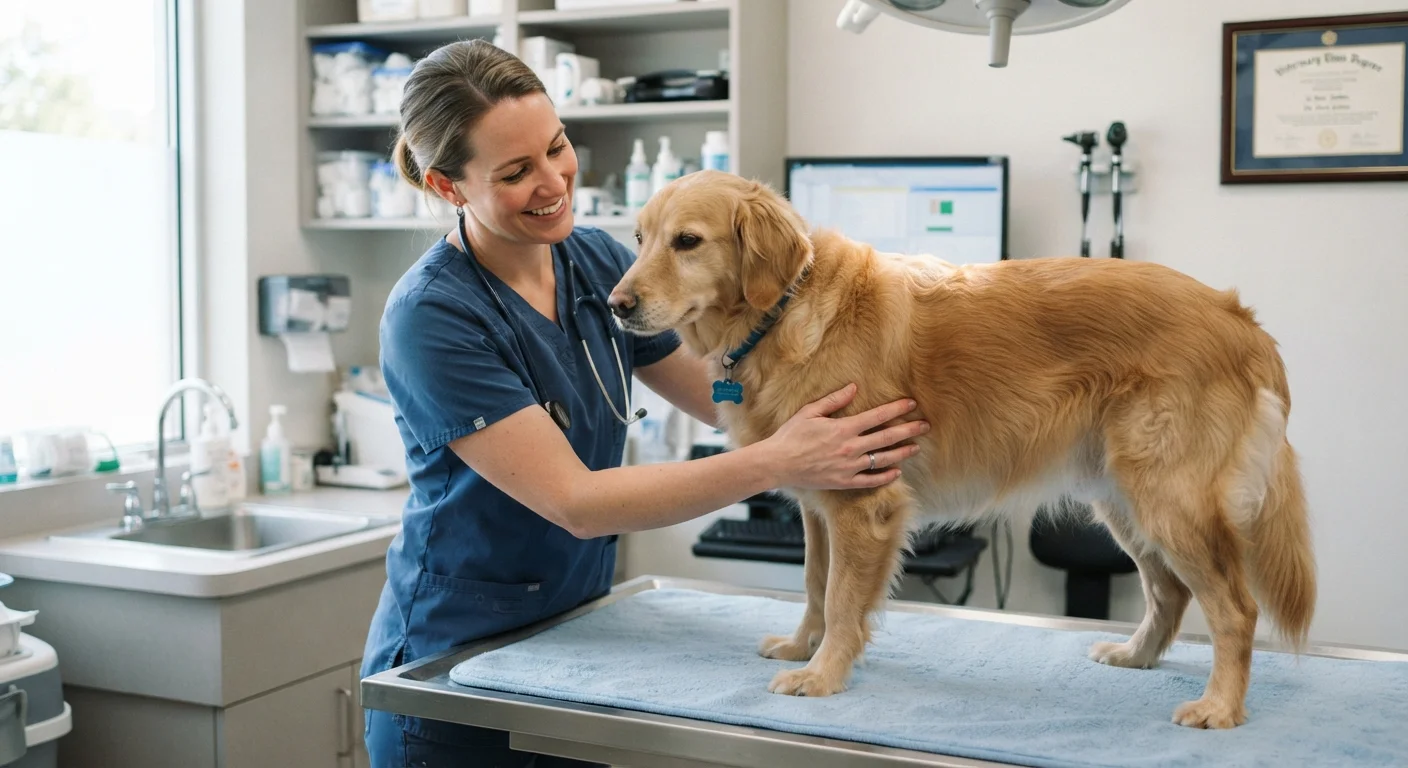
This is why veterinarians rely on body condition scoring (BCS) — a standardized, hands-on evaluation that assesses fat coverage and muscle mass relative to a dog's frame. It's a breed-neutral tool that gives a much clearer picture of whether a dog is carrying too little, too much, or just the right amount of body fat.
Understanding BCS empowers you to make more informed decisions between vet visits — and to recognize early signs that a dog's weight may be drifting in the wrong direction. For more on interpreting what your dog's physical state tells you, see our guide to signs your dog may be in pain.
How to Assess Body Condition at Home
You don't need a clinical scale to perform a basic body condition check. Vets teach a simple three-part assessment that any owner can practice:
- Rib check: Place both thumbs on your dog's spine and spread your fingers along the ribcage. You should feel individual ribs with light pressure — similar to feeling the back of your hand. If you have to press firmly to find them, there's likely excess fat coverage.
- Waist check (top view): Look down at your dog from above. A healthy dog should have a visible narrowing behind the ribs — an hourglass shape. A dog that looks rectangular or oval-shaped from above may be overweight.
- Abdominal tuck (side view): Look at your dog from the side. The belly should rise upward from the chest to the hindquarters. A dog whose belly hangs level or sags downward is likely carrying excess weight.
These checks work best as consistent habits — not one-time assessments. Document what you observe every few weeks so you can notice gradual changes that might otherwise go undetected.
Make It a Routine, Not a Reaction
The most useful time to practice a body condition check is during a calm moment — after a walk or during grooming. Doing it consistently, roughly every two to four weeks, helps you detect gradual changes that are easy to miss day-to-day. Keep brief notes or take photos from the same angles over time for easy comparison.
What Over- and Under-Feeding Actually Look Like
Weight problems don't always announce themselves dramatically. Both overfeeding and underfeeding can be gradual, subtle processes.
Signs of excess weight may include difficulty feeling the ribs, loss of the waist tuck, reluctance to exercise, labored breathing on short walks, and a rounded or pendulous belly. On the BCS scale, a score of 6 or higher signals a conversation with your vet is warranted.
Overweight dogs face measurable health risks: joint deterioration, insulin resistance, increased surgical risk, and reduced life expectancy. Research in veterinary medicine consistently links even moderate obesity to shorter lifespans in dogs.
Signs of insufficient weight include visibly prominent ribs, spine, and hip bones without needing to press; loss of muscle mass over the hindquarters; a dull or thinning coat; and low energy. Underweight dogs (BCS 3 or below) may be underfed, but the cause can also be parasites, dental pain, digestive disease, or other conditions requiring diagnosis.
What a dog eats matters as much as how much. Understanding how ingredients affect nutrition can help you evaluate whether a dog's diet is meeting its needs — see our breakdown of common dog food ingredients for a closer look.
~56%
U.S. dogs estimated overweight or obese
According to the Association for Pet Obesity Prevention's annual survey, more than half of American dogs are classified as overweight or obese by their veterinarians.
1.8 years
Estimated lifespan reduction from obesity
Research published in veterinary journals suggests that dogs maintained at an ideal body weight live approximately 1.8 years longer than their overweight counterparts on average.
9-point
Standard BCS scale used by most vets
The 9-point Body Condition Score scale, with 4–5 as ideal, is the most widely used clinical tool for assessing canine weight in North American veterinary practice.
Breed, Age, and Life Stage Matter
There is no universal number that defines a healthy dog weight. A 5-pound Chihuahua and a 150-pound Great Dane both need individualized assessment. Breed standards offer general ranges, but body composition — the ratio of muscle to fat — matters more than total pounds.
Life stage is equally important. Puppies gain weight rapidly and their nutritional needs shift frequently. Senior dogs often lose muscle mass (a condition called sarcopenia) even as fat accumulates, meaning a stable scale weight can mask a declining body condition. Pregnant or nursing dogs have specific caloric needs that differ substantially from baseline adult requirements.
Spayed and neutered dogs also have a documented tendency toward weight gain due to hormonal changes affecting metabolism. If your dog has been recently altered, this is an important topic to raise at your next vet appointment.
To learn how to read other physical signals your dog sends, our guide to reading your dog's body language offers a practical overview of posture, ear position, and movement cues.
Healthy Weight Looks Different in Every Dog
Sighthound breeds such as Greyhounds and Whippets naturally show more visible ribcage definition than other breeds — this is normal anatomy, not a sign of underfeeding. Conversely, some heavily muscled breeds like Rottweilers or Amstaffs may appear stocky even at an ideal BCS. When in doubt, your vet is the right resource for breed-specific benchmarks.
This article is for general informational purposes only and is not a substitute for professional veterinary advice. If you have concerns about your dog's weight or health, consult a licensed veterinarian.
Frequently Asked Questions
Run your hands along your dog's ribcage — you should feel individual ribs without pressing hard, but they shouldn't be visually obvious. When viewed from above, most healthy dogs show a visible waist tuck. If the ribs are buried under a firm fat layer or the waist has disappeared, speak with your veterinarian.
On the standard 9-point scale, a score of 4 or 5 is considered ideal. A score of 6–7 indicates overweight, 8–9 obese, and 1–3 underweight. Your vet can score your dog during any routine exam.
Yes, significantly. Breed standards and body type (lean sighthounds vs. muscular working breeds) affect what's ideal. A Greyhound with visible ribs may be perfectly healthy; the same presentation in a Labrador Retriever would be a concern. Always discuss targets with a vet familiar with your dog's breed.
Absolutely. Underweight dogs may suffer from muscle wasting, weakened immunity, poor coat condition, and underlying illness. Both extremes warrant veterinary evaluation to identify the cause — whether dietary, behavioral, or medical.
Most vets recommend at least annual weight checks for healthy adult dogs, and more frequently for puppies, seniors, or dogs managing a chronic condition. Many veterinary clinics allow free weight checks between appointments.
The content on this site is for informational purposes only and is not a substitute for professional advice. Always consult a qualified professional for guidance specific to your situation.