

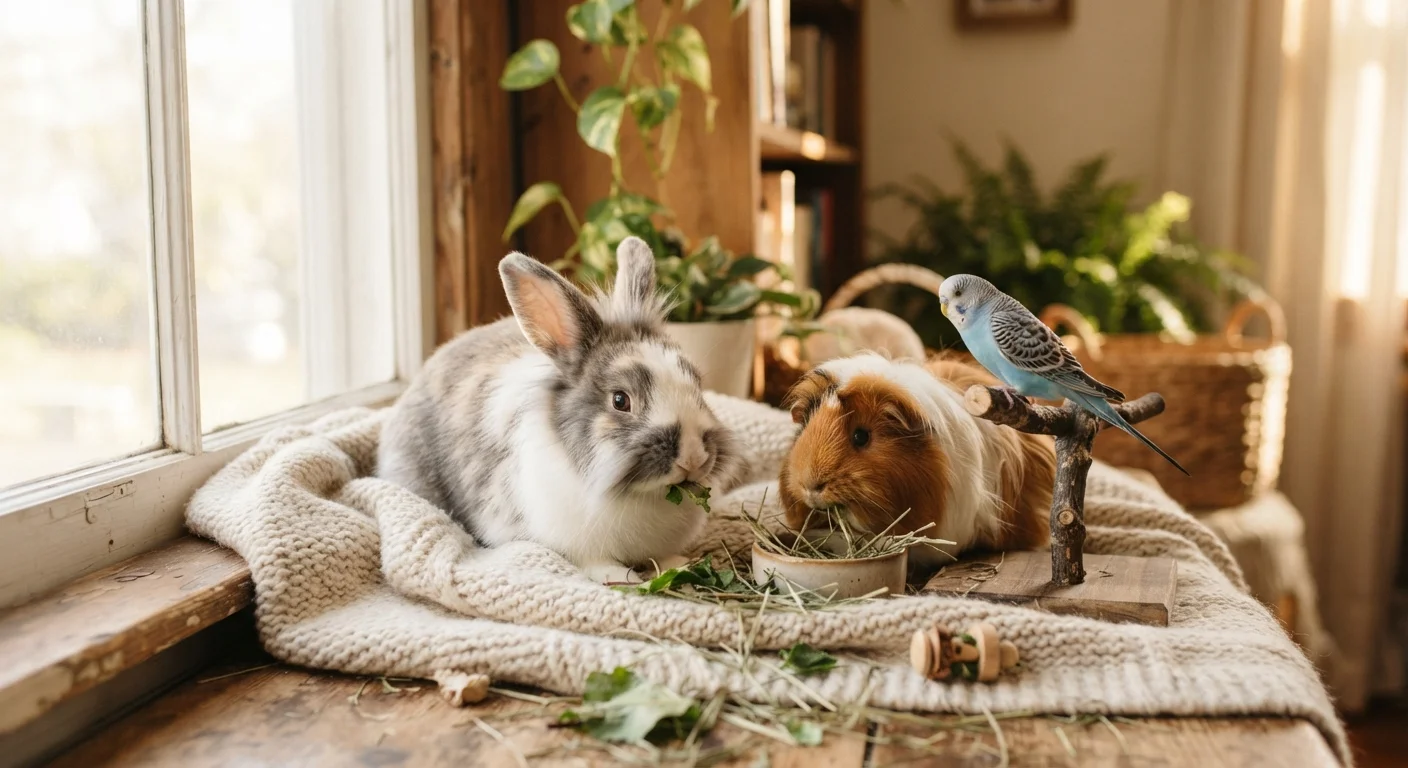
Why Small Pets Need a Different Wellness Framework
Rabbits, guinea pigs, and companion birds are often called pocket pets or exotic small animals, and that label matters medically. Their physiology, nutritional requirements, and disease patterns differ substantially from dogs and cats — yet they're frequently underserved by standard veterinary advice written for those species. If you already follow a protocol for your dog or cat, read our guide to preventive veterinary care to understand what translates — and what doesn't — before applying it to a small pet.
The challenges are real. Small animals instinctively mask illness as a survival behavior, meaning owners rarely notice a problem until it has advanced. A rabbit that stops eating for even 12 hours can develop life-threatening gastrointestinal stasis. A bird that looks slightly fluffed and quiet may already be seriously sick. Building a wellness routine around these realities — rather than waiting for obvious symptoms — is the foundation of responsible small-pet ownership.
Exotic Vets Are Not Universal
Not every veterinary clinic is equipped or trained to treat rabbits, guinea pigs, or birds. In some rural or suburban areas, the nearest exotic-animal specialist may require travel. It's worth identifying and establishing a relationship with a qualified provider before an urgent situation arises. Telehealth consultations with exotic-animal vets are increasingly available and can be a useful supplement for non-emergency questions.
Core Wellness Essentials for Rabbits, Guinea Pigs, and Birds
Find a Veterinarian Who Specializes in Exotic Animals
General practitioners are trained primarily in canine and feline medicine. Rabbits, guinea pigs, and birds require a vet with specific training in exotic or avian species. Look for veterinarians who list small mammals or avian patients as a focus area, and ideally those affiliated with the Association of Exotic Mammal Veterinarians (AEMV) or the Association of Avian Veterinarians (AAV). Schedule a wellness exam within the first few weeks of bringing any small pet home — this baseline visit is essential for detecting congenital issues and establishing normal parameters for your individual animal. Aim for exams every six to twelve months thereafter.
Finding the right vet before an emergency is the single most important step in small-pet ownership.
Prioritize Species-Appropriate Nutrition Above All Else
Diet drives more health outcomes in small pets than almost any other factor. For rabbits, unlimited timothy hay should make up at least 80% of the diet; pellets and vegetables are supplemental. For guinea pigs, vitamin C is critical — unlike most mammals, they cannot synthesize it internally, and deficiency leads to scurvy. Fresh bell peppers and leafy greens are reliable dietary sources. Seed-heavy diets are a common and serious mistake for companion birds like parakeets and cockatiels; a nutritionally complete pellet base supplemented with fresh produce is generally recommended by avian veterinarians. Consult your exotic vet about species- and age-specific feeding guidelines rather than relying on generic pet store packaging.
Guinea pigs cannot produce their own vitamin C — dietary deficiency leads directly to scurvy.
Learn to Recognize Subtle Signs of Illness
Because prey animals hide weakness instinctively, waiting for obvious symptoms often means waiting too long. For rabbits and guinea pigs, watch for changes in fecal output, reduced appetite, hunched posture, tooth grinding, or unusual lethargy. For birds, early warning signs include fluffed feathers at non-sleep times, tail bobbing (which can indicate respiratory effort), changes in droppings, or decreased vocalization. Weighing small mammals weekly on a digital kitchen scale is a practical monitoring tool — a consistent weight loss of even a few grams can signal a developing problem that warrants a vet call. Document baselines when your pet is healthy so deviations are easier to identify.
Weekly weigh-ins on a kitchen scale can catch gradual weight loss before it becomes a crisis.
Create a Safe, Enriching, and Stress-Minimal Environment
Environmental stress directly suppresses immune function in small animals. Rabbits and guinea pigs need space to move freely — hutches designed for transport are not suitable as permanent housing. Temperature regulation matters: rabbits are sensitive to heat above roughly 80°F, and birds require draft-free, stable temperatures appropriate to their species. Guinea pigs are highly social and generally do better in bonded pairs. Birds need daily mental stimulation, safe foraging opportunities, and regular out-of-cage time. Exposure to household toxins is also a serious concern: non-stick cookware fumes (polytetrafluoroethylene, or PTFE) are acutely lethal to birds and should never be used in homes where avian pets live. How environment shapes preventive care needs applies to small pets too, particularly for those with any outdoor exposure.
Non-stick cookware fumes are acutely lethal to birds and must be eliminated from bird-owning households.
Understand Pet Insurance Options for Exotic Animals
Pet insurance for exotic small animals does exist, though it is less standardized than coverage for dogs and cats. Some insurers offer plans that include rabbits, guinea pigs, ferrets, and birds; others exclude them or offer only accident coverage. Because exotic veterinary care can be costly — imaging, dental procedures, and surgeries for small mammals carry significant expense — understanding your financial options in advance is worthwhile. Review any policy carefully: look at exclusions for species-specific conditions (such as dental disease in rabbits, which is common and expensive), annual limits, and whether the plan covers exotic-specialist consultations. This is general educational information; consult a licensed insurance professional for advice tailored to your situation. For broader context on how new pet owners can approach the first year of health planning, see our new pet health and wellness roadmap.
Exotic pet insurance policies vary widely — review exclusions for species-specific conditions before enrolling.
Track Health Baselines Early
When you first bring a small pet home, document their healthy weight, normal droppings, eating habits, and activity level. Photographs of normal feather condition or coat quality provide useful reference points. These records help both you and your veterinarian identify changes quickly — especially important for animals that instinctively mask illness.
Putting It All Together
Caring for a small pet well means building consistent habits rather than reacting to crises. Establishing a relationship with a qualified exotic-animal veterinarian before an emergency occurs is arguably the single highest-impact step any small-pet owner can take. For those managing costs, wellness strategies on a limited budget can help prioritize the most essential care even when resources are tight.
If you share your home with both small pets and cats or dogs, keep in mind that wellness protocols don't transfer between species — see the cat owner's annual wellness checklist as an example of how species-specific those frameworks must be. Your small animal deserves that same level of tailored, intentional attention.
This article provides general educational information about small pet care and is not a substitute for personalized veterinary advice. Always consult a licensed veterinarian — ideally one with exotic or small-mammal/avian experience — for guidance specific to your pet's health.
The content on this site is for informational purposes only and is not a substitute for professional advice. Always consult a qualified professional for guidance specific to your situation.