

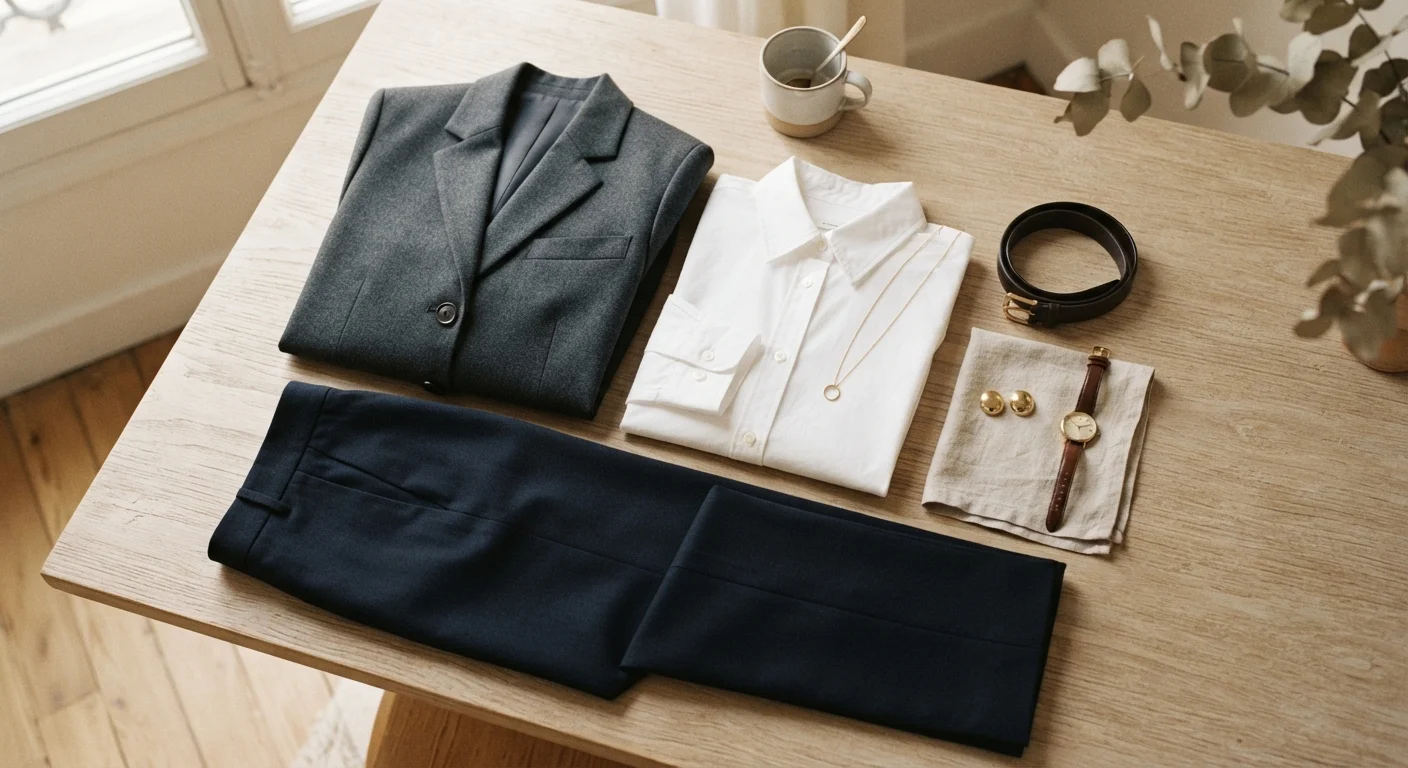
Why You Probably Have More to Work With Than You Think
The instinct to panic-buy new clothes before an interview is understandable, but it's rarely necessary — and often counterproductive. Clothes purchased the day before an interview haven't been worn in, may not fit as well as they appeared in the store, and can make you feel like you're wearing a costume rather than an outfit.
The more useful starting point is a systematic look at what you already own. Most wardrobes contain at least a handful of pieces that, properly combined and prepared, project genuine professionalism. The problem is usually one of organization and confidence, not inventory. For a deeper dive into making the most of your existing wardrobe, see outfits you already own but haven't tried.
What you will need
If you genuinely have nothing suitable after an honest audit, community organizations — including Dress for Success chapters and local nonprofit career centers — often provide professional attire at no cost to job seekers. Thrift stores are also a practical option for acquiring a single blazer or pair of trousers at low expense.
Iron or garment steamer
Removes wrinkles and creases that make even quality clothes look unprofessional.
Lint roller
Quickly removes pet hair, dust, and lint from dark fabrics before the interview.
Full-length mirror
Allows you to evaluate the complete outfit — proportion, fit, and overall impression — before leaving home.
Fabric shaver (defuzzer)
Removes pilling from knit or wool pieces to restore a cleaner, newer appearance.
Step-by-Step: Putting the Look Together
Research the company's dress culture
Before opening your closet, spend five minutes reviewing the company's website, LinkedIn page, or any social media profiles that show employees in a workplace setting. A law firm expects a different standard than a design studio or tech startup. Knowing whether the environment leans formal, business casual, or casual-creative tells you exactly how polished your outfit needs to be — and saves you from over- or under-dressing.
Audit your closet for viable pieces
Pull out every item that could read as professional and lay them on your bed. You're looking for: solid or subtly patterned tops and button-downs, trousers or dark jeans without distressing, skirts at or below the knee, blazers or structured cardigans, clean leather or canvas shoes with closed toes. Do not pre-reject anything — evaluate each piece after you can see the full inventory.
Build the outfit around one strong anchor piece
Choose one item that feels the most professional — a blazer, a well-cut trouser, a structured dress — and build everything else around it. This anchor piece sets the formality level for the whole outfit. Pair it with the simplest, most neutral options from your remaining candidates. Avoid competing focal points: if your blazer is textured or patterned, keep the rest of the outfit solid and understated.
Assess fit and condition — and fix what you can
Fit matters more than brand or price. A well-fitting, inexpensive outfit will always outperform an ill-fitting expensive one. Check for: shoulders that sit at the actual shoulder seam, trousers that fall cleanly without pooling, shirts that don't pull across the chest or back. If something is slightly too long, a tailor can hem trousers or a skirt same-day at many dry cleaners for a modest cost. Also check for missing buttons, loose seams, or pilling — address all of these before the interview.
Clean, press, and prepare the outfit the night before
Wash or spot-clean any items that need it, and allow full drying time. Iron or steam every piece — even fabrics that don't wrinkle badly benefit from a quick press. Use a lint roller on dark fabrics. Hang the complete outfit, including shoes and any accessories, so there's nothing to locate in the morning. Polished presentation is largely about preparation, not wardrobe size.
Address grooming with the same seriousness as clothing
Clean, tidy hair, trimmed nails, and fresh breath are non-negotiable regardless of what you wear. Hiring managers notice grooming — visibly unwashed hair or unkempt nails undercut even a well-assembled outfit. You don't need an elaborate routine: a shower, styled or neatly pulled-back hair, and clean hands and nails cover the fundamentals. For additional grooming guidance, the Grooming & Care hub covers hair, nail, and body care essentials in detail.
Dress Rehearsal Prevents Morning Surprises
Try the complete outfit — including shoes and any accessories — the evening before your interview. Sit down, move around, and check the mirror from multiple angles. This is your chance to catch fit issues, missing buttons, or uncomfortable shoes before it's too late to fix them.
Once your outfit is assembled and pressed, do a full dress rehearsal the evening before — shoes included. Walk around, sit down, check your range of motion. An outfit that looks right on a hanger sometimes reveals fit issues only when worn. Catching problems the night before gives you time to pivot. For reusable outfit strategies well beyond the interview, outfit formulas that solve daily dressing offers reliable combinations for any occasion.
What to Do If You Still Feel Underprepared
If your wardrobe audit leaves you short, prioritize one strategic purchase: a neutral blazer in black, navy, or charcoal. It elevates nearly any outfit beneath it and will continue earning its place in your wardrobe long after the interview. Thrift stores frequently carry quality blazers at a fraction of retail prices — look for natural fiber blends (wool, cotton) which drape and press better than synthetics.
For footwear, clean and polished matters more than formal. Scuffed leather shoes leave a worse impression than clean canvas sneakers. Use a shoe brush or damp cloth to clean the uppers and a dry cloth to buff any leather — the difference is significant. Your beauty basics routine on the morning of the interview — moisturizer, a simple skincare step, and minimal but intentional grooming — rounds out the overall impression you make walking into the room.
Condition Beats Cost Every Time
A $20 thrifted blazer that fits well and is freshly pressed will always outperform a $200 jacket that's wrinkled, pills, or fits poorly. Interviewers are reading overall presentation — cleanliness, fit, and grooming signal effort and self-awareness in ways that price tags simply do not.
Avoid Strong Fragrances Before Interviews
Heavy perfume or cologne can be distracting or uncomfortable for interviewers, particularly in small rooms. If you wear fragrance, apply it lightly — one or two sprays — and give it time to settle before leaving home. When uncertain, skip it entirely; clean clothing and fresh grooming are enough.
The content on this site is for informational purposes only and is not a substitute for professional advice. Always consult a qualified professional for guidance specific to your situation.