

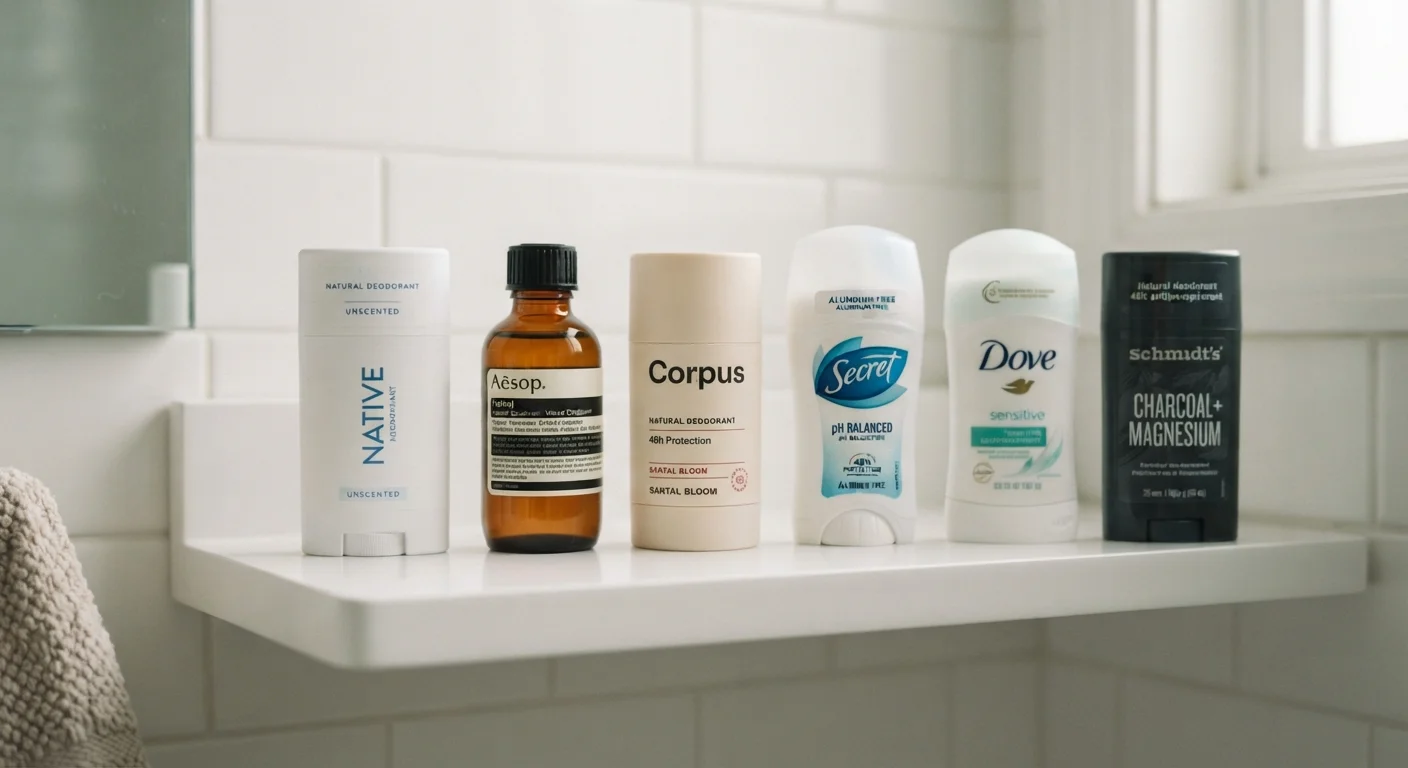
Deodorant vs. Antiperspirant: The Regulatory Difference
These two terms are often used interchangeably, but they describe products with fundamentally different functions — and different regulatory classifications. In the United States, the FDA classifies antiperspirants as over-the-counter (OTC) drugs because they alter a body function: they reduce sweating. Deodorants, by contrast, are classified as cosmetics — they mask or neutralize odor but do not affect how much you sweat.
This distinction matters practically. Antiperspirant labels are required to list active ingredients, carry drug facts panels, and meet specific efficacy standards. Deodorant-only products follow cosmetic labeling rules, which are less prescriptive. When you see both words on one package — "antiperspirant deodorant" — the product is regulated as a drug and carries both the active ingredient disclosure and the drug facts format.
| Regulatory category: antiperspirant | OTC drug (FDA-regulated) (U.S. Food and Drug Administration) |
| Regulatory category: deodorant | Cosmetic (FDA-regulated) (U.S. Food and Drug Administration) |
| Active ingredient requirement | Required on all antiperspirant labels (FDA OTC monograph system) |
| "Hypoallergenic" — legally defined? | No — not defined by FDA for cosmetics or OTC drugs (FDA consumer guidance) |
| "Clinical strength" — legally defined? | No — manufacturer-defined marketing term (FDA OTC monograph system) |
| Inactive ingredient list order | Descending concentration, then any order below 1% (FDA cosmetic labeling regulations) |
Decoding Common Label Claims
Once you understand the deodorant-vs-antiperspirant divide, the rest of the label becomes easier to parse. Here are the terms that appear most often:
- Aluminum-based active ingredients (e.g., aluminum chlorohydrate, aluminum zirconium): These are the compounds responsible for reducing sweat in any antiperspirant. They work by temporarily forming a gel-like plug in sweat ducts. If a product lists one of these as an active ingredient, it is an antiperspirant.
- Aluminum-free: This phrase typically means the product contains no aluminum-based compounds and therefore functions only as a deodorant. It will not meaningfully reduce sweat volume.
- Clinical strength: This is a marketing descriptor for antiperspirants that contain a higher concentration of active aluminum compound — usually 20% or more — compared to standard formulas. The FDA does not define "clinical strength" as a regulatory term, so the threshold varies by manufacturer.
- 48-hour / 72-hour protection: These time claims refer to odor or wetness protection duration as measured in manufacturer-conducted studies. They assume the product is applied correctly to clean, dry skin. Real-world results vary by individual physiology and activity level.
- Hypoallergenic: The FDA does not legally define this term for cosmetics or OTC drugs, so it carries no standardized guarantee. It generally signals that the manufacturer has tried to minimize common sensitizers, but individuals with known sensitivities should still review the full ingredient list. For a deeper look at related label language, see our guide to fragrance-free vs. unscented labels.
- Natural / Clean: Neither term is regulated for personal care products in the US. They are brand-defined claims. Reading the ingredient list directly is more reliable than relying on these descriptors.
Antiperspirant
An OTC drug product that reduces the amount of sweat produced by temporarily blocking sweat ducts. Must list active ingredients and carry a drug facts panel under FDA rules.
Deodorant
A cosmetic product that controls body odor through fragrance, antimicrobial agents, or both. It does not reduce sweat and is not classified as a drug.
Active ingredient
The component in an OTC drug responsible for its intended pharmacological effect. In antiperspirants, this is always an aluminum-based compound at a specified concentration.
Aluminum chlorohydrate
One of the most common aluminum-based active ingredients in antiperspirants. It temporarily narrows sweat duct openings to reduce perspiration.
Clinical strength
A marketing term — not an FDA-defined standard — indicating a higher concentration of active aluminum compound than a standard formula. The threshold varies by brand.
Hypoallergenic
A label claim suggesting reduced risk of allergic reaction, but not legally defined or verified by the FDA. It signals manufacturer intent rather than a guaranteed standard.
How to Read the Ingredient List
Cosmetic and OTC drug ingredient lists follow specific ordering rules worth knowing. For the active ingredients section (present on antiperspirants), the listed compound is the one the FDA has evaluated for the drug's intended effect — in this case, sweat reduction. The percentage concentration tells you its strength.
The inactive ingredients section lists everything else: emollients, fragrances, preservatives, and texture agents. These are ordered by predominance — highest concentration first — down to ingredients at 1% or less, which may appear in any order. If fragrance or parfum appears, it represents a blend that may contain dozens of individual compounds; manufacturers are not required to disclose each one individually. This is particularly relevant for people managing contact dermatitis or fragrance sensitivity. The same structural logic applies across personal care products — our skincare ingredient list guide explains this ordering in further detail.
When "Fragrance" Appears on the Label
The single word "fragrance" or "parfum" on an ingredient list can represent a proprietary blend of many individual chemicals. US regulations do not require manufacturers to disclose each component of a fragrance blend. If you have fragrance sensitivity or are prone to contact dermatitis, look for products explicitly labeled "fragrance-free" rather than "unscented" — the two terms have different meanings. Learn the difference between fragrance-free and unscented before choosing a product.
This article is for general informational purposes only and is not medical advice. If you have a skin condition, known allergies, or sensitivity concerns related to personal care products, consult a qualified dermatologist or healthcare professional before making changes to your routine.
The content on this site is for informational purposes only and is not a substitute for professional advice. Always consult a qualified professional for guidance specific to your situation.