

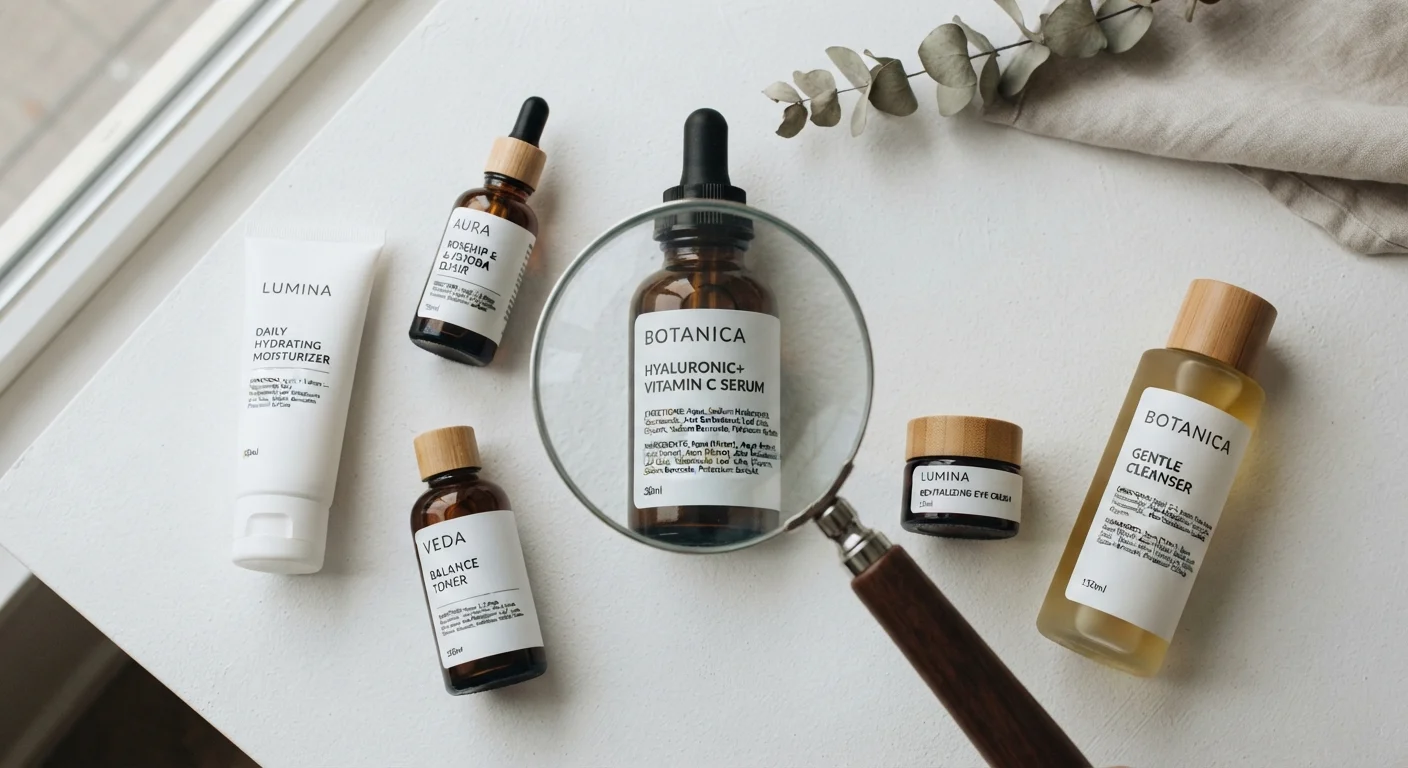
How Ingredient Lists Are Structured
Cosmetic ingredient lists in the U.S. follow a regulated format established by the FDA and use the INCI — International Nomenclature of Cosmetic Ingredients — naming system. This standardization means the same ingredient carries the same name regardless of which brand made the product, which is genuinely useful once you learn the language.
The cardinal rule: ingredients are listed from highest to lowest concentration. Whatever appears first makes up the largest proportion of the formula. Water (aqua) leads most moisturizers and cleansers because it's typically the dominant base. Ingredients near the bottom — think vitamin E or a botanical extract — are often present in small amounts, sometimes under 0.5%.
There is one important wrinkle. Once ingredients fall below the 1% concentration threshold, manufacturers are permitted to list them in any order they choose. This means two identical-sounding products could have very different formulations even if their ingredient lists look similar past the first handful of entries. This is why focusing heavily on the last few items on a long list rarely reveals much about a product's effectiveness.
What you will need
If you're just beginning to build a routine, our guide for complete beginners walks through each foundational step before diving into label reading.
Decoding Common Terms and Categories
Several ingredient categories appear in nearly every skincare product. Recognizing them on sight removes a lot of the intimidation:
- Humectants — draw moisture into skin. Look for glycerin, hyaluronic acid (sodium hyaluronate), and urea.
- Emollients — smooth and soften by filling gaps in the skin barrier. Examples include squalane, jojoba oil, and shea butter (butyrospermum parkii).
- Occlusives — form a protective layer to prevent moisture loss. Petrolatum and dimethicone are the most common.
- Emulsifiers — bind water and oil phases together so a product doesn't separate. Ingredients ending in -eth or polysorbate often serve this function.
- Preservatives — prevent microbial growth and extend shelf life. Phenoxyethanol is one of the most widely used; parabens are another category, though they remain a subject of ongoing consumer debate.
Active ingredients — those with a demonstrated effect like retinol, niacinamide, or salicylic acid — are sometimes listed separately in an "active ingredients" section on sunscreens and acne treatments, because these are regulated as OTC drugs by the FDA.
The 1% Rule Is Your Friend
Once you know that ingredients below 1% can appear in any order, you'll stop worrying about a trace botanical being listed before a preservative. Focus your attention on the top third of the list — that's where the formula's character is defined. The bottom entries are usually present for stability, texture, or regulatory compliance rather than skin-transforming effect.
For a closer look at how fragrance specifically appears on labels — and why it can be a concern for sensitive skin — see our article on fragrance in skincare.
What to Watch For and What to Ignore
A few practical habits make label reading much faster over time.
Watch for "fragrance" or "parfum." These are umbrella terms that can represent dozens of undisclosed chemical compounds. For people with reactive or sensitive skin, this single entry is often the most important one on the list. It doesn't make a product unsafe, but it's worth noting. The exfoliation guide also covers how to layer active ingredients without compounding irritation risk.
Don't be distracted by marketing terms on the front of the package. Words like "natural," "clean," or "dermatologist-tested" have no standardized legal definition in U.S. cosmetic regulation. The ingredient list on the back is the actual record of what's in the bottle.
Treat ingredient count skeptically. A product with 40 ingredients isn't inherently more effective than one with 12. Simpler formulas can be just as functional and are sometimes preferable for sensitive skin.
Front-Label Claims Aren't Regulated Like Ingredient Lists
Terms such as "hypoallergenic," "non-comedogenic," and "natural" have no single FDA-enforced definition for cosmetics. A product can carry these claims without meeting any standardized test criteria. Always verify what a product actually contains by reading the ingredient list directly rather than relying on front-of-package marketing language.
Once you understand the structure of an ingredient list, connecting that knowledge to your actual routine becomes straightforward. Our guide to layering skincare products explains how to sequence what you've chosen, and serums, essences, and toners explained helps clarify what role each product plays.
The content on this site is for informational purposes only and is not a substitute for professional advice. Always consult a qualified professional for guidance specific to your situation.