

Start here
Why Fluids Matter More Than You Think
Core knowledge
Engine Oil: The Lifeblood of Your Motor
Build on it
Coolant, Brake Fluid, and Transmission Fluid
Go further
Power Steering, Windshield Washer, and Battery Fluid
Put it into practice
How to Build a Simple Fluid Check Habit
Why Fluids Matter More Than You Think
Your vehicle is essentially a collection of moving metal parts operating under heat and pressure. Fluids are what keep that system from destroying itself. They lubricate, cool, transfer force, and protect components that would otherwise wear out in miles rather than years. Neglecting them is one of the most common - and avoidable - causes of expensive repairs.
Unlike a flat tire or a cracked windshield, degraded or low fluid gives few obvious signs until damage is already underway. That's why understanding what each fluid does, where to find it, and what warning signs to watch for is genuinely useful knowledge for any driver. See our beginner's guide to car maintenance if you're new to ownership responsibilities.
Hydraulic fluid
A liquid used to transfer mechanical force through a closed system, such as brakes or power steering, using pressure.
Viscosity
A measure of how thick or thin a fluid is. Engine oil viscosity affects how well it flows and protects at different temperatures.
Flush
A service procedure that removes all the old fluid from a system and replaces it with fresh fluid, as opposed to simply topping up the level.
Hygroscopic
A material or fluid that absorbs moisture from its surrounding environment over time. Brake fluid is hygroscopic, which is why it degrades.
Coolant reservoir
A plastic tank connected to the radiator where you can check and top up coolant level safely without opening the hot radiator cap.
Dipstick
A long metal rod inserted into the oil pan that allows you to measure the engine oil level without any tools or disassembly.
Engine Oil: The Lifeblood of Your Motor
Engine oil lubricates the hundreds of moving components inside your motor, reduces friction-generated heat, and carries microscopic debris away from critical surfaces. Without adequate oil, metal-on-metal contact causes rapid wear - and eventually, catastrophic engine failure.
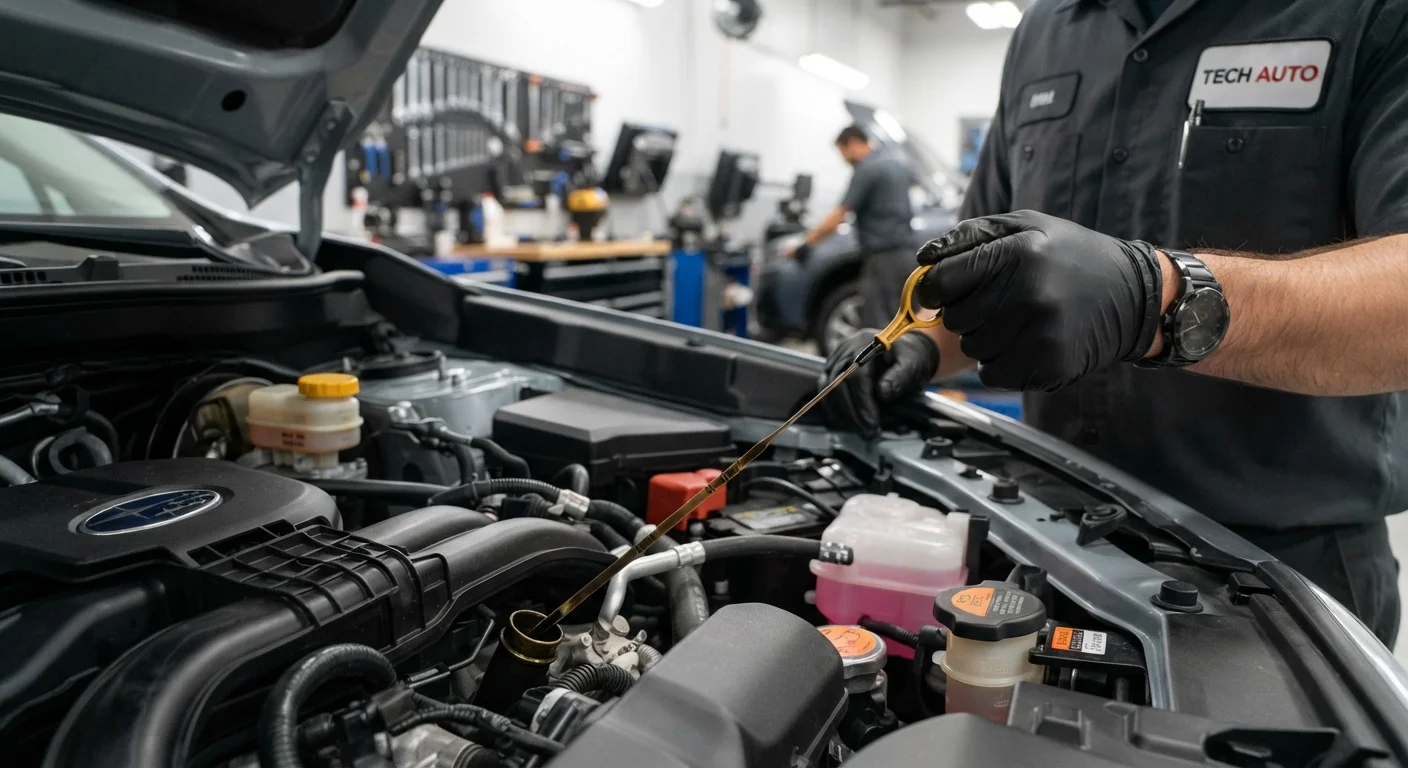
What to look for: Pull the dipstick (typically marked with a bright handle near the engine), wipe it clean, reinsert fully, then pull again. The oil level should fall between the two marks. The color matters too: fresh oil is amber; dark brown or black oil that smells burnt is overdue for a change.
General intervals: Conventional oil is commonly changed somewhere in the range of every 3,000-5,000 miles; synthetic oil often extends that to 7,500-10,000 miles or more. Always verify with your owner's manual - intervals vary significantly by engine design and driving conditions.
Check Oil When the Engine Is Cold
For the most accurate reading, check your engine oil at least 10-15 minutes after turning the engine off, so the oil has settled back into the pan. Checking immediately after driving can give a falsely low reading. Make this part of your regular pre-trip or monthly routine.
Dashboard warning lights can signal low oil pressure before you'd otherwise notice a problem. Our guide to dashboard warning lights explains what each alert means and when to act.
Coolant, Brake Fluid, and Transmission Fluid
Coolant (antifreeze): This fluid circulates through the engine and radiator to regulate operating temperature, preventing both overheating in summer and freeze-up in winter. Check the coolant reservoir level when the engine is cold - never open the radiator cap on a hot engine, as the pressurized fluid can cause serious burns. Coolant should look bright (green, orange, or pink depending on type); a rusty or murky appearance signals it's time for a flush.
Brake fluid: Brake fluid transmits the force from your foot on the pedal through the hydraulic system to the calipers at each wheel. It's hygroscopic, meaning it absorbs moisture over time, which lowers its boiling point and can cause a spongy pedal. Most manufacturers recommend a brake fluid flush every two to three years, though your manual is the authoritative source. For more on brake system health, see our article on brake wear signs and when to get them checked.
Transmission fluid: Automatic transmissions rely on this fluid for lubrication, hydraulic pressure, and heat dissipation. Low or degraded transmission fluid often presents as rough or delayed gear shifts. Some modern vehicles have a sealed transmission with no dipstick; in those cases, level checks require a shop visit.
Never Ignore a Brake Fluid Warning
A sudden drop in brake fluid level is almost always a sign of a leak or heavily worn brake pads - not just normal consumption. Either condition can compromise your ability to stop safely. If your brake warning light comes on or you notice a soft, spongy pedal, stop driving and have the system inspected by a qualified mechanic as soon as possible.
Power Steering, Windshield Washer, and Battery Fluid
Power steering fluid: Hydraulic power steering systems use this fluid to make turning the wheel effortless. If you notice a whining noise when turning or increased steering effort, low or deteriorated power steering fluid is a common culprit. Note that many newer vehicles use electric power steering and have no fluid reservoir at all.
Windshield washer fluid: This is the lowest-stakes fluid on the list - but running out at the wrong moment can impair visibility dangerously. Use a purpose-formulated washer fluid rather than plain water, especially in cold climates where water can freeze in the lines.
Battery fluid (lead-acid batteries): Traditional lead-acid batteries contain electrolyte fluid - a mix of sulfuric acid and distilled water. On batteries with removable caps, this level can drop over time and may need topping up with distilled water only. Most modern maintenance-free batteries are sealed and require no attention. Exercise caution: battery fluid is corrosive.
For a broader view of what fluid checks belong in each season, the seasonal car maintenance checklist is a practical reference.
How to Build a Simple Fluid Check Habit
The most effective approach is also the simplest: tie fluid checks to something you already do regularly. Many drivers check fluids when they fill up with gas once a month, or at the start of a new season. This takes less than five minutes and catches problems before they escalate.
- Keep your owner's manual accessible. It lists every fluid type, reservoir location, and service interval specific to your vehicle.
- Note the baseline. Know what your fluids look and smell like when fresh, so you recognize when something has changed.
- Don't ignore warning lights. A low fluid warning is the system doing its job - respond to it promptly rather than dismissing it.
- Leave complex tasks to a qualified mechanic. Topping up washer fluid is a DIY job; diagnosing a brake fluid leak is not.
Staying ahead of fluid maintenance is one of the most cost-effective things you can do as a vehicle owner. For a full picture of maintenance intervals and typical service costs, see our guide to routine maintenance intervals.
Your Vehicle Owner's Manual
The definitive source for fluid types, reservoir locations, and service intervals specific to your make and model. Available in print in your glove box or as a PDF from most manufacturer websites.
Routine Maintenance Intervals Guide
A clear reference covering what maintenance is due, when, and roughly what each service typically costs - useful for budgeting fluid-related services alongside other upkeep.
Frequently Asked Questions
A monthly visual check is a good general habit for most drivers. Engine oil should be checked more frequently if your vehicle is older or known to consume oil. Always consult your owner's manual for manufacturer-specific guidance.
In most cases you can top off with the same fluid type from a different brand, but mixing fluid specifications - for example, different coolant chemistries - can cause problems. Check your owner's manual or consult a mechanic before mixing.
Low brake fluid can indicate worn brake pads or a leak in the system. Either situation can compromise stopping power and is a safety risk. If your brake fluid warning light illuminates, have the system inspected by a qualified mechanic promptly.
A top-up restores level; a flush replaces old, degraded fluid throughout the system. Fluid that looks dark, cloudy, or smells burnt typically needs a flush. Your owner's manual specifies flush intervals for each fluid type.
Most fluid checks - oil, coolant reservoir, windshield washer, and brake fluid reservoir - are straightforward and safe for any driver. Always let the engine cool before opening the coolant cap, and never attempt repairs beyond your skill level.
Electric vehicles still use coolant for battery thermal management and brake fluid, but they do not require engine oil or transmission fluid. Always check your specific EV's owner's manual for applicable fluid maintenance schedules.
The content on this site is for informational purposes only and is not a substitute for professional advice. Always consult a qualified professional for guidance specific to your situation.