

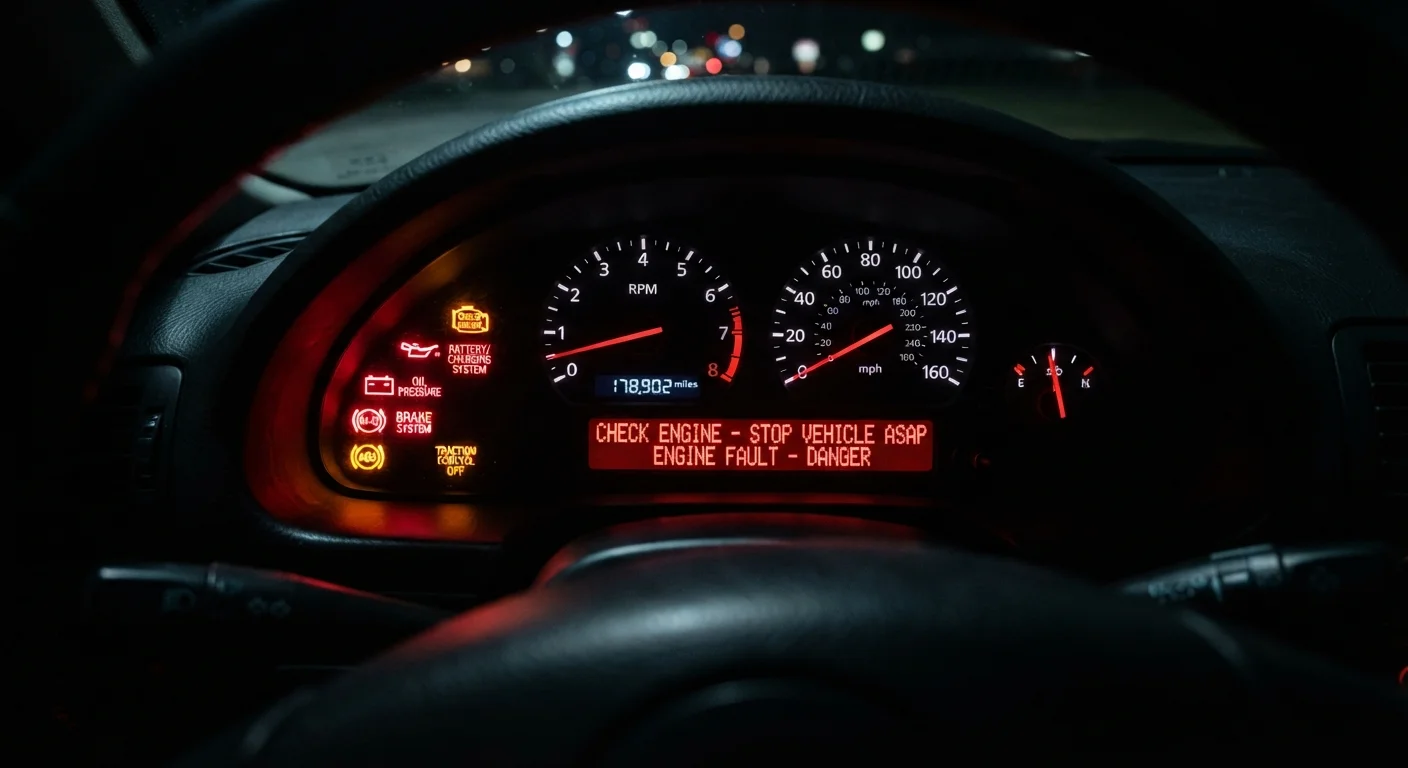
Why Warning Lights Exist - and Why You Shouldn't Ignore Them
Modern vehicles are equipped with onboard diagnostic systems (OBD-II) that continuously monitor dozens of sensors. When something falls outside acceptable parameters, the system triggers a dashboard warning light. Think of these lights as your car's way of flagging a problem before it becomes a breakdown or a safety hazard.
Not every light demands an immediate roadside stop, but none should be permanently ignored. Understanding the difference between a low-priority advisory and a stop-the-car-now emergency is one of the most practical skills any driver can have. For broader context on how maintenance issues can affect your finances, see the Car Ownership Costs hub.
| OBD-II Standard Required Since | 1996 (all U.S. passenger cars) (U.S. EPA / CARB regulations) |
| Number of Potential Fault Codes | Thousands (standardized + manufacturer-specific) (SAE International OBD-II standard) |
| Most Common CEL Trigger | Faulty oxygen sensor or loose gas cap (Commonly reported by auto diagnostic services) |
| TPMS Trigger Threshold | 25% below recommended tire pressure (NHTSA TPMS Final Rule) |
| Engine Overheating Time to Damage | As little as a few minutes at extreme temperatures (General mechanical consensus) |
The Most Common Warning Lights, Explained
Below is a plain-language breakdown of the lights drivers encounter most often. Color matters: red typically means stop or seek immediate attention; amber/yellow means investigate soon; green or blue is informational (headlights on, turn signal active, etc.).
Check Engine Light (CEL)
This amber engine-shaped icon is the most misunderstood light on any dashboard. It can signal anything from a loose gas cap to a misfiring cylinder. If it's steady, schedule a diagnostic scan within a day or two. If it's flashing, reduce speed and have the vehicle inspected as soon as possible - a flashing CEL often indicates an active engine misfire that can damage the catalytic converter.
Oil Pressure Warning
A red oil can symbol means oil pressure has dropped dangerously low. Do not keep driving. Pull over safely, shut off the engine, and check the oil level. Low oil pressure can cause severe engine damage within minutes. Learn more about keeping fluids at proper levels in our guide to car fluids and when they need attention.
Battery / Charging System
A red battery icon signals that the charging system isn't keeping the battery topped up. This could be a failing alternator, a bad battery, or a broken drive belt. Drive directly to a shop - if the alternator has failed, you may have only 20-30 minutes of electrical power remaining before the vehicle stalls.
Tire Pressure Monitoring System (TPMS)
An amber icon resembling a flat tire with an exclamation point means one or more tires are significantly under-inflated. Check all four tires with a gauge and inflate to the pressure listed on the driver's door jamb sticker - not the number on the tire sidewall. For more on reading tire specs, see how to read your tire sidewall.
Brake System Warning
A red circle with an exclamation point (or the word BRAKE) can indicate low brake fluid, a parking brake left engaged, or a more serious hydraulic fault. If the parking brake is off and the light stays on, treat it as urgent. Our guide on brake wear and when to get brakes checked covers related symptoms in depth.
Temperature Warning
A red thermometer in liquid means the engine is overheating. Turn off the A/C, pull over safely, and let the engine cool before opening the hood. Do not open the radiator cap on a hot engine. Continuing to drive risks a warped cylinder head or a seized engine.
OBD-II
On-Board Diagnostics, second generation - a standardized system required in all U.S. cars since 1996 that monitors vehicle systems and generates fault codes when a problem is detected.
TPMS
Tire Pressure Monitoring System - a sensor-based system that alerts the driver when one or more tires drop significantly below the recommended inflation pressure.
Catalytic Converter
An emissions control device in the exhaust system that converts harmful combustion byproducts into less harmful gases. Prolonged engine misfires can permanently damage it.
SRS
Supplemental Restraint System - the technical term for your vehicle's airbag network, including sensors, inflators, and control modules.
Fault Code (DTC)
A Diagnostic Trouble Code - a standardized alphanumeric code stored by the vehicle's computer that identifies which system or sensor triggered a warning light.
Alternator
A generator driven by the engine that produces electricity to power the vehicle's electrical systems and recharge the battery while the engine is running.
Lights You Might Not Recognize
Beyond the common ones, most vehicles display a range of secondary warnings that puzzle even experienced drivers.
- Traction Control / StabiliTrak (amber car with squiggly lines): If it flashes while driving on wet or icy roads, the system is actively working - that's normal. If it stays on, the system may be disabled or have a fault. This ties closely to the safety systems covered in our article on driver assistance technologies and their real-world limits.
- Power Steering Warning: Common in vehicles with electric power steering (EPS). Steering becomes much heavier; have it inspected promptly.
- Airbag / SRS Light: An amber figure with a deployed bag means the supplemental restraint system has a fault. Airbags may not deploy in a crash while this light is on. Schedule service soon.
- Transmission Temperature: Typically amber, signals the transmission fluid is running hot. Ease up on towing or aggressive driving and have the system checked.
If your car ever breaks down as a result of an ignored warning, knowing what to do next is equally important - see our guide to staying safe when your car breaks down.
What to Do When a Light Comes On
Here's a practical framework:
- Identify the color. Red = act now; amber = act soon; blue/green = informational.
- Check for obvious causes first. A TPMS alert often needs only an air top-up. An oil light might mean the level is just low.
- Get a diagnostic scan. Most auto parts retailers offer free OBD-II code reading. This gives you a specific fault code (e.g., P0420) to discuss with a mechanic.
- Don't just clear the code. Resetting a warning light without fixing the underlying problem means the light will return - and you lose valuable diagnostic data.
- Know your urgency level. Red oil pressure or temperature warnings warrant stopping immediately. A loose gas cap triggering a CEL does not.
Free Diagnostic Scans Are Available
Many auto parts retailers in the U.S. offer complimentary OBD-II code reading in their parking lots. This won't replace a professional diagnosis, but it gives you the specific fault code before you walk into a shop - helping you have a more informed conversation with your mechanic.
This article is for general informational purposes only. Always consult a qualified mechanic for diagnosis and repair decisions specific to your vehicle.
The content on this site is for informational purposes only and is not a substitute for professional advice. Always consult a qualified professional for guidance specific to your situation.