

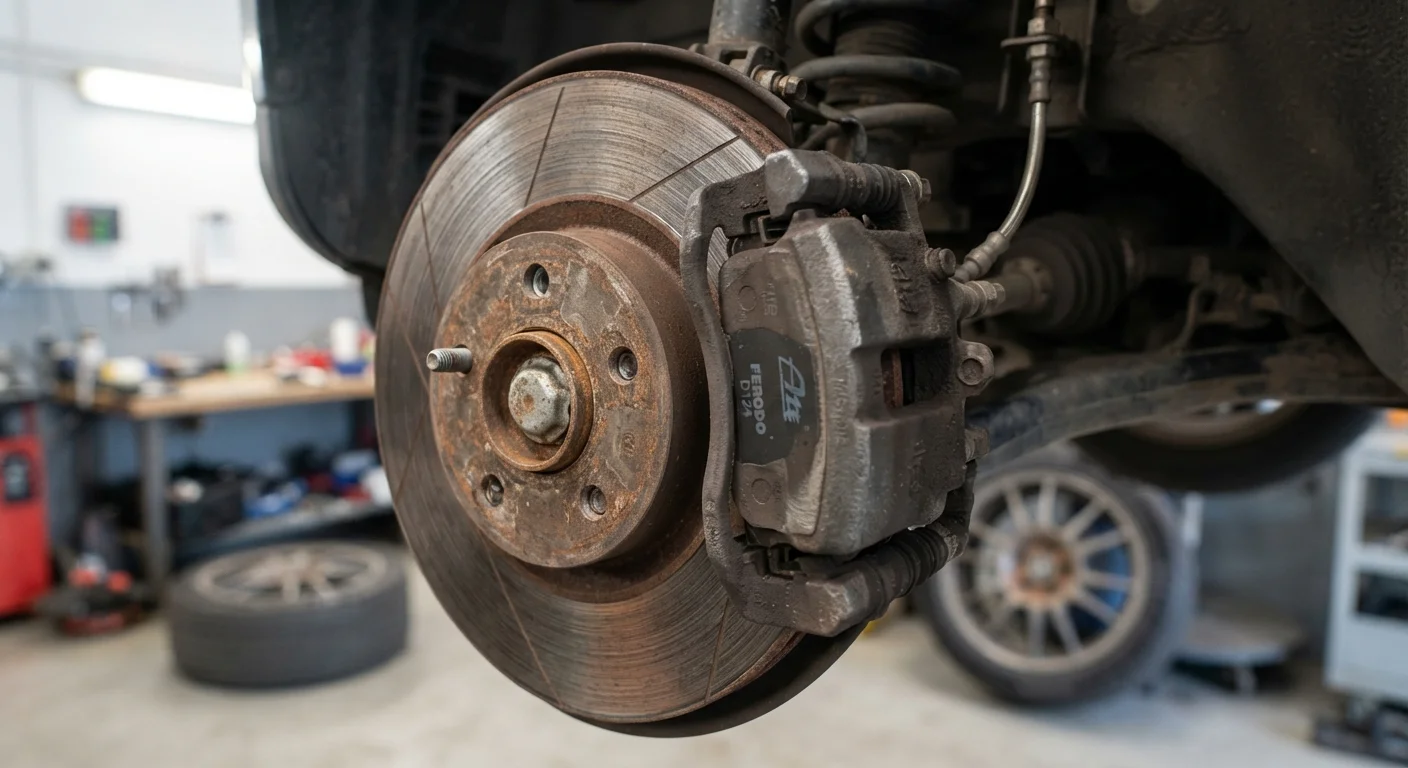
How Brakes Wear - The Basics
Most passenger vehicles use disc brakes on at least the front wheels. When you press the pedal, hydraulic pressure pushes brake calipers to clamp pads against a spinning metal rotor. That friction converts kinetic energy into heat, slowing the car. The tradeoff is gradual material loss on both the pad and rotor surfaces.
Pad lifespan varies widely - anywhere from 25,000 to 65,000 miles is a commonly cited range, but real-world results depend on driving environment, vehicle weight, and driver behavior. Rotors generally outlast two or three sets of pads, but they can wear unevenly or warp under repeated heavy use. For a broader view of where brakes fit into your overall ownership schedule, see routine maintenance intervals every driver should know.
25,000-65,000 mi
Typical brake pad lifespan range
The wide range reflects the significant impact of driving environment, vehicle weight, and braking habits on pad longevity.
2-3 mm
Pad thickness at which replacement is recommended
Most new brake pads start with 10-12 mm of friction material; mechanics generally advise replacement well before the material reaches the metal backing plate.
~40%
Greater wear in city vs. highway driving
Frequent stops at low speeds can wear brake pads significantly faster than highway driving, where braking events are less frequent and less abrupt.
Reading the Warning Signs
Your brakes communicate problems through sound, feel, and sometimes smell. Understanding what each signal means helps you act at the right time - not too late, and not unnecessarily early.
Squealing or Squeaking
A high-pitched squeal during braking is the most common early warning. Most pads include a small metal wear indicator tab designed to contact the rotor and produce this sound when pads reach a low thickness. Occasional squealing from cold or wet brakes in the morning is generally normal and short-lived. Persistent squealing during normal stops is not.
Grinding
A grinding or growling noise means the pad friction material is likely gone and metal is contacting metal. This accelerates rotor damage rapidly. At this stage, you may need to replace both pads and rotors - a more expensive repair. Don't delay.
Vibration or Pulsating Pedal
If the pedal pulses under your foot during braking, or the steering wheel shudders, rotors may be warped or have uneven wear. This is common after prolonged heavy braking (like descending a steep grade) that overheats the rotor surface.
Soft or Spongy Pedal
A pedal that sinks further than normal before engaging braking force can indicate air in the brake lines or low brake fluid. This is a safety-critical symptom. Brake fluid plays a central role in hydraulic braking - have it inspected without delay. Your dashboard may also illuminate a warning light; understanding what those lights mean can help you prioritize.
Bundle Your Brake Check With Tire Rotation
Tire rotations typically happen every 5,000-7,500 miles - a natural interval for a quick visual brake inspection too. Asking your shop to check pad thickness and rotor condition at the same time costs little or nothing extra and keeps you ahead of wear before symptoms appear.
What Accelerates Wear - and What Doesn't
Not all driving is equal when it comes to brakes. City drivers who make frequent stops at traffic lights wear through pads much faster than drivers who primarily use highways. Heavier vehicles - trucks, SUVs, cars carrying regular heavy loads - place more demand on the braking system with every stop.
Driving habits matter too. Riding the brakes on long downhill stretches builds up heat that accelerates wear and can cause brake fade (a temporary reduction in braking power). Engine braking - shifting to a lower gear on a descent - reduces that heat load. Conversely, maintaining following distance and anticipating stops reduces how hard you need to brake in normal conditions.
For those newer to managing these responsibilities, keeping up with car maintenance without mechanical experience offers a practical starting point.
When to Schedule an Inspection
The general guidance among automotive professionals is a brake inspection at least once per year or roughly every 12,000 miles - whichever comes first. Many shops offer a visual brake check during tire rotations, making it easy to bundle. See why tire rotation and other services matter for how these checks fit together.
Beyond scheduled intervals, get an inspection promptly if you notice any of the warning signs described above, or if your vehicle takes noticeably longer to stop than it used to. Brakes are also worth checking seasonally - particularly before winter, when cold temperatures and wet roads increase stopping distances. The seasonal car maintenance checklist covers this and other weather-related checks.
Brake Fluid Has a Service Life Too
Brake fluid is hygroscopic - it absorbs moisture from the air over time. As it does, its boiling point drops, which can reduce braking performance under heavy use. Most manufacturers recommend flushing brake fluid every two to three years regardless of mileage. Check your owner's manual for the specific interval for your vehicle.
This article is for general informational and educational purposes only. Brake system repairs involve safety-critical components - always consult a qualified mechanic for diagnosis and service.
Frequently Asked Questions
A high-pitched squealing sound when braking is typically the first sign - most pads have a built-in wear indicator that makes this noise. Grinding or a pulsating pedal indicates more advanced wear. A visual check through the wheel spokes can also reveal remaining pad thickness.
Most automotive professionals recommend a brake inspection at least once a year or every 12,000 miles, whichever comes first. Many shops perform a basic visual check during routine tire rotations, making that a convenient opportunity.
Uneven brake wear, a stuck caliper, or uneven rotor wear can cause pulling during braking. This is worth addressing promptly, as it can affect vehicle control. Have a qualified mechanic inspect the system.
On most vehicles you can get a rough visual estimate through the wheel spokes - look for the pad thickness against the rotor. However, a full assessment of pad condition, rotor surface, and caliper function requires a professional inspection.
Yes. Frequent hard stops, heavy loads, and stop-and-go city driving all accelerate brake wear. Highway driving is comparatively gentle on brakes because speed changes are gradual and less frequent.
A spongy or soft pedal is often caused by air in the brake lines or low brake fluid, both of which are serious safety issues. It can also indicate a failing master cylinder. Stop driving and have the vehicle inspected immediately.
The content on this site is for informational purposes only and is not a substitute for professional advice. Always consult a qualified professional for guidance specific to your situation.