

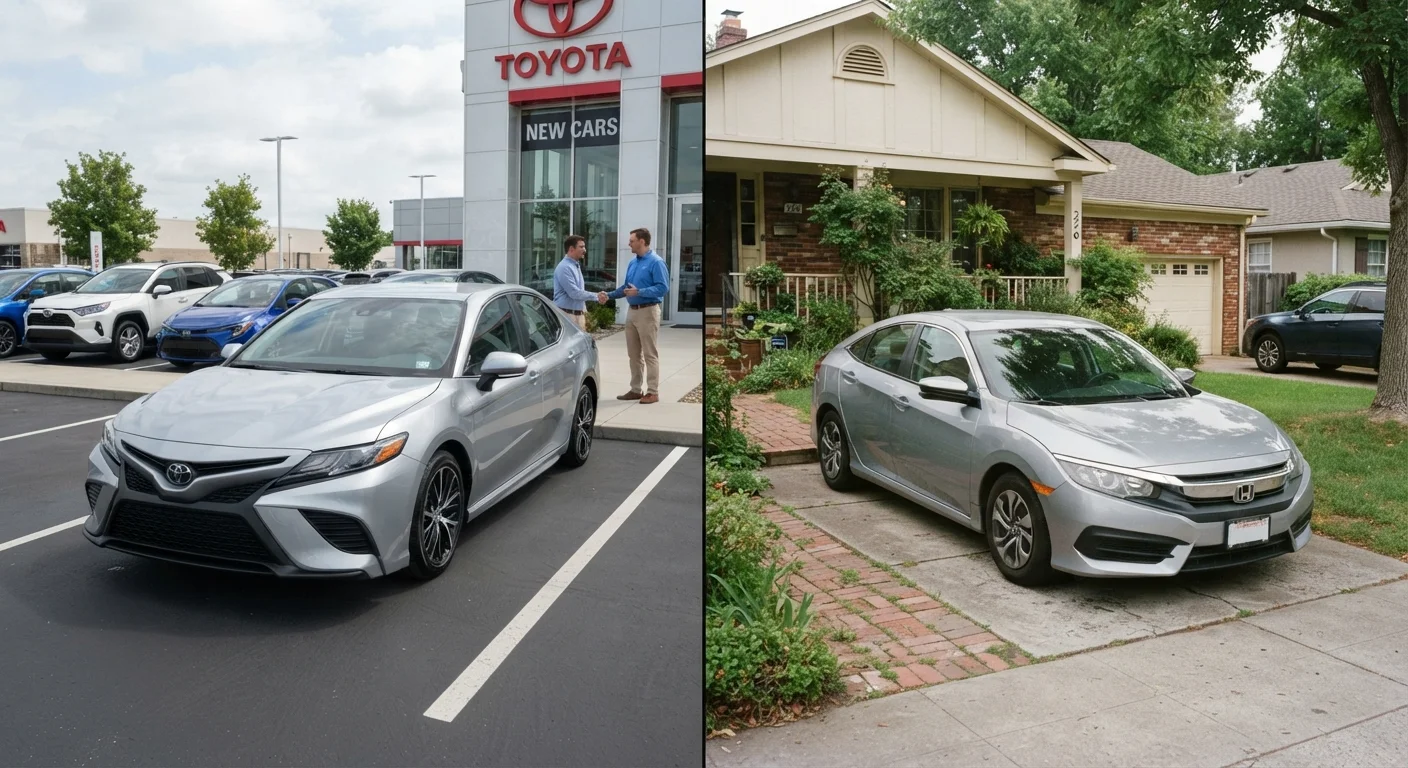
Option A
New Car
Full warranty coverage and zero prior wear — at a premium price.
Best for: Drivers who want predictable costs, the latest safety features, and strong financing options, and plan to keep the vehicle long-term.
Option B
Used Car
Lower entry cost with higher variability in long-term expenses.
Best for: Budget-conscious buyers who can absorb some maintenance uncertainty and want to avoid the steepest phase of depreciation.
Where the Real Cost Difference Begins: Depreciation
The single largest ownership cost most drivers never see on an invoice is depreciation. A new vehicle typically loses a significant portion of its value in the first year alone, with the steepest decline concentrated in years one through three. Industry data from sources such as Edmunds and the AAA consistently show new vehicles can shed roughly 15–25% of their value in year one, and 40–50% within five years.
A used vehicle, particularly one that is two to four years old, has already passed through that accelerated loss phase. The buyer of a used car, in effect, lets the original owner absorb the most punishing depreciation curve. This is one of the most financially meaningful distinctions between the two paths — and it's why sticker price alone is a poor guide to long-term value.
That said, depreciation affects resale value, not necessarily out-of-pocket cash flow while you own the vehicle. Drivers who hold cars for eight or more years feel depreciation's sting only when they sell. For total cost of ownership, it still belongs in every honest calculation.
Financing, Insurance, and the Costs You Pay Every Month
Monthly costs beyond the loan payment deserve equal attention. Financing rates — the interest charged on an auto loan — often differ meaningfully between new and used vehicles. Lenders and manufacturers sometimes offer promotional rates on new cars that aren't available on older inventory. Used-vehicle loans can carry rates one to several percentage points higher, depending on the lender and the vehicle's age. Over a four- or five-year loan term, that difference compounds. See how loan terms and rates shape your true borrowing cost for a fuller picture.
Insurance is the other major recurring line item. New vehicles generally cost more to insure because they have higher replacement values. Lenders also typically require comprehensive and collision coverage on financed new cars, which adds to the monthly premium. A used vehicle with a lower market value may qualify for a more limited coverage structure, though this is worth reviewing carefully — the right coverage depends on your specific situation. For a grounding in coverage categories, explore the major coverage types before making decisions.
| Criterion | New Car | Used Car |
|---|---|---|
| Purchase Price | Higher (full retail) | Lower (post-depreciation) |
| Depreciation Hit | Buyer absorbs steepest curve | Prior owner absorbed most |
| Financing Rates | Often lower; promotional rates available | Typically higher |
| Insurance Premiums | Generally higher | Often lower |
| Warranty Coverage | Full manufacturer warranty | Partial or expired warranty |
| Repair Risk | Low in early years | Higher, especially beyond warranty |
| Technology & Safety Features | Latest available | Varies by model year |
| Registration Fees (Year 1) | Higher (value-based in many states) | Lower |
Maintenance and Repair: The Long-Horizon Variable
New vehicles come with manufacturer warranties — typically a bumper-to-bumper period of three years or 36,000 miles and a powertrain warranty extending further. During this window, most repair costs are covered, making ownership cost more predictable. Routine maintenance — oil changes, tire rotations, cabin filters — still applies, but unexpected mechanical expenses are largely insulated.
Used vehicles, especially those beyond the original warranty period, shift repair risk to the owner. The older the vehicle and the higher its mileage, the more likely it is to need component replacements — brakes, belts, suspension parts, and cooling system elements. A pre-purchase inspection by a qualified mechanic is one of the most practical steps a used-car buyer can take to understand what they're inheriting. Routine upkeep matters regardless of which path you choose; sound maintenance practices are the foundation of managing long-term costs. Even small decisions like oil type affect long-run engine health — see how conventional and synthetic oil compare for context.
~20%
Average new car value lost in year one
Industry analyses from sources including Edmunds and AAA consistently estimate new vehicles lose roughly 15–25% of value in their first year of ownership.
$1,996/yr
Average annual vehicle maintenance and repair cost
AAA's annual 'Your Driving Costs' study has estimated average maintenance, repair, and tire costs for a typical vehicle at roughly this level, though actual costs vary by age and type.
3–4 yrs
Sweet spot age for used-car value
Vehicles in the two-to-four-year-old range have absorbed the steepest depreciation while often retaining remaining powertrain warranty coverage and relatively low mileage.
Hidden and Overlooked Costs on Both Sides
Neither new nor used ownership is free of surprises. New-car buyers sometimes underestimate registration fees (which in many states are tied to vehicle value and can run several hundred dollars in the first year), dealer add-ons, and gap insurance — a product that covers the difference between what you owe and what the car is worth if it's totaled early in ownership, when the loan balance typically exceeds market value. Many first-time buyers are caught off guard by these expenses.
Used-car buyers face a different set of potential surprises: deferred maintenance from prior owners, undisclosed mechanical wear, and the cost of bringing an older vehicle up to date on service intervals. Extended warranties and unnecessary add-ons can also inflate total costs for used-vehicle buyers who don't scrutinize what they're purchasing.
On the insurance side, understanding how your vehicle's value is assessed at claim time matters. Actual cash value and replacement cost value produce very different payouts — a distinction that becomes especially relevant for used vehicles whose market value has declined significantly.
The Myth That Cheaper Always Means Cheaper
A used car with a $10,000 lower purchase price can still cost more over five years if repair bills, higher financing rates, and elevated insurance gaps erode the initial savings. The only reliable comparison is total cost of ownership calculated across the full holding period. Several widespread beliefs about vehicle costs don't hold up under this kind of scrutiny.
This article is for general informational purposes only and does not constitute financial, legal, or insurance advice. Costs vary widely by vehicle, region, lender, and individual circumstances. Consult a qualified financial adviser or licensed insurance professional before making decisions based on your specific situation.
The content on this site is for informational purposes only and is not a substitute for professional advice. Always consult a qualified professional for guidance specific to your situation.