

Start here
What Defensive Driving Actually Means
Next
The Core Principles in Practice
Apply it
Common Situations Where It Makes a Real Difference
Make it stick
Building the Habit Over Time
What Defensive Driving Actually Means
The phrase "defensive driving" gets used so often it risks losing its meaning. It is not simply driving slowly, being overly cautious, or taking a one-time course. At its core, defensive driving means operating your vehicle with the assumption that other road users may make mistakes — and positioning yourself to handle those mistakes before they become emergencies.
The distinction that matters: reactive driving waits for a problem to appear and then responds. Defensive driving continuously reads conditions, anticipates probable hazards, and creates options before anything goes wrong. That shift — from reacting to anticipating — is the entire mindset.
Defensive driving
A style of driving that prioritizes anticipating hazards and maintaining control options, rather than simply reacting to events as they occur.
Following distance
The space between your vehicle and the one ahead, typically measured in seconds of travel time rather than car lengths.
Hazard perception
The ability to identify road conditions, other drivers' behavior, and environmental factors that could develop into a dangerous situation.
Stopping distance
The total distance a vehicle travels from the moment a driver perceives a hazard to the moment the vehicle comes to a complete stop, combining reaction time and braking distance.
Blind spot
Areas around a vehicle that are not visible to the driver through mirrors, requiring a physical head-check or sensor assistance to detect other vehicles.
For a broader view of how these habits fit into everyday road use, see A Driver's Complete Guide to Road Safety.
The Core Principles in Practice
Defensive driving collapses into a handful of durable habits. None of them are complicated, but all of them require consistent attention.
Scan Well Ahead — Not Just the Car in Front
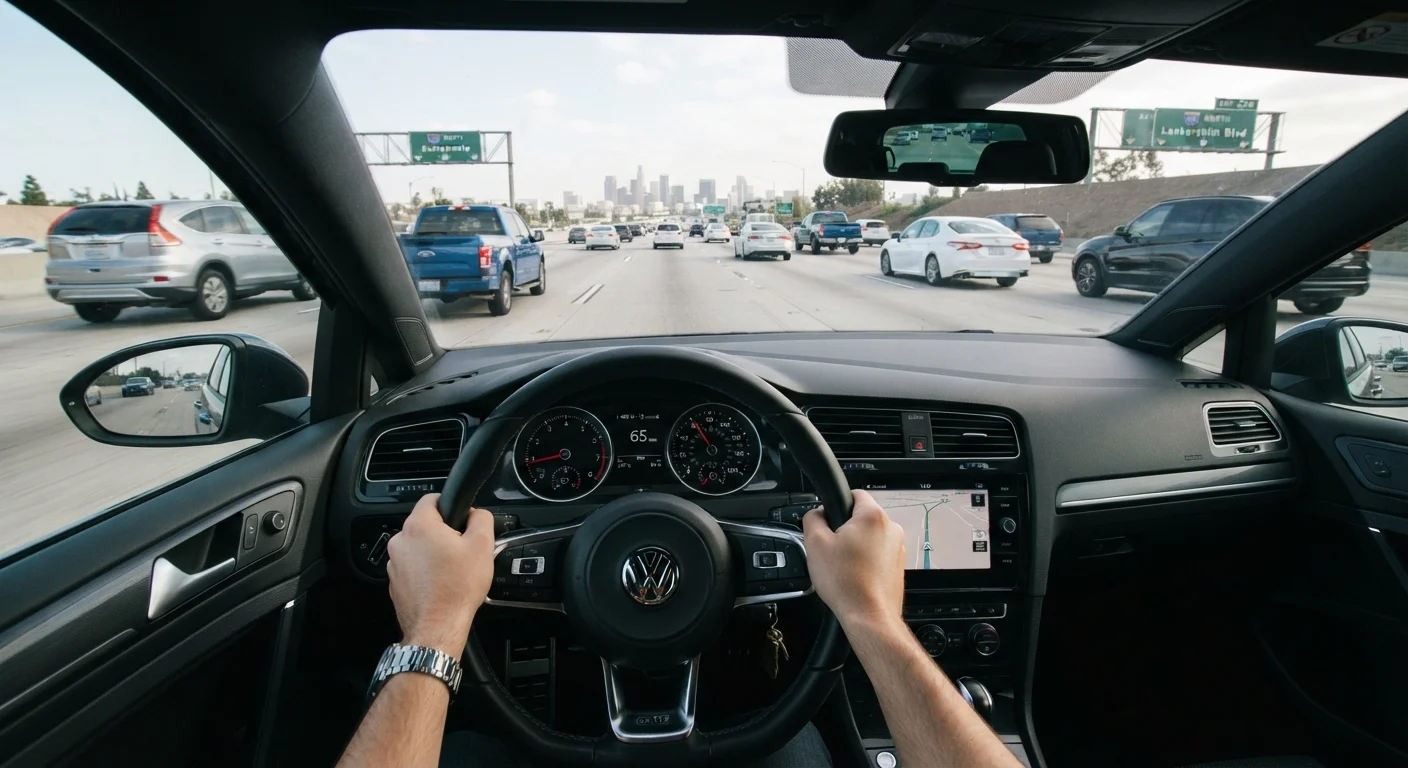
Most drivers fixate on the vehicle immediately ahead. Defensive drivers scan 10–15 seconds down the road, taking in merge points, brake lights several cars ahead, pedestrians about to step off a curb, and lane-change signals that may not actually match the driver's intentions. This forward-looking scan is what converts surprise into manageable situations.
Maintain a Buffer — In Every Direction
Space is time. The more distance between your vehicle and others, the more time you have to respond. The three-second following distance is a widely accepted starting point in normal conditions; increase it in rain, at night, or when following large trucks. Equally important: avoid sitting in another driver's blind spot on the highway longer than necessary.
Understanding why distance matters so much starts with physics. Our article on stopping distance explains how speed and reaction time combine to determine how far your car travels before it actually stops.
Manage Your Own Risk Factors
Fatigue, distraction, and emotional agitation all degrade the perceptual skills that defensive driving depends on. A driver who is tired or distracted cannot scan ahead effectively, no matter how well they understand the theory. Before each trip, a quick self-assessment — combined with a pre-trip safety check — takes less than two minutes and meaningfully reduces avoidable risk.
The Two-Second Scan Habit
Every 20–30 seconds, make a deliberate sweep: mirrors, ahead, mirrors again. This keeps your mental picture of surrounding traffic current and prevents tunnel vision on the vehicle directly in front. It takes almost no extra effort once it becomes automatic.
Common Situations Where It Makes a Real Difference
Defensive principles are always active, but certain scenarios are where they pay off most clearly.
Intersections
A large share of crashes occur at intersections. A defensive approach means covering the brake as you approach a stale green light (one that has been green long enough that it may change), checking cross-traffic even on a green signal, and not pulling into an intersection the moment a light turns green without a brief scan for red-light runners.
Highway Lane Changes and Merges
Merging zones concentrate vehicles moving at different speeds into the same lane. Signal early, check mirrors and blind spots, and adjust speed to find a natural gap — rather than forcing one. When others are merging onto the highway, moving left (when it is safe to do so) or adjusting speed to create space reduces the friction that causes rear-end collisions in these zones.
Adverse Weather
Every defensive habit becomes more demanding when roads are wet, icy, or visibility is low. Stopping distances increase dramatically. Our detailed guide on driving in rain, snow, and fog covers how to adapt speed, spacing, and steering for each condition.
Overconfidence Is a Real Risk Factor
Experienced drivers are not immune to lapses — in fact, familiarity with a route can create overconfidence that reduces attention. Defensive driving requires active engagement on every trip, not just unfamiliar roads or bad weather. Treat routine drives with the same level of awareness as any other.
Building the Habit Over Time
Defensive driving is a skill that degrades when it is not actively practiced. It is easy to revert to autopilot on familiar routes — the commute home, the trip to the grocery store — which is precisely where attention lapses happen most.
A few practical ways to reinforce the habit:
- Name hazards aloud (or mentally) while driving. Saying "pedestrian on curb, could step out" keeps the analytical part of your attention engaged.
- Audit your following distance at least once per drive. If the three-second count comes up short, adjust.
- Review close calls honestly. If something surprised you, ask what earlier cue you missed. This turns near-misses into useful feedback rather than dismissed luck.
Driver assistance systems — lane-keep alerts, automatic emergency braking, blind-spot monitoring — can complement these habits. But as our article on driver assistance technologies explains, these tools have real limitations and cannot substitute for an attentive driver. Keeping your vehicle in good mechanical condition also supports safe driving — see our car maintenance hub for guidance on essential upkeep.
Finally, it is worth cross-checking your habits against common misconceptions. Some widely held beliefs about driving safety — four-wheel drive prevents skidding, hands-free calls are as safe as no calls — are not supported by evidence. Our article on driving safety myths covers the most consequential ones.
Frequently Asked Questions
No — defensive driving is relevant at every experience level. In fact, overconfidence is a common risk factor among experienced drivers. Practicing anticipation and hazard awareness benefits anyone behind the wheel, regardless of years of experience.
A commonly recommended guideline is the three-second rule: pick a fixed point, and when the car ahead passes it, count three seconds before you reach the same point. In poor weather or low visibility, extend that gap further. See our article on <a href="/cars-driving/safe-driving-tips/the-science-behind-stopping-distance-what-every-driver-should-understand">stopping distance</a> for the reasoning behind this.
Some insurers offer discounts to drivers who complete an approved defensive driving course, but this varies by provider, state, and policy. Check directly with your insurer for specifics — this article is general information, not insurance advice.
No. Features like automatic emergency braking and lane-keep assist add a meaningful safety layer, but they have real limitations and can fail or be overwhelmed by conditions. Attentive, skilled drivers remain the primary line of defense.
Driver inattention — including distraction, fatigue, and failure to scan the road — is consistently cited among the leading contributors to preventable crashes by traffic safety researchers. Defensive driving directly addresses all three.
Yes. Rain, snow, and fog each change stopping distances, visibility, and vehicle handling, so defensive habits like increased following distance and reduced speed become even more critical. Our guide on <a href="/cars-driving/safe-driving-tips/driving-in-rain-snow-and-fog-adjusting-your-habits-for-each-condition">driving in adverse weather</a> covers specific adjustments.
The content on this site is for informational purposes only and is not a substitute for professional advice. Always consult a qualified professional for guidance specific to your situation.