

Carbohydrates: Your Body's Preferred Fuel
When you eat carbohydrates — whether from oatmeal, bread, fruit, or beans — your digestive system breaks them down into glucose, a simple sugar that circulates in your bloodstream and powers your cells. Glucose is the brain's primary fuel source; it's also the form of energy your muscles reach for first during physical activity.
Carbohydrates come in two main forms: simple carbohydrates (sugars found naturally in fruit and dairy, or added to processed foods) and complex carbohydrates (starches and fiber found in whole grains, legumes, and vegetables). Complex carbs digest more slowly, which helps maintain steadier blood sugar levels and longer-lasting energy.
Fiber — a type of carbohydrate your body cannot digest — deserves special mention. It feeds beneficial gut bacteria, supports digestive regularity, and is associated with reduced risk of several chronic conditions. Most Americans fall well short of the recommended daily fiber intake.
Choosing Quality Carbs at a Glance
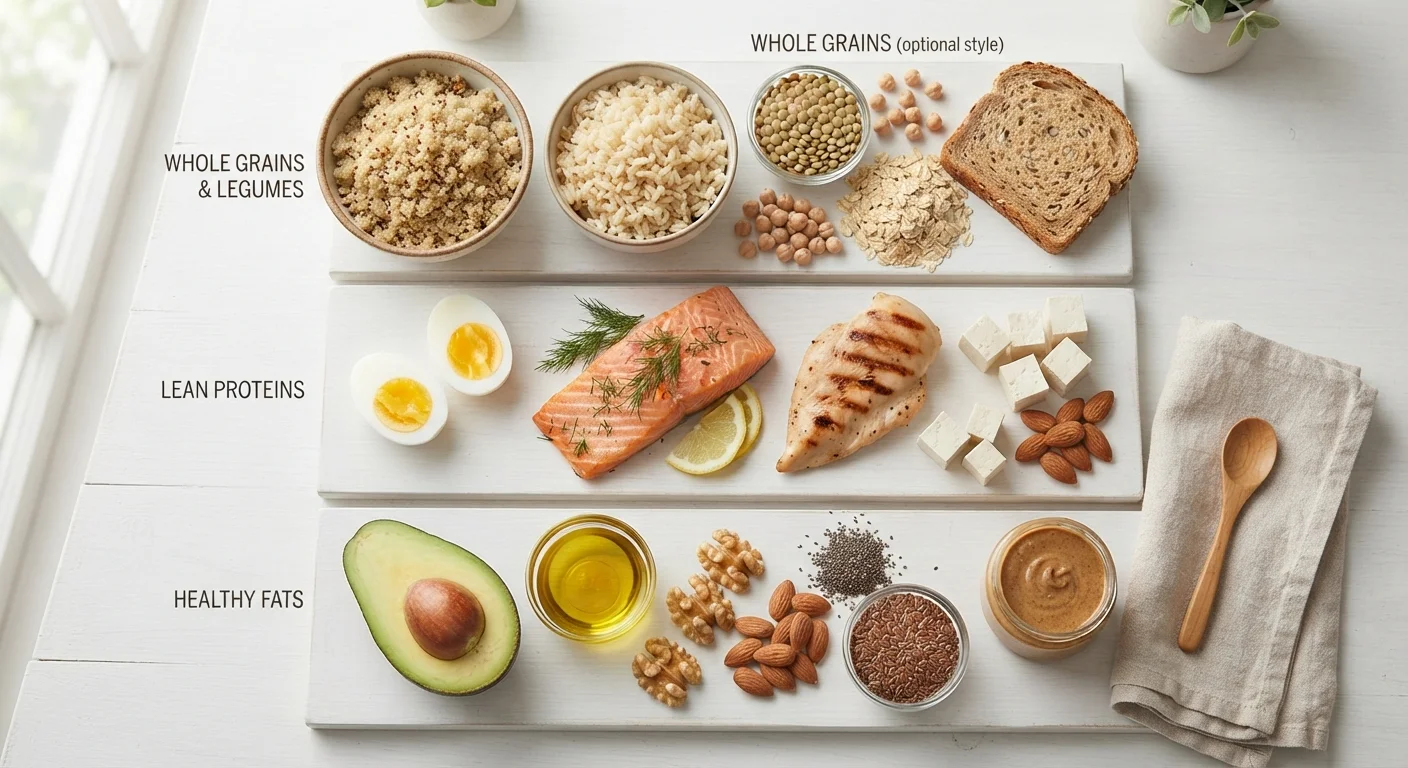
When selecting carbohydrate-rich foods, prioritize options with intact fiber: whole grains, legumes, vegetables, and fruit. These slow digestion and provide longer-lasting energy compared to refined grain products or sugary snacks. Aim to make at least half your grain servings whole grains, in line with U.S. Dietary Guidelines recommendations.
When reading food labels, look beyond total carbohydrates and check the fiber content. Understanding that information is easier when you know how to read a nutrition label.
Protein: The Body's Builder and Repairman
Protein is made up of smaller units called amino acids — think of them as the alphabet your body uses to write structural and functional molecules. Your body uses protein to build and repair muscle tissue, produce enzymes and hormones, support immune function, and transport molecules through the bloodstream.
Of the 20 amino acids involved in human biology, nine are considered essential, meaning your body cannot synthesize them — you must get them from food. Animal-based proteins (meat, fish, eggs, dairy) typically contain all nine essential amino acids, making them complete proteins. Many plant-based proteins are incomplete individually, but eating a variety of plant foods throughout the day covers all essential amino acids.
10–35%
Recommended protein share of daily calories
According to the Dietary Reference Intakes established by the National Academies of Sciences, Engineering, and Medicine, protein should account for 10–35% of total daily calorie intake for adults.
45–65%
Recommended carbohydrate share of daily calories
The same Dietary Reference Intakes framework recommends that carbohydrates make up 45–65% of total daily calories for most adults, reflecting their central role as an energy source.
95%
Americans falling short of fiber goals
The U.S. Dietary Guidelines Advisory Committee has reported that dietary fiber is a nutrient of public health concern, with the vast majority of Americans not meeting recommended intake levels.
Protein is not purely a muscle-building nutrient — it also plays a central role in satiety. Research consistently shows that higher-protein meals tend to promote a feeling of fullness, which can support overall calorie regulation without restrictive dieting.
Fat: Essential, Not the Enemy
Dietary fat has spent decades unfairly cast as a villain, but nutrition science is clear: fat is essential. It provides a concentrated energy source, cushions vital organs, and forms the structural layer of every cell membrane in your body. Fat also enables the absorption of vitamins A, D, E, and K — nutrients that simply cannot enter your bloodstream without it.
Fat is also foundational to hormone production, including sex hormones and stress hormones, and it supports brain health — roughly 60% of the brain's dry weight is fat.
Not all dietary fats behave the same way in the body. Unsaturated fats (found in olive oil, avocados, and nuts) are associated with cardiovascular benefits, while trans fats (largely removed from the food supply but still present in small amounts in some products) are broadly considered harmful. Our in-depth guide to dietary fat types covers these distinctions in detail.
Fat Content on Nutrition Labels
Nutrition labels break down total fat into subcategories: saturated fat, trans fat, and sometimes monounsaturated and polyunsaturated fat. These distinctions matter for health. Hydration also interacts with how your body processes and transports these nutrients — learn how fluid intake fits into the nutrition picture.
Why Balance Matters More Than Elimination
Popular diet trends often demonize one macronutrient or celebrate another. Low-carb approaches, fat-free phases, and high-protein plans all cycle through cultural attention — but the evidence base for long-term, extreme macronutrient restriction is mixed, and sustainability is a real concern.
What research consistently supports is the importance of food quality alongside macronutrient balance. A diet rich in whole foods rather than heavily processed options tends to deliver better macronutrient quality: more fiber-rich carbs, more complete proteins, and more unsaturated fats — alongside vitamins, minerals, and beneficial plant compounds that isolated macronutrient supplements can't replicate.
Your specific macronutrient needs also vary based on age, activity level, health status, and personal health goals. There is no universal ratio that suits everyone. If you're managing a health condition or pursuing a specific fitness outcome, a registered dietitian can help you dial in an approach grounded in your individual circumstances.
This article is for general informational and educational purposes only and is not a substitute for professional medical or nutritional advice. Always consult a qualified healthcare provider or registered dietitian before making significant changes to your diet.
Frequently Asked Questions
Most people do not need to track macronutrients precisely to maintain good health. Focusing on a varied diet rich in whole foods generally provides an appropriate balance. Tracking may be useful for specific health or fitness goals, but it's best approached with guidance from a registered dietitian.
Carbohydrates are not inherently bad — your brain and muscles depend on them for fuel. The quality and source of carbs matters: whole grains, legumes, fruits, and vegetables provide fiber and nutrients, while refined sugars and highly processed carbs offer less nutritional value. See <a href="/health-wellness/nutrition-basics/nutrition-myths-that-refuse-to-die-and-what-the-evidence-actually-shows">our myth-busting nutrition guide</a> for more on this common misconception.
General dietary guidelines suggest approximately 0.8 grams of protein per kilogram of body weight per day for sedentary adults, though needs vary based on age, activity level, and health status. Athletes, older adults, and people recovering from illness may require more. Consult a healthcare professional for personalized guidance.
Weight change is driven by overall calorie balance, not by fat intake alone. Fat is calorie-dense, so portions matter, but it is an essential nutrient that supports many body functions. Replacing fat with refined carbohydrates, for example, does not automatically improve health outcomes.
Yes. Plants provide carbohydrates, protein (from legumes, tofu, tempeh, seeds, and nuts), and fat (from avocados, nuts, seeds, and oils). Plant-based diets can meet macronutrient needs, though some people may need to pay extra attention to certain amino acids and nutrients like B12 — a dietitian can help.
Very low fat intake can impair absorption of fat-soluble vitamins (A, D, E, and K), disrupt hormone production, and affect brain function. Extremely low-fat diets are not recommended without medical supervision.
The content on this site is for informational purposes only and is not a substitute for professional advice. Always consult a qualified professional for guidance specific to your situation.