

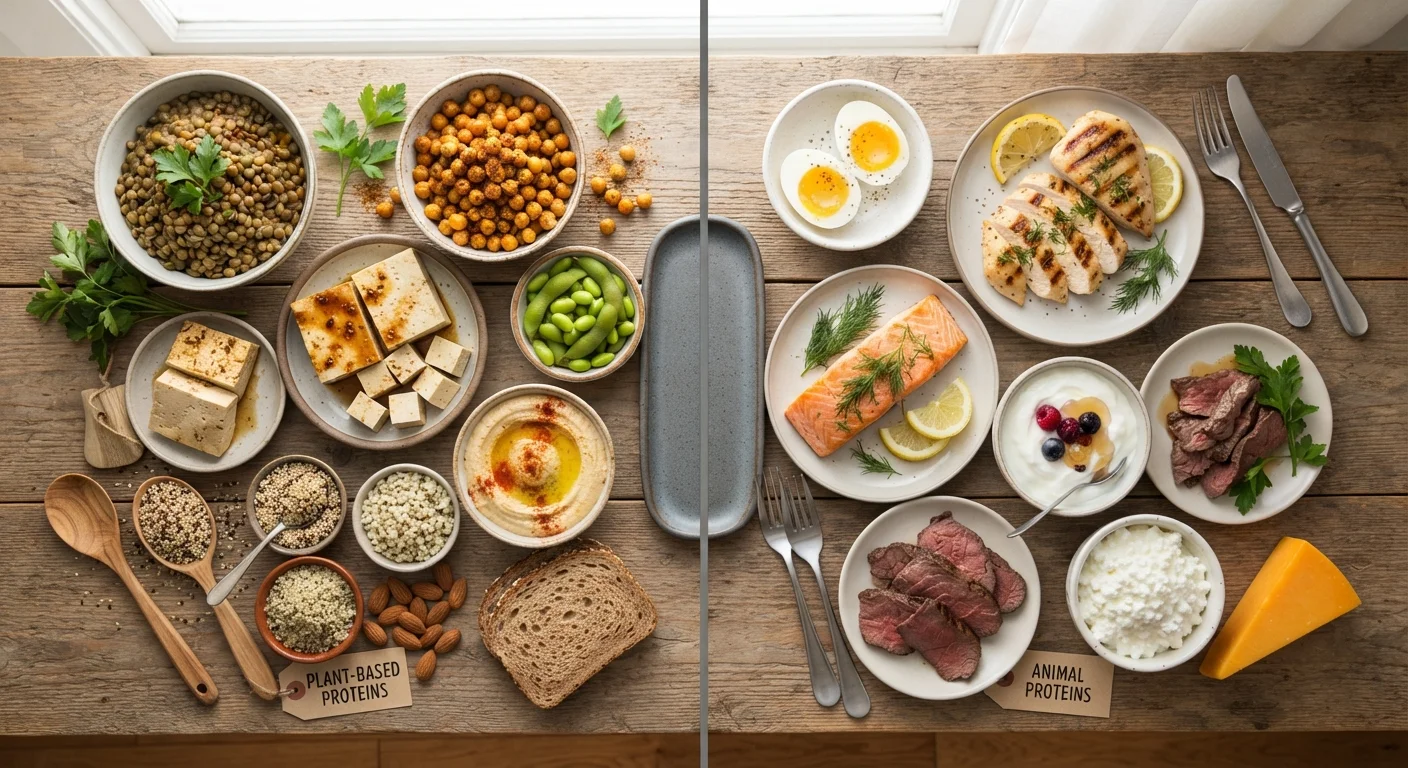
Option A
Plant-Based Protein
The fiber-rich, nutrient-diverse option.
Best for: People seeking protein alongside fiber, phytonutrients, and lower saturated fat intake.
Option B
Animal Protein
The complete, highly bioavailable classic.
Best for: Those prioritizing complete amino acid profiles and nutrient density in compact servings.
What Makes a Protein 'Complete' or 'Incomplete'?
Protein is made up of amino acids — the building blocks your body uses for everything from muscle repair to immune function. Of the 20 amino acids, nine are considered essential, meaning your body cannot produce them and must obtain them through food.
Animal proteins — including meat, poultry, fish, eggs, and dairy — contain all nine essential amino acids in proportions that closely match human needs. Nutrition scientists describe these as complete proteins. Most plant proteins, by contrast, are incomplete: they supply all nine amino acids but often have one or two present in very small amounts, called limiting amino acids. For example, grains tend to be low in lysine, while legumes are low in methionine.
The practical fix is simpler than it sounds. Eating a variety of plant protein sources throughout the day — beans and rice, hummus and whole-grain pita, lentil soup with bread — naturally fills these gaps. You don't need to combine them at every single meal; a balanced day's eating does the work. For a framework on building those balanced meals, see our practical guide to balancing your plate.
| Criterion | Plant-Based Protein | Animal Protein |
|---|---|---|
| Amino acid completeness | Often incomplete; combinations needed | Complete in most sources |
| Protein digestibility (DIAAS) | Moderate; varies by food & prep | Generally high |
| Fiber content | High (legumes, grains, seeds) | None |
| Saturated fat | Very low to none | Varies; higher in red/processed meat |
| Vitamin B12 | Absent (supplementation needed) | Naturally abundant |
| Iron type & absorption | Non-heme; lower absorption | Heme iron; higher absorption |
| Phytonutrients | Rich and diverse | Minimal |
| Environmental footprint | Generally lower | Generally higher |
Bioavailability: How Much Protein Does Your Body Actually Use?
Eating 20 grams of protein on paper doesn't mean your body absorbs and uses all 20 grams. Bioavailability — the proportion of a nutrient that the body can digest, absorb, and put to work — differs meaningfully between protein sources.
Nutritionists use a measure called the PDCAAS or the newer DIAAS to rank protein quality. Animal sources like eggs, dairy, and fish consistently score near the top. Many plant proteins score lower because fiber and certain compounds called antinutrients (phytates and tannins) can partially interfere with digestion.
Cooking, soaking, fermenting, and sprouting plant foods substantially reduces antinutrients and improves digestibility. Tofu and tempeh, for instance, are more digestible than unprocessed soybeans. The takeaway: preparation method matters, and a varied, well-cooked plant-based diet can overcome much of the bioavailability gap.
~95%
Digestibility of egg protein
Eggs are among the highest-scoring proteins on the DIAAS scale, making them a benchmark for protein quality in nutrition research.
~85%
Digestibility of cooked legume protein
Proper cooking of beans and lentils significantly improves their protein digestibility compared to raw or undercooked forms.
~95%
Protein digestibility of soy isolate
Isolated soy protein scores close to animal proteins on the PDCAAS scale, making it an efficient plant-based option.
Beyond Protein: The Nutritional Package That Comes With Each Source
Protein never travels alone. The broader nutritional profile of a food matters just as much as its protein content.
Animal proteins bring highly absorbable heme iron, vitamin B12 (essential and found almost exclusively in animal foods), zinc, and omega-3 fatty acids (especially from fatty fish). Fatty cuts of red meat and full-fat dairy also deliver saturated fat, which most dietary guidelines suggest limiting to support cardiovascular health.
The guidance here isn't to avoid animal protein categorically — it's to choose leaner cuts, include fatty fish regularly, and moderate processed meat consumption, a pattern consistently supported by nutrition research.
Plant proteins come packaged with dietary fiber, which most Americans under-consume, as well as phytonutrients (beneficial plant compounds) and unsaturated fats. They contribute virtually no cholesterol and generally lower saturated fat. The trade-off: plant-based iron (non-heme iron) is absorbed less efficiently, vitamin B12 is absent, and zinc bioavailability is lower. People relying primarily on plant proteins should pay attention to these micronutrients and discuss supplementation with a healthcare provider.
For guidance on spotting these nutrients on packaging, our nutrition labels explainer is a practical next step. And understanding how processing affects the protein foods you buy is equally important — explore that in our piece on whole foods vs. processed foods.
A Note on Vitamin B12 for Plant-Based Eaters
Vitamin B12 is found almost exclusively in animal-derived foods. People who significantly limit or eliminate animal products are at meaningful risk of deficiency over time, which can affect nerve function and red blood cell production. If you eat primarily plant-based, speak with a healthcare provider about whether B12 supplementation or fortified foods are appropriate for your situation. This is one area where dietary tracking alone is not sufficient — a blood test is the only reliable way to assess your status.
Making It Work in Real Life
Most people don't need to choose one camp exclusively. Research consistently suggests that eating patterns blending plant-forward protein with moderate amounts of animal protein — sometimes called a flexitarian approach — can support a wide range of health goals.
Practical daily habits that reflect the science:
- Anchor meals with legumes. Lentils, black beans, edamame, and chickpeas are affordable, fiber-rich, and protein-dense.
- Include soy foods regularly. Tofu, tempeh, and edamame are among the few plant proteins with PDCAAS scores that rival animal sources.
- Choose leaner animal proteins when you include them. Eggs, plain Greek yogurt, fish, and skinless poultry deliver protein efficiently with less saturated fat.
- Diversify your plate. A mix of grains, legumes, vegetables, nuts, and seeds throughout the day naturally covers your amino acid bases.
If you're curious how protein fits into an active lifestyle, our Fitness & Movement hub offers practical exercise and recovery guidance to pair with your nutrition choices.
This article is for general informational purposes only and is not a substitute for professional medical or dietary advice. Please consult a registered dietitian or qualified healthcare provider before making significant changes to your diet, especially if you have a health condition or specific nutritional needs.
The content on this site is for informational purposes only and is not a substitute for professional advice. Always consult a qualified professional for guidance specific to your situation.