

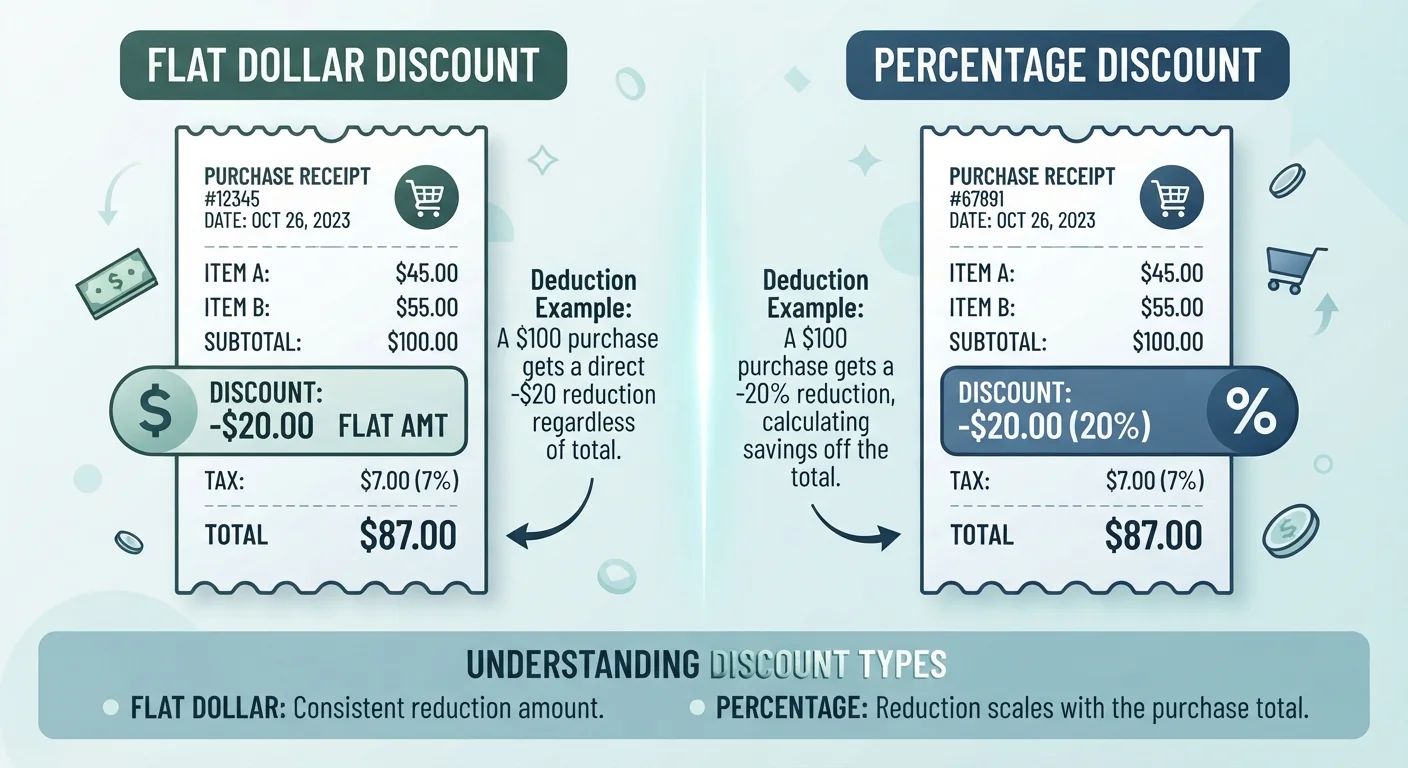
Option A
Copay
The predictable, fixed-dollar cost-share.
Best for: Routine visits where you want to know exactly what you'll owe before you walk in.
Option B
Coinsurance
The percentage-based cost-share that scales with the bill.
Best for: Plans that spread larger medical expenses proportionally between you and your insurer.
What Is a Copay?
A copay (short for copayment) is a fixed, predetermined dollar amount you pay for a covered healthcare service at the time you receive it. Your insurer sets this amount in advance — say, $25 for a primary care visit or $50 for a specialist — and that's what you owe regardless of what the provider actually charges.
Copays are straightforward by design. You don't need to calculate anything; the number is printed right on your insurance card or in your plan documents. They're most commonly applied to office visits, urgent care trips, and prescription drug tiers.
One important nuance: copays often apply before your deductible is met on many plans, particularly for primary care. This means you may pay the same $25 copay whether you've met your deductible or not. However, plan designs vary widely, so always confirm how your specific policy handles this. For a broader look at how copays fit alongside premiums and deductibles, see our breakdown of core insurance cost terms.
What Is Coinsurance?
Coinsurance is your share of a covered service's cost expressed as a percentage — and it typically kicks in after you've satisfied your deductible for the year. If your plan has 20% coinsurance, you pay 20% of the insurer's allowed amount for a service, and your plan pays the remaining 80%.
Because coinsurance is a percentage, your actual dollar cost depends entirely on the size of the bill. A 20% share of a $200 lab test costs you $40. The same 20% on a $5,000 outpatient procedure costs you $1,000. That variability is the key difference from a copay.
Coinsurance is common for hospital stays, imaging, surgery, and other higher-cost services. Understanding how your deductible interacts with coinsurance is critical — you can explore that relationship in detail at our guide on deductibles and out-of-pocket maximums.
| Criterion | Copay | Coinsurance |
|---|---|---|
| How it's calculated | Fixed dollar amount | Percentage of allowed cost |
| Predictability | High — amount is set in advance | Variable — depends on service cost |
| When it typically applies | Often before deductible is met | Usually after deductible is met |
| Common service types | Office visits, prescriptions, urgent care | Hospital stays, surgery, imaging |
| Counts toward out-of-pocket max | Yes (on most plans) | Yes |
| Risk on large bills | Low — capped at fixed amount | Higher — scales with the bill |
How They Work Together in One Plan
Most health insurance plans don't use only copays or only coinsurance — they blend both. A typical plan might charge a $30 copay for primary care visits, a $60 copay for specialist visits, and then 20% coinsurance (after the deductible) for hospital care and surgery.
This structure means the rules governing what you owe shift depending on the type of service. Reading your plan's Summary of Benefits and Coverage (SBC) document is the clearest way to see which services trigger a copay and which trigger coinsurance.
83%
Employer plans using both copays and coinsurance
According to KFF (Kaiser Family Foundation) employer health benefits survey data, the large majority of employer-sponsored plans incorporate both copays and coinsurance for different service categories.
20%
Typical coinsurance rate on many plans
A common plan structure requires enrollees to pay 20% of allowed costs after the deductible, with the insurer covering the remaining 80%.
Critically, both copays and coinsurance accumulate toward your plan's out-of-pocket maximum — the annual cap on what you can be required to spend. Once you hit that ceiling, your insurer covers 100% of covered costs for the rest of the plan year. For a full picture of how these numbers interact, see our article on deductibles, premiums, and out-of-pocket maximums.
The type of plan you're enrolled in also shapes how copays and coinsurance apply. HMO plans, for instance, often rely heavily on copays for in-network care, while PPO plans may use coinsurance for a broader range of services. Learn how plan structure affects costs in our HMO vs. PPO comparison.
Copays and Coinsurance in Pet Insurance
Cost-sharing concepts aren't limited to human health coverage. Many pet insurance policies use coinsurance — often called a reimbursement percentage — to determine how much of a vet bill is covered. Understanding these terms helps when evaluating any coverage type. See how pet insurance coverage actually works for a plain-language explanation.
This article provides general insurance education and is not personalized financial, legal, or insurance advice. Coverage terms, cost-sharing structures, and eligibility vary by plan and insurer. Always review your actual policy documents and consult a licensed insurance agent or adviser for guidance specific to your situation.
The content on this site is for informational purposes only and is not a substitute for professional advice. Always consult a qualified professional for guidance specific to your situation.