

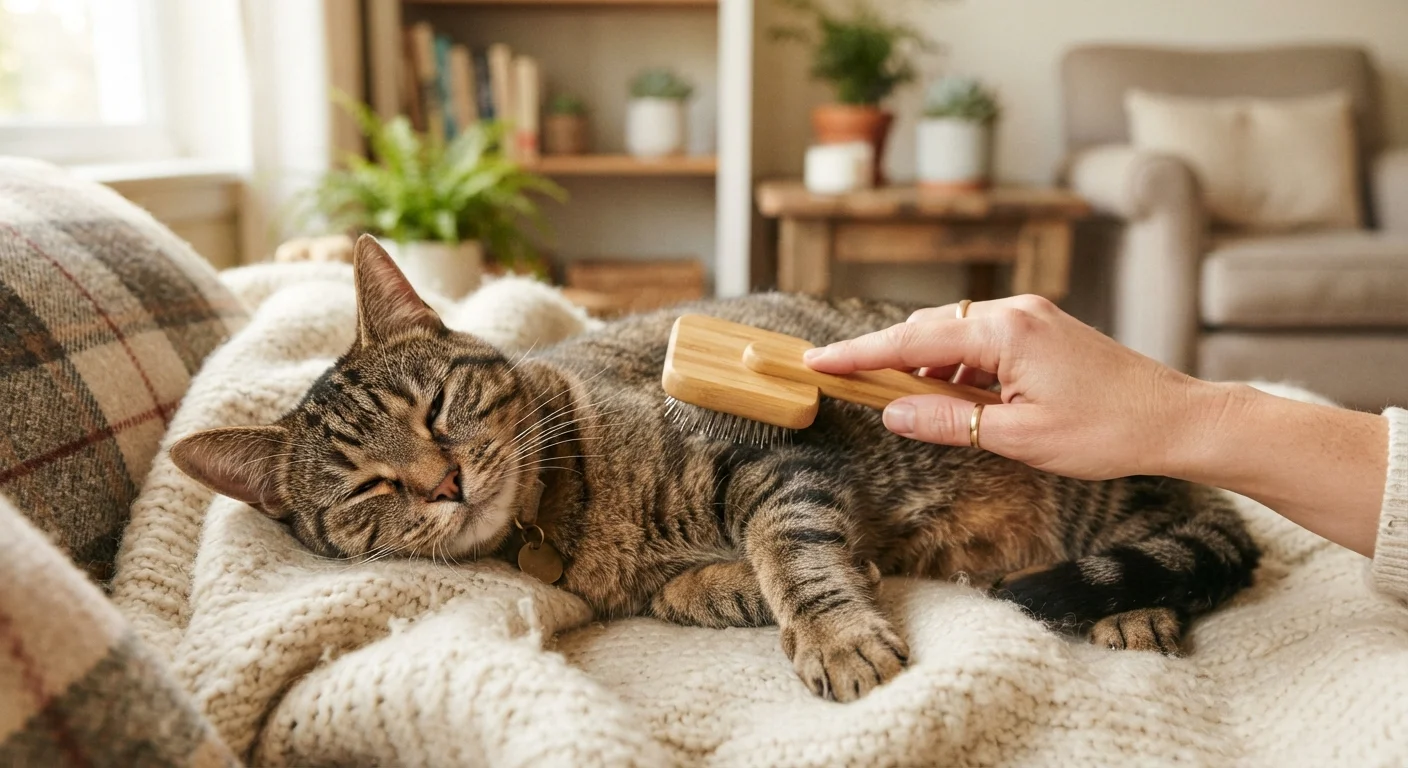
Why At-Home Grooming Matters for Your Cat
Cats are famously self-cleaning, but self-grooming alone doesn't cover everything. Regular human-assisted grooming reduces the volume of loose fur your cat ingests during self-cleaning — a key factor in managing hairballs. It also gives you a routine opportunity to check for skin irregularities, fleas, ticks, ear debris, and overgrown nails before they become veterinary concerns.
Grooming is also a relationship-building activity. Cats in multi-cat households often allogroom — grooming one another as a social bonding behavior. When done with patience, owner-led grooming can fulfill a similar function, deepening your cat's trust. If you've recently adopted a feline companion, see our guide to bringing a cat home for the first time for foundational trust-building advice before establishing a grooming routine.
Grooming is also part of a broader preventive care picture. Our cat owner's annual wellness checklist covers grooming alongside dental care, parasite prevention, and vet visits as interconnected pillars of feline health.
Time Sessions Around Natural Calm
Cats are often most relaxed after a meal or a play session when they naturally want to rest. Scheduling grooming during these windows dramatically increases the likelihood of a cooperative cat. Keep early sessions under five minutes to build tolerance gradually.
What You'll Need Before You Begin
Having the correct tools reduces friction and makes sessions more comfortable for your cat. Coat type determines which tools matter most — short-haired cats need less equipment than their long-haired counterparts, who are prone to tangles and matting.
Slicker brush or soft-bristle brush
Removes loose fur, distributes natural oils, and detangles light matting for most coat types.
Stainless steel wide-tooth comb
Works through dense or long coats and helps locate hidden mats before they tighten.
Cat nail clippers (scissor or guillotine style)
Trims sharp nail tips safely to prevent snagging or accidental scratches.
Cat-specific ear cleaning solution
Gently loosens debris in the outer ear canal; only products formulated for cats should be used.
High-value treats
Reinforces calm behavior and builds a positive association with each grooming step.
Grooming wipes or damp cloth
Spot-cleans facial folds or paws when a full bath is unnecessary.
What you will need
This article is for general informational purposes only and does not constitute veterinary advice. Always consult a licensed veterinarian for guidance specific to your cat's health needs.
Step-by-Step: Grooming Your Cat at Home
Know When to Call a Veterinarian
At-home grooming is general maintenance, not a substitute for professional care. If you notice skin sores, unusual lumps, persistent matting, excessive scratching, or signs of ear infection during grooming, contact your veterinarian before continuing. This article provides general information only and does not constitute veterinary advice.
Choose the right time and space
Select a quiet room with minimal foot traffic and low noise. Place a non-slip mat on a stable surface at a comfortable working height — or sit on the floor with your cat in your lap if they prefer it. Dim or natural lighting helps keep the environment calm. Avoid grooming immediately after a stressful event like a car trip or veterinary visit.
Let your cat inspect the tools first
Place your brushes and clippers on the floor and allow your cat to sniff them at their own pace. This brief investigation removes the element of surprise. Offer a treat while they explore — you're beginning to build a positive association before any touching occurs.
Start with gentle petting, then introduce the brush
Begin by stroking your cat along their back and sides the way you normally would. After a minute, pick up the brush and mimic the same motion — short, gentle strokes in the direction of fur growth. Focus on areas cats typically enjoy: the back and sides. Avoid the belly, paws, and tail base until your cat is comfortable with basic brushing.
Work through the coat systematically
Move section by section — from neck to tail, then flanks. For short-haired cats, two to three passes per area is typically sufficient. Long-haired cats may require more attention and benefit from sessions every two to three days. If you encounter a mat, hold the fur at the root with your fingers to limit pulling and gently work the comb through the outer edge. Do not attempt to cut out large mats at home; a professional groomer or veterinarian should handle severe matting.
Trim the nails carefully
Wrap your cat gently in a towel or have them sit in your lap. Hold one paw and apply light pressure to the pad to extend the claw. Identify the pink quick — the blood vessel running through the nail — and clip only the clear, curved tip beyond it. Trim one or two nails per session if your cat resists, and reward immediately after each clip.
Check and clean ears
Gently fold back the ear flap and inspect the visible outer canal. Healthy ears appear light pink and have minimal debris. If light wax is present, dampen a cotton ball with a cat-formulated cleaning solution and wipe only the visible outer surface. Never insert anything into the ear canal. Dark discharge, strong odor, or excessive scratching at the ears warrants a veterinary visit rather than home treatment.
End every session on a positive note
Stop before your cat shows signs of stress — tail flicking, skin twitching, flattened ears, or attempts to move away are all signals to pause. Offer a treat, praise calmly, and let your cat walk away freely. Short sessions that end positively build trust faster than longer ones that push past your cat's comfort threshold.
Troubleshooting Common Grooming Challenges
Cat who refuses brushing
Start with just one stroke and immediately reward. Gradually increase the number of strokes over days or weeks. Some cats respond better to grooming gloves than traditional brushes — the sensation is closer to a hand pet. Consistent, low-pressure repetition is more effective than forcing longer sessions.
Matted fur
Prevention is the most practical strategy: brush long-haired cats at least every two to three days. If mats develop, do not cut them with scissors — the skin beneath a mat sits closer than it appears and cuts can cause serious injury. A professional groomer or veterinarian is the safer option for significant matting.
Cats who dislike nail trims
Desensitize paw handling separately from nail trimming. Touch and gently squeeze paws during calm petting sessions daily, rewarding each time. Once your cat tolerates paw handling, introduce the clipper. Trim one nail per session if needed — there is no rule requiring all nails in a single sitting.
For a broader look at how grooming integrates with overall feline wellbeing, our complete guide to feline preventive care covers every major health maintenance category. And if your cat lives alone, consider pairing a grooming routine with enrichment strategies from our article on keeping an only cat mentally stimulated — a calm, engaged cat is often easier to groom.
The content on this site is for informational purposes only and is not a substitute for professional advice. Always consult a qualified professional for guidance specific to your situation.