

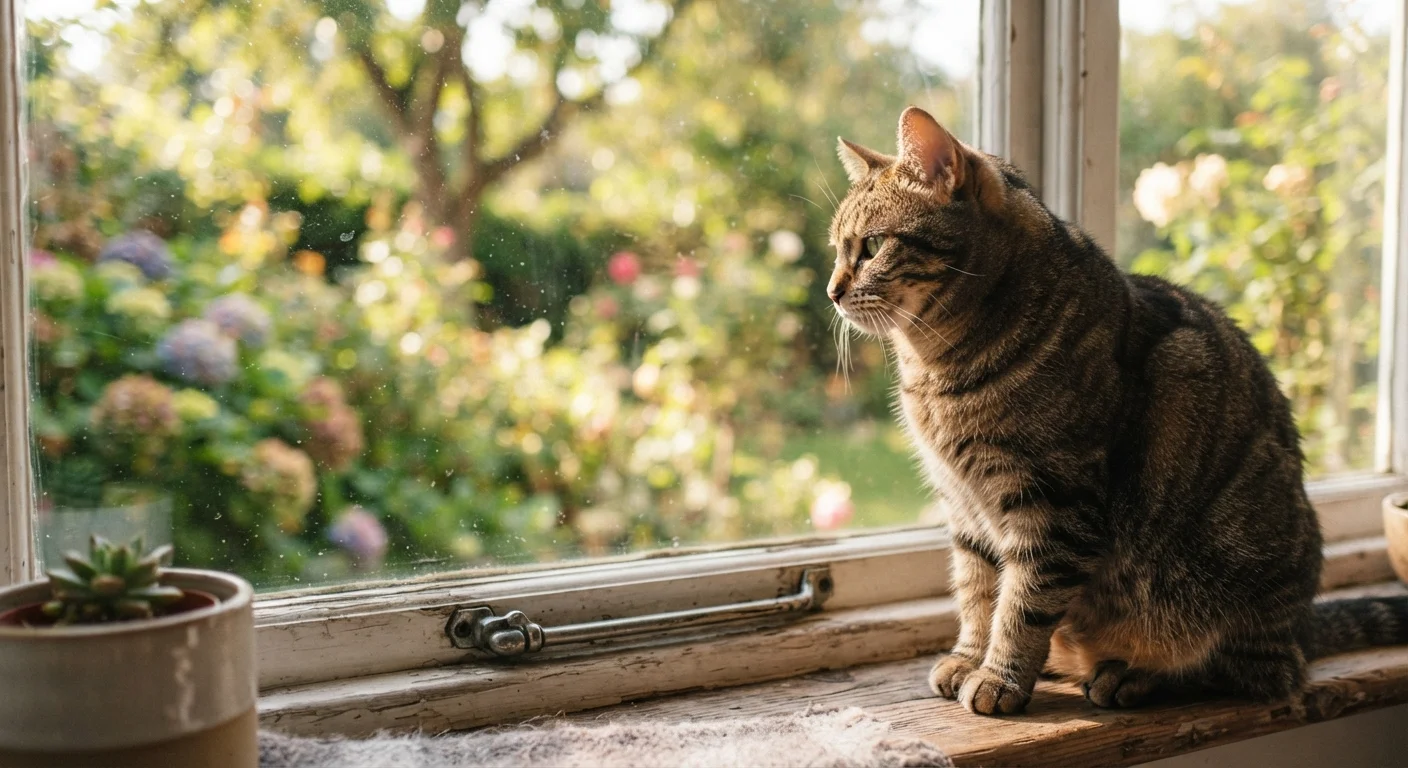
Our Verdict
Indoor living generally offers a longer, safer life, but outdoor access can meet behavioral needs that are harder to replicate inside. For most cat owners, the answer lies somewhere between a strictly indoor environment and unrestricted outdoor roaming — structured supervised outdoor time or a secure enclosure can offer meaningful compromise. Whatever you choose, discuss your cat's specific needs with a veterinarian to build the right preventive care plan.
Cat owners who want a clear framework to weigh their individual cat's temperament, health status, and local environment before making or changing a lifestyle decision.
The Core Question: What Does Each Lifestyle Actually Mean?
An indoor cat lives exclusively inside the home, relying entirely on its environment and owner for stimulation, exercise, and social interaction. An outdoor cat — or a cat with outdoor access — spends some or all of its time outside, often able to roam, hunt, and engage with its natural surroundings.
Between these poles sits a growing middle ground: supervised outdoor time on a harness and leash, screened-in "catios," or fenced yards with cat-proof barriers. Understanding the genuine tradeoffs helps owners choose — or design — an arrangement that serves their cat's individual temperament and health profile. For a broader look at how environment shapes preventive care, see how lifestyle shapes preventive care needs.
The Case for Keeping Cats Indoors
The safety argument for indoor living is difficult to overstate. Outdoor cats face exposure to traffic, dogs, wildlife predators, toxins, poisons left for rodents, and disease from other cats. Veterinary and animal welfare organizations consistently observe that indoor cats tend to live significantly longer than those with outdoor access.
Significantly reduced risk of injury or death
Indoor cats avoid traffic, predators, and neighborhood hazards that represent leading causes of injury and premature death in outdoor cats.
Lower exposure to infectious disease
Diseases like FeLV and FIV spread through contact with infected cats; indoor living dramatically limits that exposure for most pets.
No risk of getting lost or stolen
Cats kept indoors cannot wander far from home, reducing the likelihood of becoming lost, trapped, or taken in by another household.
Protection from environmental toxins
Rodenticides, toxic plants, antifreeze, and lawn chemicals are real outdoor hazards that indoor cats are never exposed to.
Indoor cats also sidestep several infectious diseases — feline leukemia virus (FeLV) and feline immunodeficiency virus (FIV) spread primarily through contact with infected cats. Keeping a cat inside reduces this exposure substantially.
The enrichment challenge is real, however. Without deliberate effort, indoor environments can become boring. Boredom contributes to inactivity, obesity, and stress-related behavioral problems. Our guide to keeping a solo cat mentally stimulated covers practical strategies for filling that gap.
The Case for Allowing Outdoor Access
Cats are natural hunters with strong instincts for exploration, territory, and prey-tracking behavior. For many cats, outdoor access provides a quality-of-life dimension that is difficult — though not impossible — to replicate indoors.
Requires deliberate enrichment to prevent boredom
Indoor cats depend entirely on their owners to provide stimulation through toys, vertical space, play, and environmental variety — without it, behavioral problems can develop.
Higher obesity risk without active lifestyle
Limited space and fewer natural movement triggers mean indoor cats often exercise less, making weight management an ongoing concern for many owners.
Outdoor hazards including disease and injury
Cats allowed outside face real risks from traffic, wildlife, other cats, and infectious diseases — risks that accumulate over a lifetime of outdoor access.
Parasite exposure increases substantially
Fleas, ticks, intestinal parasites, and ear mites are far more common in outdoor cats, requiring more intensive and consistent preventive treatment.
Outdoor environments deliver sensory variety, physical exercise, and behavioral outlets that align with a cat's evolutionary wiring. Cats allowed outside often show lower rates of obesity and fewer compulsive behaviors, though individual variation is significant.
It's worth noting that outdoor cats also carry risks to local wildlife. Studies have documented that free-roaming cats contribute to bird and small mammal mortality, a consideration for owners weighing community and ecological impact alongside their pet's wellbeing.
The Catio and Harness Middle Ground
Many veterinarians and feline behaviorists recommend supervised outdoor access as a meaningful compromise. Secure outdoor enclosures (often called "catios") and leash-and-harness walks can provide fresh air, sensory stimulation, and physical activity while limiting the most serious risks of free roaming. Not every cat will adapt to a harness, but gradual positive-reinforcement training starting in kittenhood tends to produce the best results.
How Lifestyle Shapes Veterinary and Preventive Care
A cat's indoor or outdoor status directly changes the preventive care your veterinarian will recommend. Outdoor cats are at higher risk for parasites including fleas, ticks, ear mites, and intestinal worms. They also require broader vaccination coverage — rabies, FeLV, and others — based on their exposure level.
2–5×
Outdoor cat disease exposure multiplier
Veterinary sources commonly note that outdoor cats face substantially higher rates of parasitic and infectious disease than their indoor counterparts.
10–15 yrs
Typical indoor cat lifespan
Indoor cats generally live between 10 and 15 years on average, compared to estimates of 2 to 7 years for free-roaming outdoor cats, according to widely cited veterinary guidelines.
Indoor cats are not risk-free: parasites can enter the home on clothing, and some infections spread through shared litter or contact with new animals. Still, risk profiles differ enough that your vet should know your cat's routine when building a wellness plan. For a stage-by-stage overview of health benchmarks, see feline wellness milestones every owner should know.
Spay and neuter status also intersects with lifestyle: intact outdoor cats face additional risks related to roaming behavior and disease transmission. Spaying and neutering reduces roaming drive and disease risk, and is strongly recommended regardless of lifestyle.
This article is for general informational purposes only and is not a substitute for professional veterinary advice. Always consult a licensed veterinarian for guidance specific to your cat's health and circumstances.
The content on this site is for informational purposes only and is not a substitute for professional advice. Always consult a qualified professional for guidance specific to your situation.