

Why This Problem Deserves More Than a Quick Fix
Litter box avoidance is one of the most misunderstood challenges in cat ownership. It is also one of the most consequential: inappropriate elimination is consistently cited as a leading reason cats are surrendered to shelters. Understanding what actually drives the behavior — and what mistakes owners make in response — is essential to resolving it and preserving the human-animal bond.
The instinct to label the behavior as defiant is understandable but misplaced. Cats are fastidious by nature and actively prefer to use a designated elimination spot. When they stop, something has changed — medically, environmentally, or both. See our complete guide to feline preventive care for a broader look at how routine wellness habits can catch these issues early.
Don't Assume It's Behavioral First
Many owners jump to behavioral solutions — new litter, new box, retraining — before ruling out a medical cause. Conditions like urinary tract infections, kidney disease, feline idiopathic cystitis, and arthritis are all common drivers of litter box avoidance. A veterinary exam should always be the first step when the problem is new or sudden.
Common Mistakes Cat Owners Make — And How to Correct Them
The errors below represent the most frequently observed missteps when cats begin eliminating outside the box. Each one is correctable, and recognizing your own approach honestly is the first step toward a lasting solution.
Assuming the behavior is spite or defiance rather than a signal of distress.
Why it happens: Cats have a reputation for being aloof and willful, which leads many owners to interpret elimination outside the box as deliberate misbehavior directed at them.
Not cleaning the litter box frequently enough.
Why it happens: Owners often underestimate how sensitive cats are to odor. A box that seems tolerable to a human may be genuinely repellent to a cat with a sense of smell that is estimated to be 14 times stronger than ours.
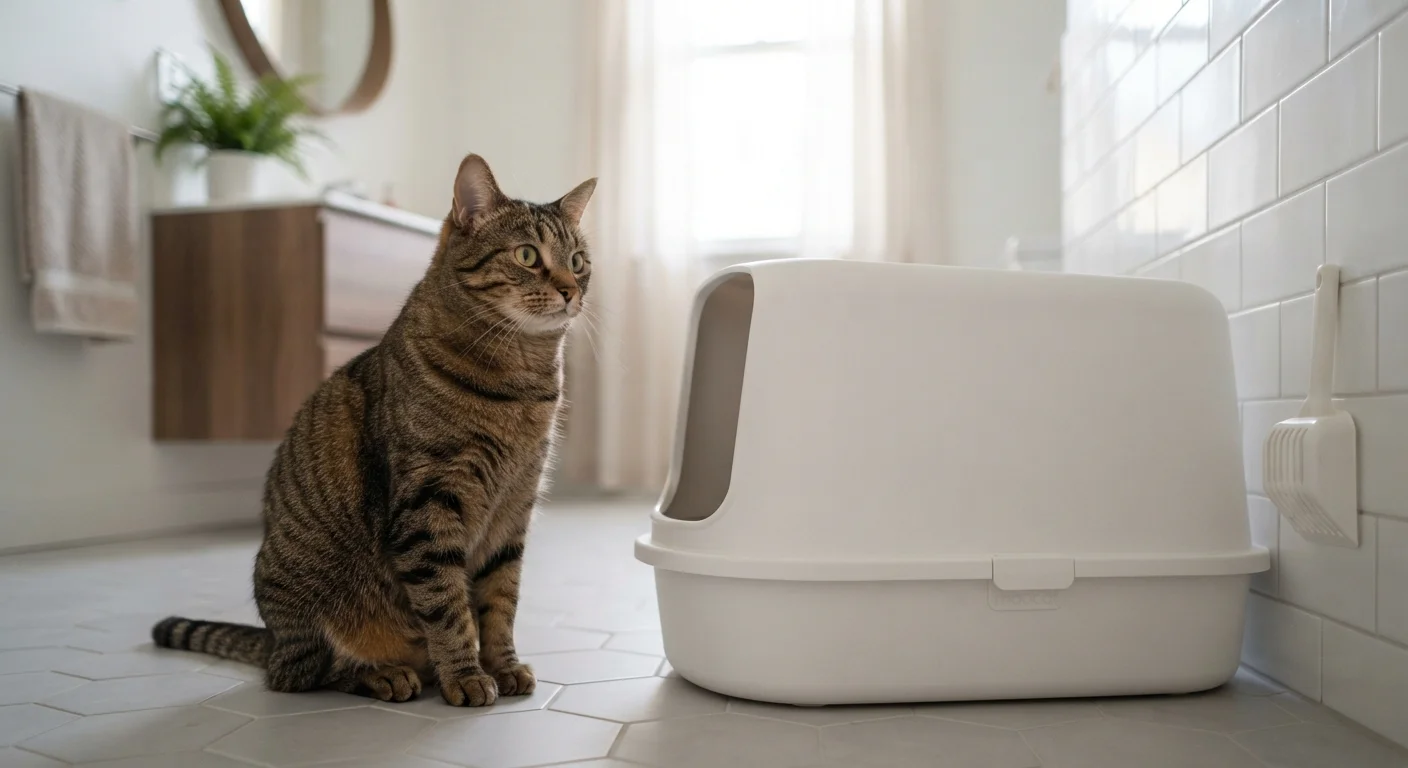
Using a litter box that is too small or has a hood that traps odors.
Why it happens: Many commercially available litter boxes are sized for aesthetics and human convenience rather than feline comfort. Covered boxes, while tidy-looking, concentrate ammonia and waste smell inside.
Placing the litter box in a loud, high-traffic, or hard-to-reach location.
Why it happens: Owners tend to hide litter boxes in laundry rooms, garages, or basement corners for odor control — spaces that can be startling, cold, or difficult for elderly or arthritic cats to access.
Switching litter types abruptly without a transition.
Why it happens: Owners often change litter for reasons of cost, scent, or dust reduction without realizing that cats can be strongly attached to a specific texture and smell.
Punishing the cat after finding an accident.
Why it happens: Frustrated owners may scold, spray water, or physically move a cat to the box after discovering soiled laundry or carpet — believing this teaches the cat where elimination belongs.
Sudden Changes Require Veterinary Attention
If your cat abruptly stops using the litter box — especially if straining, crying, or producing little to no urine — this is a potential medical emergency. Urinary blockages in cats can be life-threatening within hours. Do not wait to see if the behavior resolves on its own; contact your veterinarian immediately.
For broader context on how a cat's living environment shapes its health behaviors, our article on indoor versus outdoor cat tradeoffs offers useful perspective. And because litter box habits often intersect with overall wellness, the cat owner's annual wellness checklist is a practical resource to review alongside this one.
10%
Cats affected by litter box issues
Estimates from veterinary behaviorists suggest that approximately 10% of cats will develop a litter box problem at some point in their lives.
#1
Most common behavioral complaint in cats
Inappropriate elimination is consistently cited by veterinary professionals as the leading behavioral reason cats are surrendered to shelters in the United States.
When to Involve Your Veterinarian
Any new or sudden change in litter box behavior — particularly in a cat with a previously reliable routine — should prompt a veterinary consultation before environmental changes are made. Your veterinarian can evaluate for urinary tract infections, feline idiopathic cystitis, kidney disease, diabetes, hyperthyroidism, and musculoskeletal pain, all of which can cause or contribute to avoidance behavior.
If a physical cause is ruled out, your vet may refer you to a veterinary behaviorist or provide guidance on environmental modification. The common feline health myths article is also worth reading, as some widely held assumptions about cat behavior can delay owners from seeking the help their cat actually needs.
This article provides general educational information about cat care and is not a substitute for professional veterinary advice. Always consult a licensed veterinarian for guidance specific to your cat's health and behavior.
The content on this site is for informational purposes only and is not a substitute for professional advice. Always consult a qualified professional for guidance specific to your situation.