

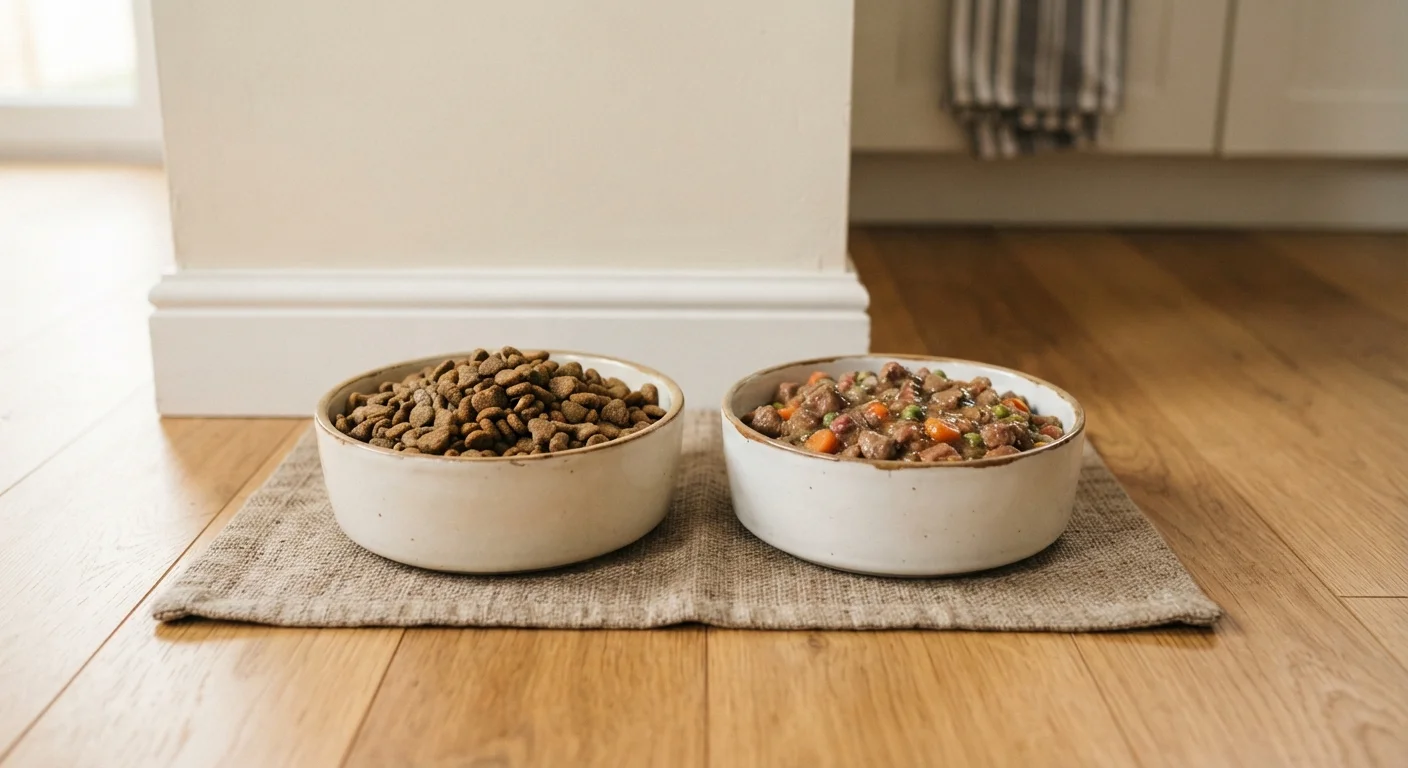
Option A
Dry Dog Food (Kibble)
The convenient, shelf-stable everyday staple.
Best for: Dogs needing portion-controlled, budget-friendly feeding with dental texture benefits.
Option B
Wet Dog Food (Canned)
The moisture-rich, palatable alternative.
Best for: Dogs requiring higher hydration, seniors with dental issues, or picky eaters needing appetite support.
What Sets These Two Formats Apart
At the most fundamental level, dry and wet dog foods differ in moisture content, and that single variable cascades into differences in texture, calorie density, palatability, cost, and shelf life. Dry food — or kibble — typically contains around 10% moisture. Wet food, sold in cans or pouches, usually ranges from 70% to 80% moisture. That gap matters more than many owners initially realize.
Because wet food is largely water by weight, it tends to have fewer calories per gram than dry food. This can be useful for weight management, but it also means dogs may need to eat a larger volume to meet their caloric needs. Conversely, kibble is calorie-dense, which makes portion control especially important — particularly for less active dogs prone to weight gain.
When evaluating either format, it helps to understand what the ingredient list is actually communicating. Our guide to common dog food ingredients walks through how to decode protein sources, fillers, and preservatives regardless of which format you choose.
| Criterion | Dry Food (Kibble) | Wet Food (Canned) |
|---|---|---|
| Moisture content | ~10% | 70–80% |
| Calorie density | High per gram | Lower per gram |
| Typical cost per serving | Generally lower | Generally higher |
| Shelf life after opening | Weeks in sealed container | 1–2 days refrigerated |
| Texture | Crunchy, hard | Soft, moist |
| Palatability for picky eaters | Moderate | Generally higher |
| Hydration support | Minimal | Significant |
| Ease of portioning | Simple by weight or cup | Requires measuring and refrigerating |
Hydration, Dental Health, and Life Stage Considerations
One of the most clinically relevant differences between the two formats is hydration. Dogs that consume wet food receive a meaningful portion of their daily fluid intake through their meals. This can be beneficial for dogs with a history of urinary tract issues, kidney concerns, or those who simply don't drink enough water. However, this is general information — always discuss specific health conditions with your veterinarian before adjusting your dog's diet.
The dental health picture is more nuanced than popular belief suggests. While the crunching action of kibble has traditionally been associated with scraping plaque, veterinary dental research indicates that dry food alone is not a reliable substitute for active dental care such as brushing or professional cleanings. The texture may offer marginal benefit, but it doesn't eliminate the need for a broader dental hygiene routine.
Life stage matters significantly here. Puppies often benefit from the caloric density of kibble, though some dry puppy foods can be moistened during the transition from mother's milk. Senior dogs with missing teeth or gum sensitivity frequently do better with wet food's softer texture. Dogs managing chronic illness — such as kidney disease, where protein and phosphorus intake must be carefully controlled — may have specific format recommendations from their vet.
70–80%
Moisture content in wet dog food
Compared to roughly 10% in dry kibble, making wet food a notable source of daily fluid for dogs.
~10%
Moisture content in dry kibble
The low moisture level makes kibble calorie-dense and shelf-stable but provides minimal hydration on its own.
2 in 3
Dogs show signs of dental disease by age 3
According to the American Veterinary Medical Association, dental disease is among the most common conditions seen in adult dogs, underscoring that food texture alone is insufficient for oral health.
For a broader view of how feeding fits into overall daily routines, see building a consistent dog care routine.
Cost, Storage, and Practical Feeding
For most households, cost is a real factor. On a per-serving basis, dry food tends to be considerably less expensive than wet food of comparable nutritional quality. Kibble also stores easily at room temperature in a sealed container, with no refrigeration required after opening — unlike wet food, which must be covered and refrigerated once opened and typically used within a day or two.
Many veterinarians and canine nutritionists support a mixed-feeding approach: kibble as the dietary base, supplemented with a small portion of wet food. This can improve palatability, add moisture, and keep meals varied without dramatically increasing cost. If you pursue this approach, it's important to account for the total caloric intake across both formats to avoid unintentional overfeeding.
Learning to read the guaranteed analysis panel and AAFCO nutritional adequacy statement on packaging helps ensure any food — dry or wet — meets your dog's complete dietary needs. Our article on interpreting pet food nutrition labels explains what these markings actually mean.
When to Involve Your Veterinarian
Certain health conditions — including kidney disease, diabetes, obesity, and food allergies — can make the choice between dry and wet food clinically significant rather than simply a matter of preference. If your dog has an ongoing health issue, a vet or board-certified veterinary nutritionist can recommend a format and formulation tailored to their specific needs. General feeding guidelines on packaging are a starting point, not a prescription.
This article is for general informational purposes only and is not a substitute for veterinary advice. Always consult a licensed veterinarian before making significant changes to your dog's diet, especially if your dog has an existing health condition.
The content on this site is for informational purposes only and is not a substitute for professional advice. Always consult a qualified professional for guidance specific to your situation.