

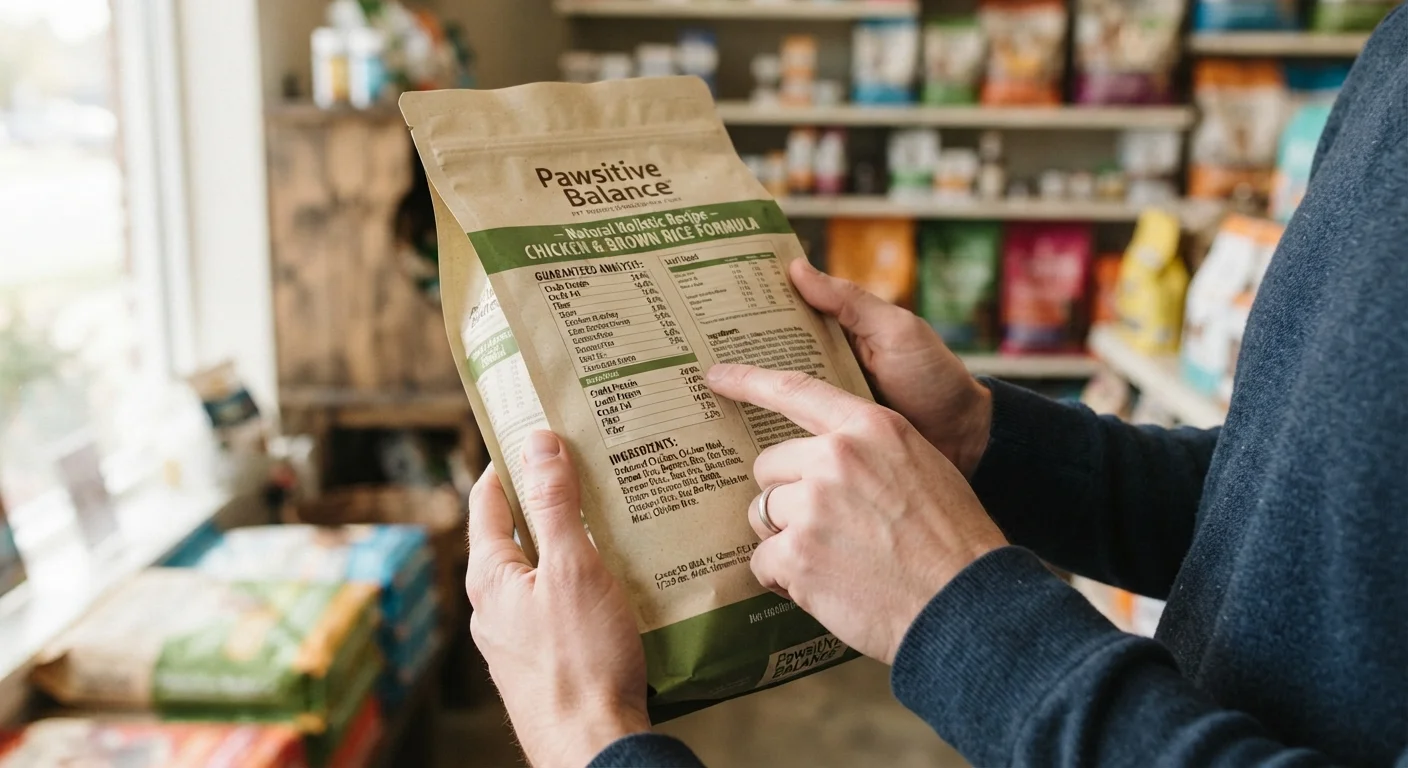
Why Pet Food Labels Are Structured the Way They Are
Pet food labels in the United States are regulated by the Association of American Feed Control Officials (AAFCO) and, at the state level, by individual state departments of agriculture. This oversight means every panel on a pet food bag — from the ingredient list to the nutrition claim — must follow specific formatting rules. Understanding those rules is the foundation of reading any label with confidence.
Unlike human food packaging, pet food labels don't display a familiar "Nutrition Facts" box. Instead, they present a guaranteed analysis and a separate ingredient list, both of which communicate different things. The guaranteed analysis reports nutrient levels as minimums or maximums (crude protein minimum, crude fat minimum, crude fiber maximum, moisture maximum). These are regulatory floors and ceilings, not precise measurements of what's actually in each serving.
For dog owners navigating nutrition decisions, our dog care resource hub covers a broad range of food, health, and lifestyle guidance. Cat owners can find species-specific context in our cat care hub.
The Label Is Regulated — but Not a Complete Picture
AAFCO guidelines standardize what must appear on a label, but they don't capture everything about food quality — such as ingredient sourcing, manufacturing standards, or digestibility. Treat the label as a starting point for evaluation, not a final verdict on a food's suitability for your specific pet.
How to Read the Ingredient List Step by Step
The ingredient list is where most pet owners spend their time — and where the most confusion arises. Here's how to work through it systematically.
Identify the First Five Ingredients
Ingredients are listed in descending order by pre-cooking weight, including their moisture content. A named animal protein — such as chicken, salmon, or beef — appearing first is a positive indicator, though it doesn't tell the whole story on its own. Focus on the first five ingredients, as these make up the bulk of the formula.
Watch for Ingredient Splitting
Manufacturers sometimes list the same base ingredient under several different names — for example, "ground corn," "corn gluten meal," and "corn bran" — to prevent any one form from appearing near the top of the list. If you add these separate entries together, corn might actually outweigh the named protein. Recognize this pattern when you see multiple variations of the same ingredient scattered through the list.
Distinguish "Meal" from Whole Ingredients
"Chicken meal" and "chicken" are not the same thing. Chicken meal is a rendered, dehydrated concentrate of chicken tissue — it actually contains more protein by weight than whole chicken once moisture is removed. A food listing "chicken meal" second may deliver more protein than a food listing "chicken" first. Neither is inherently better; context and the guaranteed analysis help clarify what you're getting.
Check the Preservatives and Additives
Preservatives extend shelf life and are required in most commercial foods. Natural preservatives include mixed tocopherols (vitamin E) and rosemary extract. Synthetic options such as BHA, BHT, and ethoxyquin are permitted at regulated levels. Vitamins and minerals listed near the end of the ingredient list are typically added to meet AAFCO nutrient profiles and are not a cause for concern.
Compare the Dry Matter Basis for Moisture-Rich Foods
Wet and dry foods cannot be compared directly using the guaranteed analysis because moisture levels differ dramatically — wet foods are often 75–80% moisture, while kibble may be around 10%. To compare nutrient levels on equal footing, convert both to a dry matter basis: divide each nutrient percentage by (100 minus the moisture percentage), then multiply by 100. This gives you a true apples-to-apples comparison of protein, fat, and fiber content.
Once you've worked through the ingredient list, cross-reference what you find with the guaranteed analysis. A food listing chicken as the first ingredient but showing a very low crude protein minimum may be using high-moisture chicken, which weighs more before processing but contributes less protein by dry weight. Our article on common dog food ingredients and what they mean goes deeper on individual terms you'll encounter.
"Natural" and "Organic" Have Defined — but Limited — Meanings
AAFCO defines "natural" to mean ingredients derived from plant, animal, or mined sources without synthetic chemical processes. "Organic" on pet food follows USDA National Organic Program standards. Neither term is synonymous with nutritionally complete, balanced, or appropriate for your pet's life stage. Always verify the AAFCO adequacy statement regardless of marketing language on the front of the bag.
The AAFCO Statement: The Label's Most Important Line
Buried in small print on most bags is the AAFCO nutritional adequacy statement — arguably the single most important line on the label. It takes one of two forms:
- Formulated to meet — the recipe was designed to hit AAFCO nutrient profiles on paper, but was not tested in feeding trials.
- Feeding trials — the food was tested on actual animals according to AAFCO protocols, which is generally considered a higher standard of evidence.
The statement also specifies the life stage the food is intended for: growth (puppies/kittens), adult maintenance, reproduction, or "all life stages." Feeding a food labeled only for adult maintenance to a growing puppy could mean the diet falls short on nutrients critical for development. Always match the label's life stage to your pet's current needs.
Cats have uniquely specific nutritional requirements — including an absolute need for taurine and arachidonic acid from animal sources — that make the AAFCO statement especially critical for feline diets. Our article on feline nutritional needs explains why cats cannot thrive on diets formulated for other species. For a focused look at cat food label terminology, see our guide on reading a cat food ingredient label.
Life Stage Mismatch Can Create Nutritional Gaps
Feeding a food labeled for "adult maintenance" to a growing puppy or kitten can result in deficiencies in calcium, phosphorus, and other nutrients critical during development. Always confirm the AAFCO life stage statement matches your pet's current stage — and consult your veterinarian if you are unsure which category applies.
Putting It All Together at the Pet Store
Armed with an understanding of ingredient order, guaranteed analysis, and the AAFCO statement, you can evaluate any pet food in a few minutes. Start with the AAFCO statement to confirm the food is complete, balanced, and appropriate for your pet's life stage. Then scan the first five ingredients to assess the primary protein and carbohydrate sources. Finally, check the guaranteed analysis to see whether the nutrient minimums align with your pet's needs — particularly for protein and fat.
Keep in mind that label literacy is only one part of the nutrition picture. Feeding amounts, your pet's individual health status, activity level, and any medical conditions all shape what "good nutrition" looks like for a specific animal. If you're weighing wet versus dry food, our article on dry food vs. wet food for dogs walks through the trade-offs. And if you're unsure whether your dog is at a healthy weight on their current diet, see our guide on what a healthy dog weight actually looks like.
This article is for general informational and educational purposes only. It is not a substitute for professional veterinary advice. Always consult a licensed veterinarian before making significant changes to your pet's diet, especially if your pet has a health condition or specific nutritional needs.
The content on this site is for informational purposes only and is not a substitute for professional advice. Always consult a qualified professional for guidance specific to your situation.