

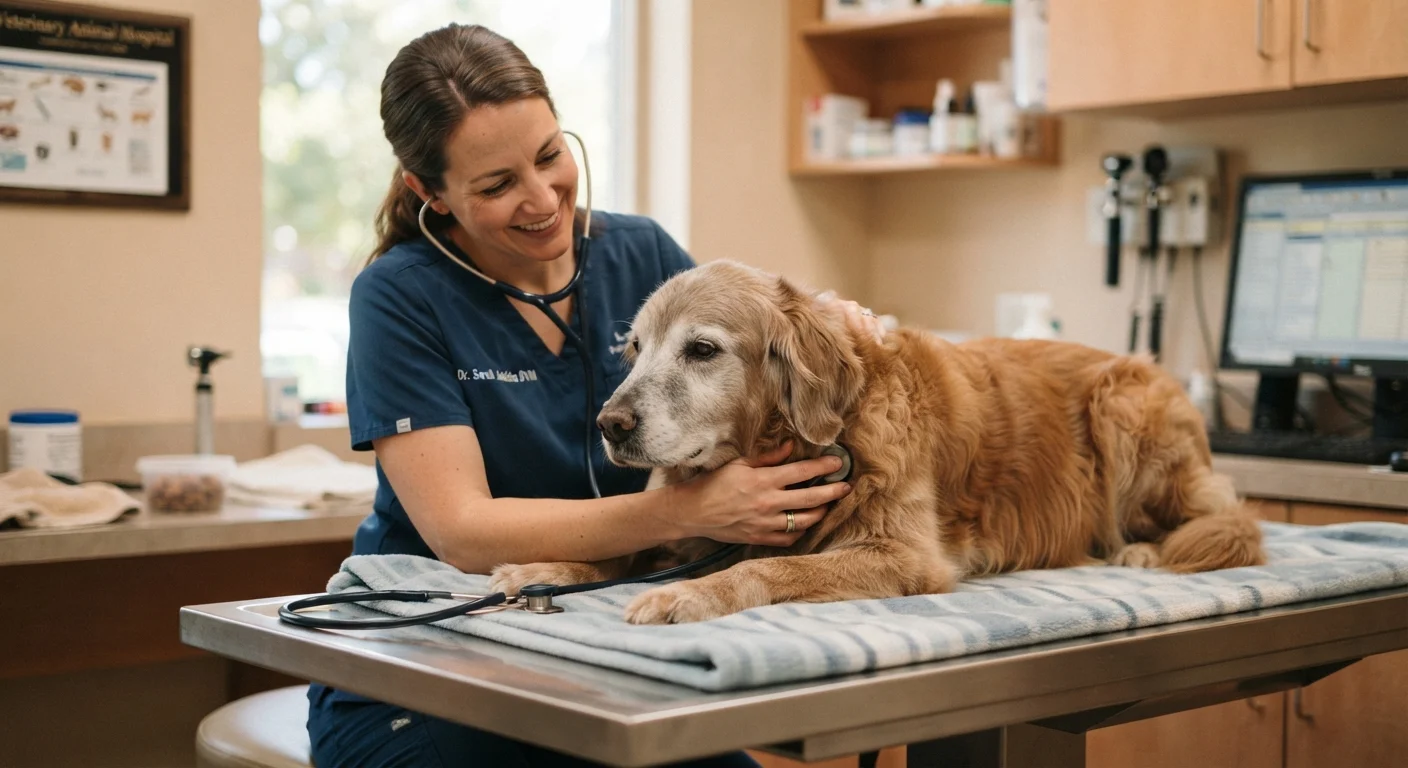
Why Senior Pets Need a Different Standard of Care
The biology of aging accelerates in dogs and cats more rapidly than in humans. A seven-year-old dog has physiologically crossed into senior territory, while cats typically reach that threshold around age ten — though large dog breeds may age faster still. At this stage, organ function can decline subtly over months, and conditions like chronic kidney disease, hypertension, and osteoarthritis often progress well before they produce obvious symptoms.
This is why a standard once-a-year checkup is generally no longer sufficient. Routine checkups and reactive visits serve different purposes, and for senior pets, the preventive visit becomes far more diagnostic in nature. Six-month intervals allow your veterinarian to track changes in bloodwork values, body weight, and mobility — trends that are far more informative than any single snapshot.
Owners of senior dogs can find breed-specific aging guidance in our article on adapting routines as your dog ages. Cat owners can cross-reference the wellness milestones every cat owner should know to understand what benchmarks to watch for at each life stage.
This Is Education, Not Medical Advice
This article provides general information about senior pet wellness exams and is not a substitute for professional veterinary guidance. Every pet is different — always consult your licensed veterinarian for recommendations specific to your animal's age, breed, and health history.
What to Bring and How to Prepare
A well-prepared owner makes the exam significantly more productive. Before the appointment, assemble your pet's vaccination history, past lab results if available, and a complete list of any medications or supplements with dosages. Your veterinarian will use this information as a baseline against which to measure new findings.
What you will need
Beyond records, your own observations carry real diagnostic weight. Subtle changes in thirst, litter box habits, nighttime restlessness, or reluctance to climb stairs are the kinds of details that a vet cannot see in a 30-minute appointment but can investigate with targeted testing when flagged by the owner. Writing these down in advance — rather than trying to recall them on the spot — improves the quality of the clinical conversation.
Bring a Written Log to Every Visit
Keep a simple running note on your phone of anything unusual you observe between appointments — changes in appetite, water intake, sleep patterns, or mobility. Vets consistently report that owner observations are one of the most valuable diagnostic tools available during a senior exam.
Cat owners with additional questions about year-round tracking can reference the Cat Owner's Annual Wellness Checklist for a structured approach to monitoring between visits.
Following Up After the Exam
The exam does not end when you leave the clinic. If bloodwork was drawn during the visit, results typically return within one to three business days. Ask your vet's office how results will be communicated and whether abnormal findings will trigger a follow-up call or require a recheck appointment.
Don't Wait for Obvious Symptoms
Older pets are skilled at masking discomfort. By the time a senior dog or cat shows clear signs of pain or illness, a condition may already be well advanced. Scheduled wellness visits — not just reactive appointments — are how vets catch changes early. If you notice sudden weight loss, increased thirst, or difficulty moving, contact your vet promptly rather than waiting for the next scheduled exam.
If your veterinarian recommended a dietary change, joint supplement, or environmental modification — such as adding ramps or orthopedic bedding — create a written plan for implementing those changes at home. Follow-up rechecks to assess response to treatment are a standard part of senior care management, not an added inconvenience.
For a broader framework on what preventive veterinary care encompasses across all life stages, see our guide to preventive care for pets. General information about the range of care available for both dogs and cats is also available on our dog care hub and cat care hub.
This article is for general informational purposes only and does not constitute veterinary or medical advice. Consult a licensed veterinarian for guidance specific to your pet's health needs.
The content on this site is for informational purposes only and is not a substitute for professional advice. Always consult a qualified professional for guidance specific to your situation.