

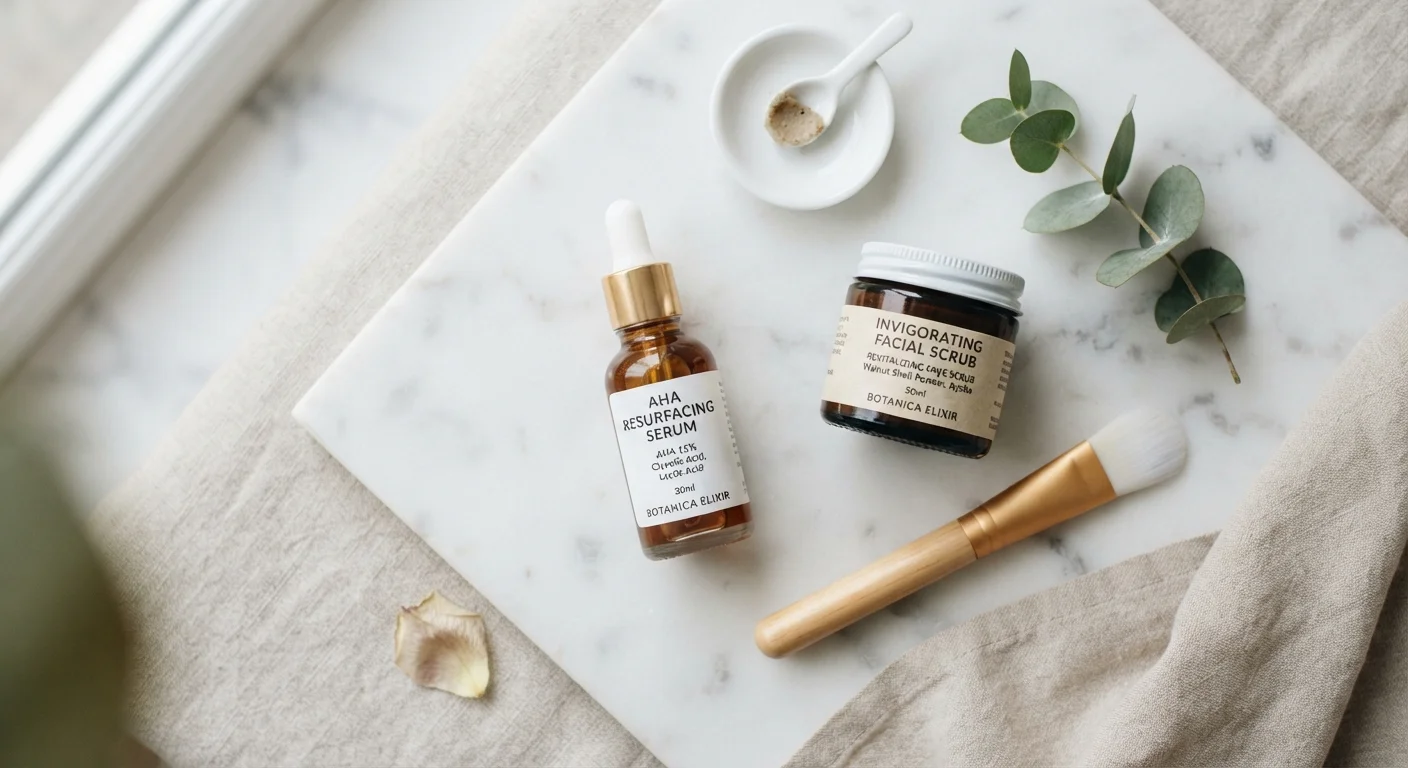
Our Verdict
Both chemical exfoliants and physical scrubs can effectively remove dead skin cells when used correctly, but they suit different skin types and goals. Chemical exfoliants tend to offer more precise, consistent results with a lower risk of mechanical damage, while physical scrubs provide immediate tactile feedback and can be appropriate when formulated with fine, gentle particles. The right choice depends on your skin's sensitivity, your existing routine, and how well you understand proper technique.
| Best for | Recommended |
|---|---|
| Sensitive, acne-prone, or reactive skin | Chemical exfoliants (BHAs or low-percentage AHAs) |
| Those who prefer a hands-on, immediate-feedback experience | Physical scrubs with fine, uniform particles |
| Targeting uneven tone, dullness, or texture at a deeper level | Chemical exfoliants (AHAs such as glycolic or lactic acid) |
| Occasional, once-weekly resurfacing on normal or combination skin | Either method used conservatively |
How Each Method Actually Works
Exfoliation — the process of removing accumulated dead skin cells from the surface — improves texture, clarity, and the absorption of subsequent skincare products. But the mechanism differs sharply between chemical and physical approaches, and that difference matters for how your skin responds.
Chemical exfoliants work by dissolving the intercellular bonds that hold dead cells together. The two dominant categories are alpha hydroxy acids (AHAs), such as glycolic and lactic acid, which work primarily on the skin's surface; and beta hydroxy acid (BHA), most commonly salicylic acid, which is oil-soluble and can penetrate the pore lining. Enzyme-based exfoliants — often derived from papaya or pineapple — offer a gentler variation within this category.
Physical scrubs use friction. Abrasive particles — which may be sugar, salt, ground oatmeal, rice bran, or synthetic microbeads (now largely banned in the US for rinse-off products) — are manually worked across the skin to dislodge dead cells. The results are immediate but depend heavily on particle size, shape, and how much pressure the user applies.
For a broader overview of how each fits into a complete skincare routine, see our guide to exfoliation methods.
| Chemical Exfoliants | Physical Scrubs | |
|---|---|---|
| Mechanism | Dissolves bonds between dead cells | Manually buffs away dead cells via friction |
| Key ingredients | AHAs (glycolic, lactic), BHA (salicylic), enzymes | Sugar, salt, ground oatmeal, jojoba beads |
| Depth of action | Surface to within pores (BHA) | Surface only |
| Sensitivity risk | Lower when used at correct concentration | Higher if particles are irregular or pressure is excessive |
| Control and consistency | High — concentration is fixed by formulation | Variable — depends on user technique and pressure |
| Best skin types | Sensitive, acne-prone, oily, dry (AHAs) | Normal, combination (with fine particles) |
| Photosensitivity concern | Yes — especially AHAs; sunscreen required | Minimal direct photosensitivity increase |
| Immediate results | Gradual; builds over consistent use | Immediate visible smoothness after use |
Sensitivity, Skin Type, and Tolerance
Skin type is one of the most practical filters for choosing an exfoliation approach. Those with sensitive or reactive skin often find physical scrubs unpredictable — irregular particle shapes can create micro-abrasions, and it's easy to unknowingly apply too much pressure. A well-formulated BHA or a low-concentration lactic acid product typically delivers more controlled results for this group.
Oily and acne-prone skin tends to respond well to salicylic acid, a BHA that can work within the pore itself, potentially reducing congestion over time. AHAs, being water-soluble, are better suited to surface texture concerns and mild hyperpigmentation on normal-to-dry skin types.
Dry skin benefits from the hydrating secondary effects of certain AHAs like lactic acid, though any exfoliant — physical or chemical — used on an already compromised barrier can worsen dryness and irritation.
People with darker skin tones should approach strong AHAs with care, as post-inflammatory hyperpigmentation can occur if the skin barrier is disrupted. Consulting a licensed dermatologist before introducing a new exfoliant is always reasonable, particularly for those managing active skin conditions. This article provides general skincare information and is not a substitute for personalized advice from a qualified dermatologist or healthcare provider.
Patch Test Before Committing
When introducing any new exfoliant — chemical or physical — apply a small amount to the inner arm or jawline and wait 24 hours before using it on your full face. This simple step helps identify sensitivity or allergic reactions before widespread application. It's especially worth doing if you have a history of reactive skin or known ingredient sensitivities.
Technique, Frequency, and Common Mistakes
How you use an exfoliant matters as much as which type you choose. The most common mistake with both approaches is overuse. Dermatologists generally recommend exfoliating one to three times per week at most, depending on skin tolerance — daily use of either type risks stripping the skin barrier, leading to redness, tightness, and increased sensitivity.
With chemical exfoliants, starting at lower concentrations and building gradually is the standard guidance. Applying to damp skin, leaving on for longer than directed, or layering multiple acids simultaneously can amplify irritation. Sunscreen use on the following days is strongly advised, as AHAs can increase photosensitivity.
With physical scrubs, using light, circular motions and avoiding active breakouts or freshly shaved skin reduces the risk of irritation. Products with round, uniform particles (such as jojoba beads) tend to be gentler than those with irregular edges like crushed shells or coarse sugar.
Pay attention to how your skin feels in the 24 hours after exfoliating. Persistent redness, stinging, or peeling are signals to reduce frequency or concentration. A thoughtful cleansing step before exfoliation also supports better results by removing surface debris that might interfere with contact.
Avoid Exfoliating Compromised Skin
If your skin is sunburned, actively broken out with open blemishes, or showing signs of a disrupted barrier (tight, flaky, or stinging after cleansing), hold off on exfoliation entirely until it recovers. Applying either a chemical or physical exfoliant to already-stressed skin can significantly worsen inflammation and delay healing. When in doubt, consult a dermatologist before resuming exfoliation.
Building Exfoliation Into a Wider Routine
Neither chemical nor physical exfoliation exists in isolation. Both interact with other routine steps, and sequencing matters. As a general principle, exfoliation typically follows cleansing and precedes serums, moisturizers, and SPF. For chemical exfoliants in liquid or toner form, a brief wait time before applying the next step allows the active ingredients to work at their intended pH level.
Layering active ingredients requires care. Retinoids, vitamin C, and exfoliating acids used simultaneously can overwhelm even resilient skin — alternating evenings or separating usage to morning and night is a common strategy.
If you're building or refining a complete routine, understanding what each product layer contributes will help you avoid redundancy or conflict. Our article on serums, essences, and toners explains how those steps interact with exfoliation in a layered regimen.
Ultimately, the most effective exfoliation method is the one your skin tolerates consistently. Patience and observation — rather than high concentrations or aggressive scrubbing — tend to produce the most durable improvements in skin texture and clarity.
The content on this site is for informational purposes only and is not a substitute for professional advice. Always consult a qualified professional for guidance specific to your situation.