

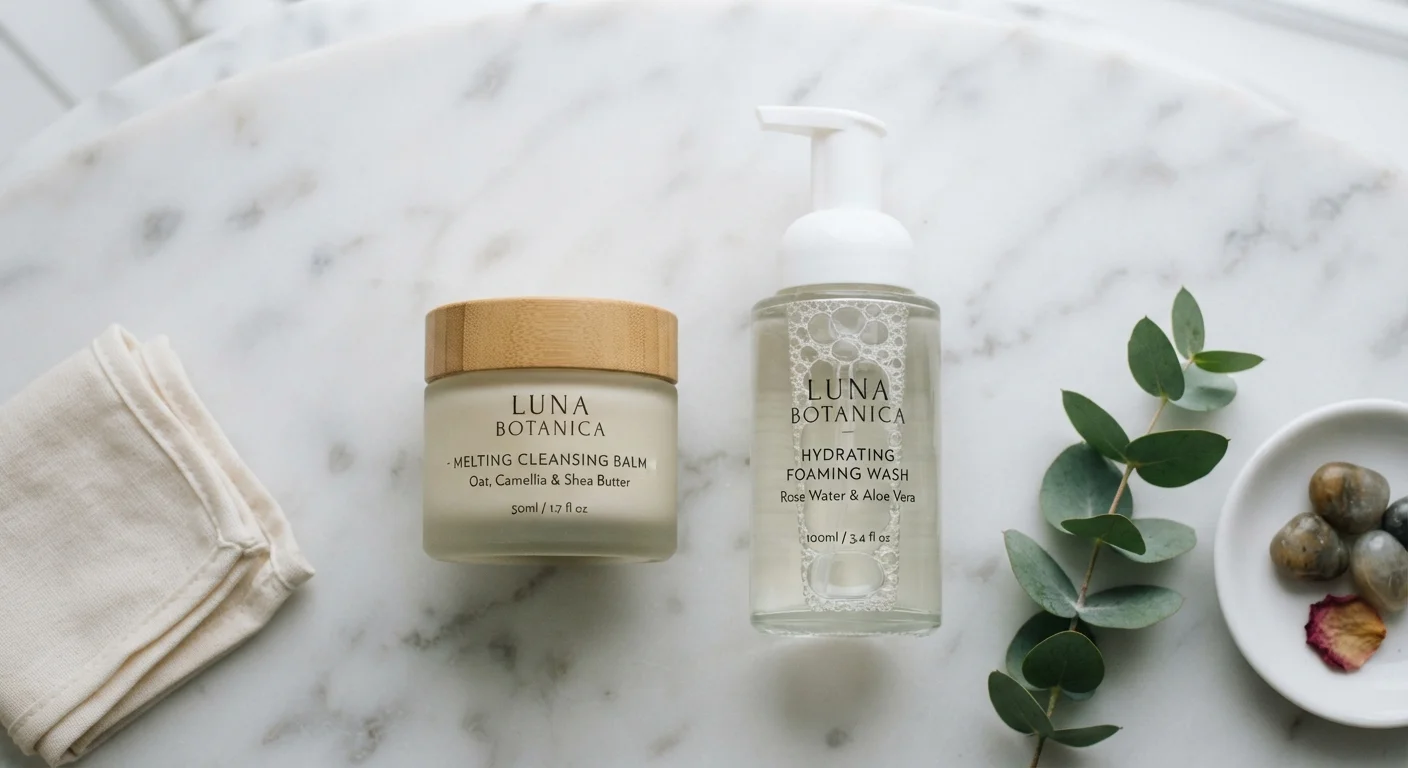
Option A
Facial Cleanser
The gentle, skin-barrier-conscious option.
Best for: Best for dry, sensitive, or mature skin types that need effective cleansing without stripping natural oils.
Option B
Face Wash
The thorough, deeper-cleansing formula.
Best for: Best for oily, acne-prone, or combination skin that benefits from a more thorough removal of excess sebum and impurities.
Why the Distinction Matters
Walk into any beauty aisle and you'll find dozens of products with the words "cleanser" and "face wash" used interchangeably on packaging. In practice, these terms describe meaningfully different formulations — and reaching for the wrong one can leave your skin drier, oilier, or more reactive than before.
At their core, both products remove dirt, oil, and environmental debris from the skin's surface. Where they diverge is in how they do it. A cleanser is a broad category term that encompasses everything from micellar water and cleansing balms to cream and oil formulas. A face wash is a more specific type — typically a water-activated, lather-producing product designed for a more thorough cleanse. Understanding which formula serves your skin on any given day is one of the most practical upgrades you can make to your routine. To understand where cleansing fits in the bigger picture, see our guide on serums, essences, and toners and how each step earns its place in your regimen.
How Each Formula Works
Cleansers — particularly cream, oil, and balm varieties — rely on emulsifying agents or hydrophilic (water-attracting) molecules to lift impurities away from skin. Many contain occlusives or humectants that leave a thin layer of moisture behind, which helps protect the skin barrier. Micellar water, one of the gentlest cleansers, uses tiny molecular clusters called micelles to attract and lift oil and debris without requiring rinsing in most cases.
Face washes use surfactants — compounds that reduce surface tension between oil and water — to produce foam or lather and remove a higher volume of sebum and buildup. Sodium lauryl sulfate (SLS) and sodium laureth sulfate (SLES) are common examples, though many modern face washes use gentler alternatives like cocamidopropyl betaine to reduce irritation potential. The tradeoff is that stronger surfactants can disrupt the skin's acid mantle, the slightly acidic surface that acts as a first line of defense against bacteria and environmental stressors.
| Criterion | Facial Cleanser | Face Wash |
|---|---|---|
| Primary mechanism | Emulsification or micellar action | Surfactant-based lathering |
| Typical texture | Cream, oil, balm, or micellar water | Gel, foam, or liquid |
| Lather produced | Little to none | Moderate to high |
| Effect on moisture barrier | Generally preserves or supports barrier | Can disrupt barrier if surfactants are harsh |
| Best skin types | Dry, sensitive, mature | Oily, acne-prone, combination |
| Makeup removal efficacy | High (especially oil-based formats) | Moderate; may need a prior cleanse step |
| Active ingredient compatibility | Less common | Common (salicylic acid, niacinamide) |
For those who exfoliate regularly, the cleanser you use matters even more — see how chemical exfoliants compare to physical scrubs to avoid layering too many active steps.
Matching Formula to Skin Type
Skin type is the most reliable guide when choosing between the two.
- Dry or sensitive skin: Cream or oil cleansers are generally gentler and less likely to compromise the moisture barrier. Dermatologists frequently recommend fragrance-free, non-foaming formulas for people with conditions like rosacea or eczema.
- Oily or acne-prone skin: A gel or foaming face wash provides the deeper clean needed to control excess sebum. Look for formulas with active ingredients — such as salicylic acid or niacinamide — that are established to address congestion and blemishes.
- Combination skin: A mild, low-lather cleanser often works well as an everyday option. Some people with combination skin choose a gentle face wash in the morning (when oil production tends to peak) and a cream cleanser at night.
- Mature skin: As skin produces less sebum with age, a hydrating cleanser is typically preferable to a face wash, which may feel too drying.
A Note on pH and Skin Health
Healthy skin surface pH typically falls between 4.5 and 5.5 — slightly acidic. Many traditional foaming face washes have a higher, more alkaline pH, which can temporarily disrupt this balance. If you use a face wash, look for formulations labelled as pH-balanced (around 5–6), which are less likely to compromise the skin's natural acid mantle. This detail is rarely mentioned on packaging but is worth checking when reading product ingredient information.
Whatever your skin type, proper makeup removal technique matters as much as the product you choose — improper removal is one of the most overlooked causes of skin irritation.
Double Cleansing: When Both Have a Role
A method popularized in Korean skincare routines, double cleansing uses an oil-based cleanser as a first step to dissolve makeup and sunscreen, followed by a water-based face wash or gentle cleanser to remove any remaining residue. This two-step approach is particularly effective for those who wear full-coverage makeup, waterproof SPF, or work in high-pollution environments.
The method is not essential for everyone. Those with dry or sensitive skin may find that one thorough cleanse with an appropriate formula is sufficient, and that double cleansing adds unnecessary disruption. The goal with any cleansing routine is to remove what needs to be removed — without stripping what needs to stay.
~60%
Adults who over-wash their face daily
Dermatology research consistently suggests that over-cleansing is a common contributor to skin barrier disruption, particularly among people with dry or sensitive skin.
2×
Typical cleansing frequency recommended
Most dermatologists recommend cleansing no more than twice daily — morning and evening — regardless of which cleanser type you use.
If you're also navigating other product categories in your routine, our guide on moisturizers, lotions, and body butters breaks down what comes after cleansing and how hydrating products differ. And for a broader look at cleansing beyond the face, body wash vs. bar soap applies similar thinking to your full routine.
This article is for general informational and educational purposes only. It is not a substitute for advice from a licensed dermatologist or qualified skincare professional. If you have a skin condition or concern, consult a healthcare provider before changing your routine.
The content on this site is for informational purposes only and is not a substitute for professional advice. Always consult a qualified professional for guidance specific to your situation.