

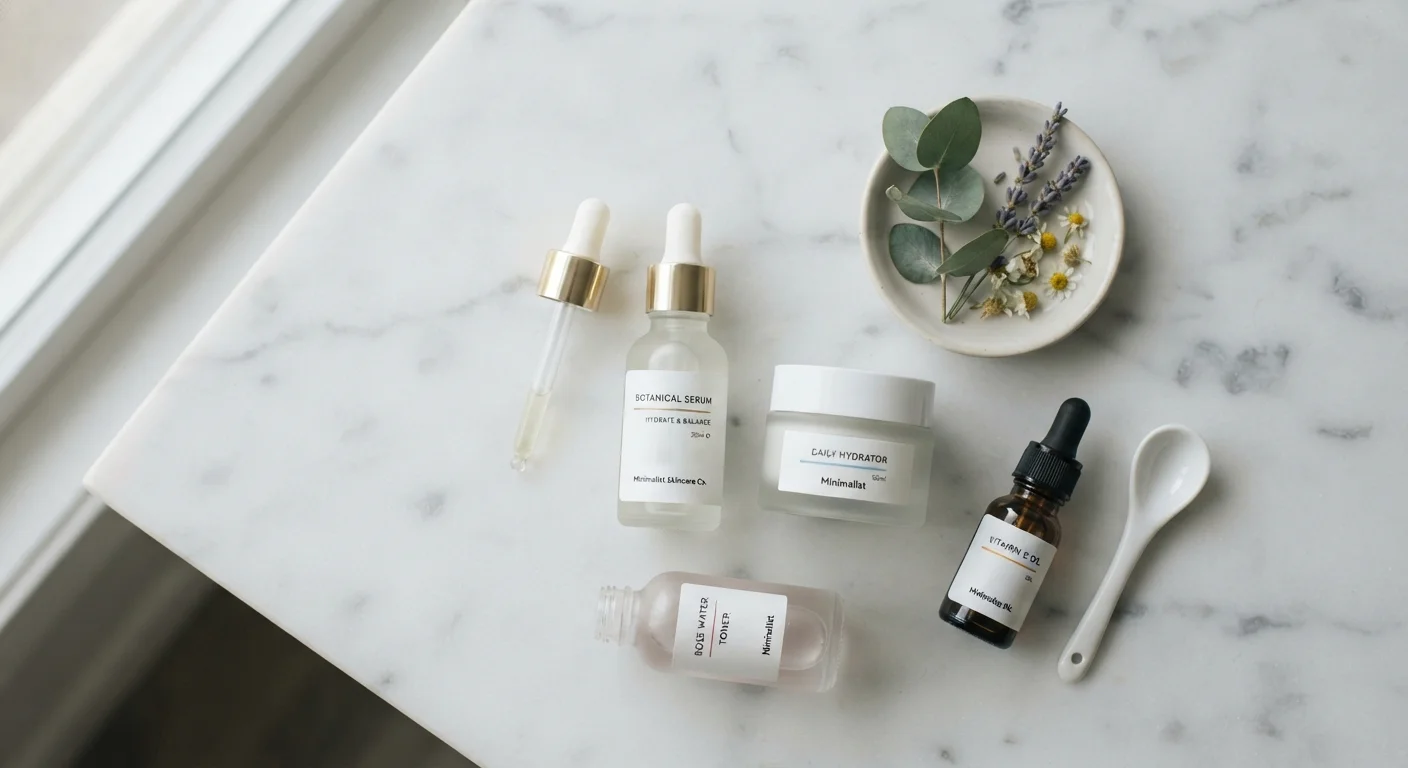
Why Fragrance Is a Skincare Concern
Fragrance is consistently identified by dermatologists as one of the leading causes of allergic contact dermatitis — an immune-mediated skin reaction triggered by repeated exposure to an allergen. It is present across a wide range of everyday products: moisturizers, cleansers, serums, sunscreens, and even some products marketed as "gentle" or "natural."
The challenge is that fragrance rarely appears as a straightforward single ingredient. The U.S. allows manufacturers to list "fragrance" or "parfum" as a catch-all term, concealing a blend that may contain 10 to 200 or more individual compounds. This opacity makes it difficult for consumers to identify exactly what they are reacting to — or to avoid it consistently across products.
~1 in 5
People with eczema reactive to fragrance
Research published in dermatology literature consistently identifies fragrance as a leading allergen in patients with atopic dermatitis and contact dermatitis.
Top 5
Fragrance ranks among most common contact allergens
Across multiple patch-test studies, fragrance mix is routinely identified among the most frequent positive reactions in dermatological testing.
200+
Compounds possibly hidden under "fragrance"
U.S. labeling rules allow the single term "fragrance" or "parfum" to represent a proprietary blend of potentially hundreds of individual chemical ingredients.
Importantly, the problem is not limited to synthetic fragrance. Essential oils — often positioned as the clean, natural alternative — contain complex aromatic compounds that are among the most potent contact allergens in cosmetics. Lavender, bergamot, tea tree, and citrus-derived oils are all documented sensitizers.
How to Identify Fragrance on an Ingredient Label
Reading an ingredient list fluently takes practice. Fragrance can appear under several different names, and knowing what to look for is the first step toward making more informed choices. For a broader overview of how labels are structured, see reading a skincare ingredient list.
- Fragrance / Parfum: The umbrella term used when a blend is not individually disclosed.
- Essential oils: Listed by botanical name (e.g., Lavandula angustifolia oil, Citrus aurantium peel oil).
- Isolated fragrance compounds: Linalool, limonene, citronellol, geraniol, eugenol — these are individual aromatic chemicals required to be disclosed in EU-sold products and increasingly listed voluntarily in U.S. formulas.
- Botanical extracts: Some plant extracts carry aromatic compounds even when not classified as fragrance (e.g., rose water, jasmine extract).
Scan the Last Third of the Label
Fragrance compounds are often listed toward the end of an ingredient list, where concentrations are lowest — but they are still present. Scanning the full list, not just the first few ingredients, gives you a clearer picture of what a formula actually contains. Some brands also voluntarily disclose individual fragrance allergens alongside the catch-all "fragrance" term.
Position on the ingredient list matters too. Ingredients are generally listed in descending order of concentration. Fragrance listed near the bottom suggests a lower concentration, though this does not eliminate the risk of reaction for highly sensitive individuals.
Fragrance-Free vs. Unscented: A Critical Distinction
These two terms are frequently used interchangeably by consumers, but they carry meaningfully different implications. A product labeled fragrance-free should contain no added fragrance ingredients whatsoever — it is the more protective designation for sensitive skin. An unscented product, however, may still contain masking fragrances — compounds added specifically to neutralize the natural odor of other ingredients, leaving the product smelling neutral rather than scented.
For a full breakdown of what each label signals and why it matters in practice, the article fragrance-free vs. unscented explains the distinction in detail.
EU Disclosure Rules Differ From U.S. Rules
The European Union requires manufacturers to individually list 26 specific fragrance allergens above a certain concentration threshold on product labels. Many globally sold products sold in the U.S. market voluntarily follow this standard, meaning some American labels now list individual compounds like linalool or citronellol. If you see these names on a U.S. product, the brand is offering more transparency than U.S. law requires.
Assessing Your Own Skin's Tolerance
Sensitivity to fragrance exists on a spectrum. Some people experience immediate stinging or redness; others develop a delayed allergic response after repeated exposure over weeks or months. Neither response is a character flaw or overreaction — contact sensitization is a recognized immunological process.
A practical starting point is a patch test: apply a small amount of the new product to the inner forearm and observe the site over 24 to 48 hours before wider use. If you suspect a fragrance allergy rather than simple irritation, a dermatologist can conduct formal patch testing to identify specific compounds you react to.
When building or adjusting a skincare routine, products that interact with the skin barrier — such as serums and treatment products — deserve particular scrutiny for fragrance content. See what serums, essences, and toners actually do for context on where each step sits in a routine. Similarly, makeup removal techniques that protect skin covers how cleansing habits affect the skin barrier over time.
This article is for general informational purposes only and does not constitute medical or dermatological advice. If you have persistent skin reactions, consult a licensed dermatologist for personalized guidance.
Frequently Asked Questions
Not always, but it is one of the most frequent triggers for irritation. Sensitive skin responds differently from person to person, so someone may tolerate low concentrations of certain fragrance compounds while reacting to others. If your skin is consistently reactive, minimizing fragrance exposure is a reasonable precaution.
Not necessarily. Essential oils and plant-derived aromatic compounds are among the most well-documented skin sensitizers. Citrus oils, lavender, and ylang-ylang, for example, contain allergens like limonene and linalool. "Natural" does not automatically mean gentler or safer for reactive skin.
Fragrance-free means no fragrance ingredients were added to the formula. It does not mean the product has no scent — some raw ingredients have a natural odor. This label offers stronger assurance for sensitive skin users than "unscented," which may still contain masking fragrance compounds.
Common signs include redness, itching, stinging, or a rash that appears shortly after applying a product. An elimination approach — removing one product at a time — can help identify the trigger. A patch test on the inner arm before full facial use is also a useful first step.
Not necessarily. Some fragrance compounds appear at concentrations too low to cause a reaction in most people. However, if you have a known sensitivity or history of contact dermatitis, avoiding products with EU allergen fragrance disclosures is a prudent strategy worth discussing with a dermatologist.
The content on this site is for informational purposes only and is not a substitute for professional advice. Always consult a qualified professional for guidance specific to your situation.