

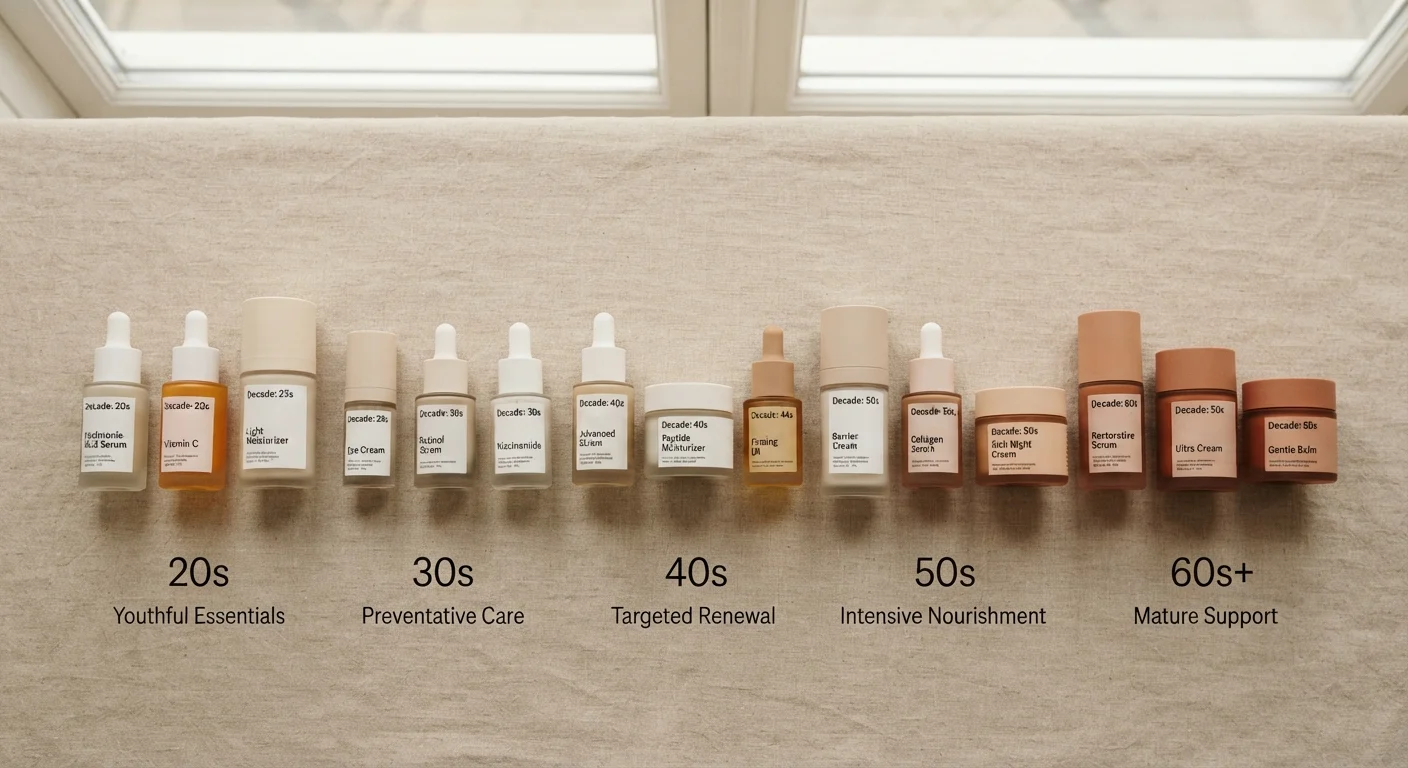
Why Skin Changes Over Time
Skin is a living organ that undergoes measurable biological shifts across the lifespan. Cell turnover — the process by which fresh skin cells migrate to the surface and shed dead ones — slows progressively after your mid-20s. Collagen and elastin production, which give skin its firmness and bounce, naturally decline with each passing decade. Sebaceous glands that once overproduced oil may gradually produce less, shifting oily complexions toward drier territory. Hormonal fluctuations, cumulative sun exposure, and environmental stressors layer on top of these intrinsic changes.
Understanding these shifts takes some of the guesswork out of routine adjustments. Rather than chasing trends, you can make incremental, informed changes that reflect what your skin is actually doing — not what advertising says it should need.
For a grounding overview of how daily habits interact with long-term skin health, see our comprehensive look at grooming and skin health.
~1%
Annual collagen loss rate after age 25
Research published in dermatology literature suggests collagen decreases by roughly 1% per year beginning in the mid-20s.
90%
Visible aging attributed to UV exposure
A widely cited estimate in dermatology holds that up to 90% of visible skin aging is associated with cumulative ultraviolet exposure.
28–40 days
Skin cell turnover cycle in young adults
This cycle, which supports fresh, even-looking skin, can extend to 45–90 days by the time a person reaches their 60s.
Skincare in Your 20s: Building the Foundation
The 20s are often characterized by relatively high cell turnover and sebaceous activity — meaning breakouts remain common even as skin heals faster. Despite this resilience, the habits established now carry outsized long-term consequences.
Dermatologists consistently identify daily broad-spectrum sunscreen as the single most evidence-supported step for reducing visible aging and lowering skin cancer risk. A gentle, non-stripping cleanser and a basic moisturizer suited to your skin type round out a functional starting point. For guidance on identifying your skin type, our article on what oily, dry, combination, and sensitive skin really mean is a practical resource.
Introduce SPF as a non-negotiable morning step before any other concerns — it's easier to sustain when it's the first habit locked in, not the last thing added.
Dermatologists consistently identify daily sun protection as the highest-leverage action for long-term skin health, making early adoption particularly valuable.
When starting a retinoid for the first time, begin with application every third night rather than nightly, and always buffer with moisturizer to reduce irritation while your skin adjusts.
Gradual introduction is the approach most supported by clinical guidance for minimizing the dryness and flaking that cause many people to abandon retinoids prematurely.
If acne is persistent, a topical retinoid or benzoyl peroxide formulation may be relevant — but those decisions benefit from professional input rather than self-prescription.
Skincare in Your 30s: Maintenance and Early Prevention
By the early 30s, many people notice their first fine lines at rest, mild uneven tone, or a slightly duller complexion — all consistent with the biological slowdown underway. This is a natural inflection point where a routine that worked at 22 may start to feel less effective.
Antioxidants such as vitamin C (ascorbic acid) have a well-established evidence base for addressing oxidative stress from UV and environmental exposure. Retinoids — a class of vitamin A derivatives — are among the most research-supported ingredients for supporting cell turnover and collagen synthesis, though they require a gradual introduction to minimize irritation.
Introducing Actives Gradually
When adding a new active ingredient — such as a retinoid or vitamin C serum — do so one product at a time, spaced at least two to three weeks apart. This gives your skin time to adapt and makes it easier to identify the source of any irritation. Combining too many actives simultaneously is a common reason routines cause unexpected sensitivity.
Layering these additions correctly matters. Our guide on layering skincare products in the right order explains how sequencing affects absorption and performance.
Skincare in Your 40s and 50s: Adapting to Structural Shifts
Perimenopause and menopause bring significant hormonal changes that affect skin in measurable ways: decreased estrogen is associated with reduced skin thickness, increased dryness, and accelerated collagen loss. Even people who have never struggled with dry skin may find their skin barrier more easily compromised in this phase.
Formulas that support barrier function — those featuring ceramides, fatty acids, and humectants like hyaluronic acid or glycerin — tend to become more relevant. Heavier moisturizers that once felt occlusive may now feel appropriate. Retinoids remain valuable at this stage, though those with newly sensitive skin may do better with lower concentrations or buffer application techniques.
More Products Don't Equal Better Results
A longer routine is not inherently more effective — and can actively work against you. Stacking multiple exfoliating acids, retinoids, and fragranced formulas simultaneously is a frequent cause of compromised skin barrier and chronic irritation. When in doubt, simplify before adding more steps, and consult a dermatologist if persistent sensitivity develops.
It's also worth noting that more complex routines aren't always more effective. Our editorial on the tradeoffs of going minimal with your skincare routine offers an honest look at what simplicity gains and loses.
What Stays Consistent at Every Age
Beneath the decade-specific adjustments, a small set of fundamentals holds steady. Daily broad-spectrum SPF 30 or higher remains the most supported single step across all age groups. A cleanser that removes impurities without disrupting the skin barrier is universally appropriate. And some form of moisturizer — adjusted in richness and formulation to match your current skin behavior — supports barrier health at every stage.
Lifestyle factors carry as much weight as topical products: consistent sleep, adequate hydration, and not smoking are each associated with meaningful differences in skin appearance and long-term health. For a broader look at how grooming habits connect to skin outcomes, visit the Grooming & Care hub.
“Sunscreen is not optional for any skin type or skin tone. It's the one intervention with the strongest evidence base across every demographic, regardless of age or complexion.”
— American Academy of Dermatology, Professional association representing board-certified dermatologists in the United States
When to See a Dermatologist
No editorial resource — however thorough — replaces individualized professional assessment. A board-certified dermatologist can evaluate your specific concerns, skin history, fitzpatrick type, and medication interactions in ways that general guidance cannot.
Common reasons to schedule a visit include: new or changing moles, persistent acne unresponsive to over-the-counter options, significant dryness or redness that disrupts daily life, or simply a desire for a personalized routine recommendation. Annual skin checks are also routinely recommended for skin cancer screening, particularly for those with high sun exposure history.
Skin Changes Can Signal Health Issues
Not every skin change is cosmetic. Sudden shifts in mole shape, color, or size; unexplained rashes; or persistent unusual dryness or redness can sometimes indicate underlying health conditions. These should be evaluated by a qualified healthcare provider rather than addressed through skincare products alone.
This article is for general informational and educational purposes only. It does not constitute medical or dermatological advice. Always consult a qualified healthcare professional for guidance specific to your health and skin concerns.
American Academy of Dermatology — Public Education
The AAD offers free, dermatologist-reviewed skincare guides covering topics from sunscreen selection to acne management, organized by concern and age group.
Skin Types Decoded
Our companion article breaks down what oily, dry, combination, and sensitive skin actually mean — and how to identify which category your skin currently fits.
Layering Skincare Products in the Right Order
A practical sequencing guide explaining which product types belong at each step of a routine, and why order affects how well actives absorb and perform.
The content on this site is for informational purposes only and is not a substitute for professional advice. Always consult a qualified professional for guidance specific to your situation.