

Our Verdict
Going minimal with skincare is a genuinely sound strategy for many people — particularly those with sensitive skin, limited time, or tight budgets. The evidence strongly supports that a small number of consistently applied, well-chosen products can maintain healthy skin for most adults. However, minimalism has real limitations when targeted concerns like post-acne marks, persistent breakouts, or age-related texture changes enter the picture.
Best suited for people with generally balanced or sensitive skin who prioritize simplicity, want to reduce spending, or are just starting to build a consistent routine.
What a Minimal Routine Actually Looks Like
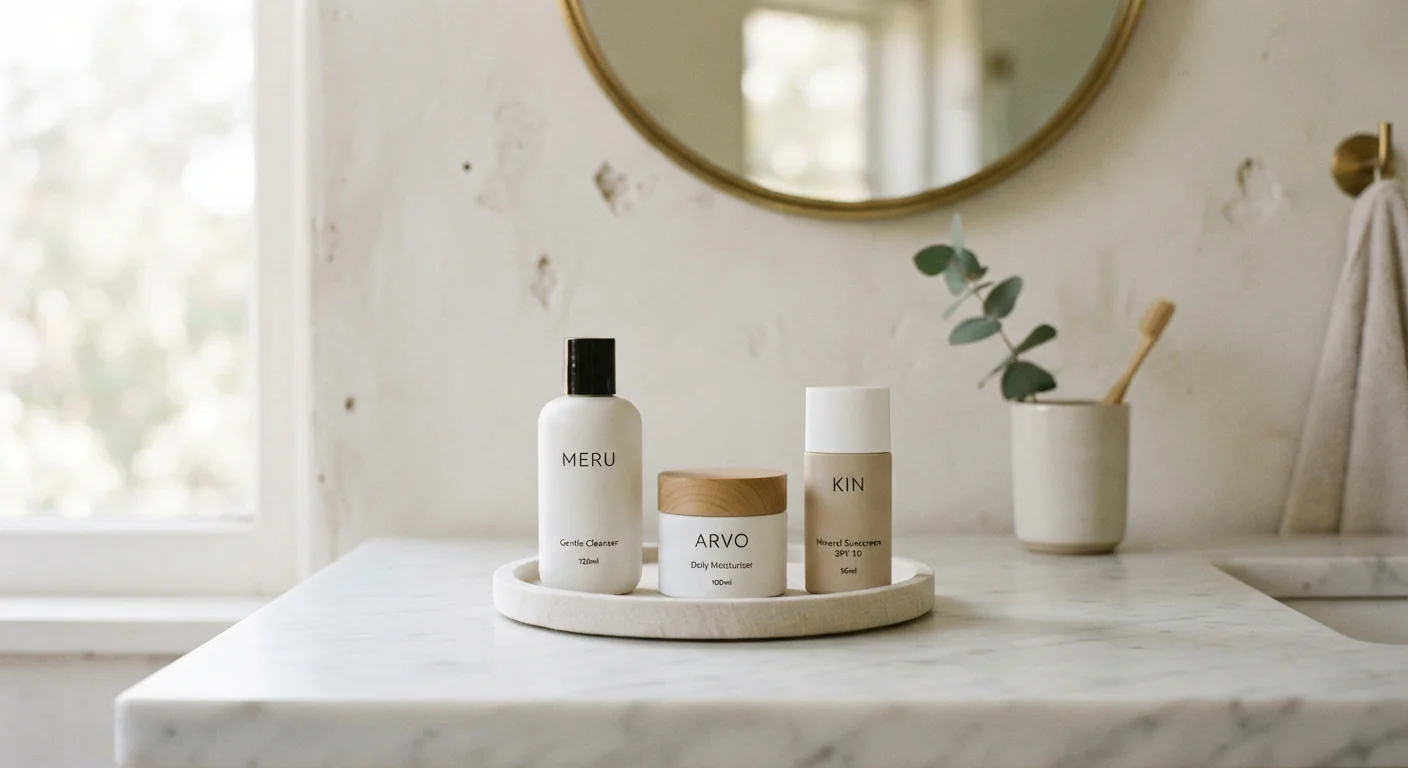
A minimal skincare routine, by most dermatologist definitions, means three steps: a gentle cleanser, a moisturizer suited to your skin type, and a broad-spectrum sunscreen applied every morning. That's it. No serums, no toners, no targeted treatments — just the foundations that protect the skin barrier and guard against UV damage.
For anyone feeling overwhelmed by the sheer volume of products marketed as essential, this framework is a useful anchor. Foundational skincare guidance consistently points to these three categories as the non-negotiables. Everything else — acids, antioxidants, peptides — layers on top and addresses specific concerns rather than baseline skin health.
Understanding what you're opting out of when you go minimal is just as important as knowing what you're keeping. The tradeoffs below reflect that honest picture.
The Real Advantages of Keeping It Simple
The case for minimalism isn't just about convenience — there are well-supported reasons it works well for a significant portion of people.
Reduces risk of ingredient overload and irritation
Using fewer products means fewer opportunities for ingredient interactions that can compromise the skin barrier or trigger sensitivity reactions, a common issue with multi-step routines.
Lower ongoing cost
Three core products cost significantly less than a seven- or ten-step routine, and bottles last longer when you're not layering multiple products. This aligns well with thoughtful budgeting basics.
Easier to stay consistent
A short routine removes the friction that causes people to skip steps. Dermatologists widely agree that consistent application of basics outperforms irregular use of sophisticated products.
Simpler troubleshooting when skin reacts
With only a handful of products, identifying the cause of a breakout or reaction is straightforward — an advantage that disappears with longer, more complex routines.
One underappreciated benefit: fewer products mean fewer variables when something goes wrong. If your skin reacts, you know exactly what caused it. Multi-step routines with overlapping active ingredients can make troubleshooting genuinely difficult. For people with sensitive or reactive skin, simplicity isn't a compromise — it's often the smarter choice.
The consistency argument is also strong. A two-minute routine you actually do every day will outperform a ten-step routine you skip half the time. Low-maintenance grooming habits can extend this logic across your entire personal care approach.
Where Minimalism Falls Short
A stripped-back routine handles maintenance well. It handles targeted correction less effectively. This is the central limitation worth understanding before committing to a minimal approach.
Limited ability to address targeted skin concerns
Concerns like hyperpigmentation, active acne, fine lines, or uneven texture typically respond to specific actives — retinoids, niacinamide, vitamin C — that fall outside a pure three-step routine.
May not meet changing skin needs over time
As skin ages or responds to hormonal shifts, environmental changes, or stress, a static minimal routine may become inadequate without periodic reassessment.
Sunscreen compliance can be a weak link
A minimal routine's effectiveness depends heavily on daily SPF use. If sunscreen is skipped regularly — a common pattern — cumulative UV damage undermines the entire approach.
Can be misread as a reason to skip all actives
Minimalism doesn't mean avoiding beneficial ingredients indefinitely. Some people use it as a rationalization to avoid adding genuinely useful steps, even when their skin would benefit.
Minimalism Isn't the Same as Doing Nothing
A truly minimal routine still requires daily commitment and thoughtful product selection. Skipping sunscreen entirely, or using a harsh cleanser that strips the skin barrier, can cause more harm than a carefully layered multi-step routine. Minimal means intentional, not absent. If you're unsure which basics are right for your skin type, a single consultation with a dermatologist can provide clarity that no amount of online reading can fully replace.
Skin needs also shift meaningfully over time. How skin changes across the decades is worth reviewing if you're building a long-term strategy — what's sufficient at 25 may need revisiting at 40. A minimal routine isn't a permanent contract; it can be a starting point that evolves.
Making Minimalism Work for Your Skin
If you decide a minimal approach fits your life, the quality of your three core products matters more — not less. A gentle, pH-balanced cleanser appropriate for your skin type, a moisturizer with ingredients that support your barrier (such as ceramides or hyaluronic acid, depending on your skin's needs), and a daily SPF 30 or higher sunscreen form a credible foundation.
SPF 30+
Minimum sun protection recommended daily
The American Academy of Dermatology recommends broad-spectrum SPF 30 or higher as a daily non-negotiable, regardless of routine length.
~80%
Of visible aging attributed to UV exposure
Research published in dermatology literature estimates that the majority of visible skin aging results from cumulative UV exposure, underscoring sunscreen's central role in any minimal routine.
Where possible, patch test new products before full adoption. Read ingredient lists with enough care to avoid duplicating actives or combining things known to cause sensitivity — though with only three products, this is considerably easier to manage.
For those with specific skin concerns — persistent acne, significant hyperpigmentation, or pronounced texture changes — it may be worth consulting a board-certified dermatologist before concluding that minimalism alone is sufficient. General skincare content, including this article, is informational and not a substitute for personalized professional guidance.
This article is for general informational purposes only and does not constitute medical or dermatological advice. Consult a qualified healthcare or skincare professional for guidance specific to your skin type and concerns.
The content on this site is for informational purposes only and is not a substitute for professional advice. Always consult a qualified professional for guidance specific to your situation.