

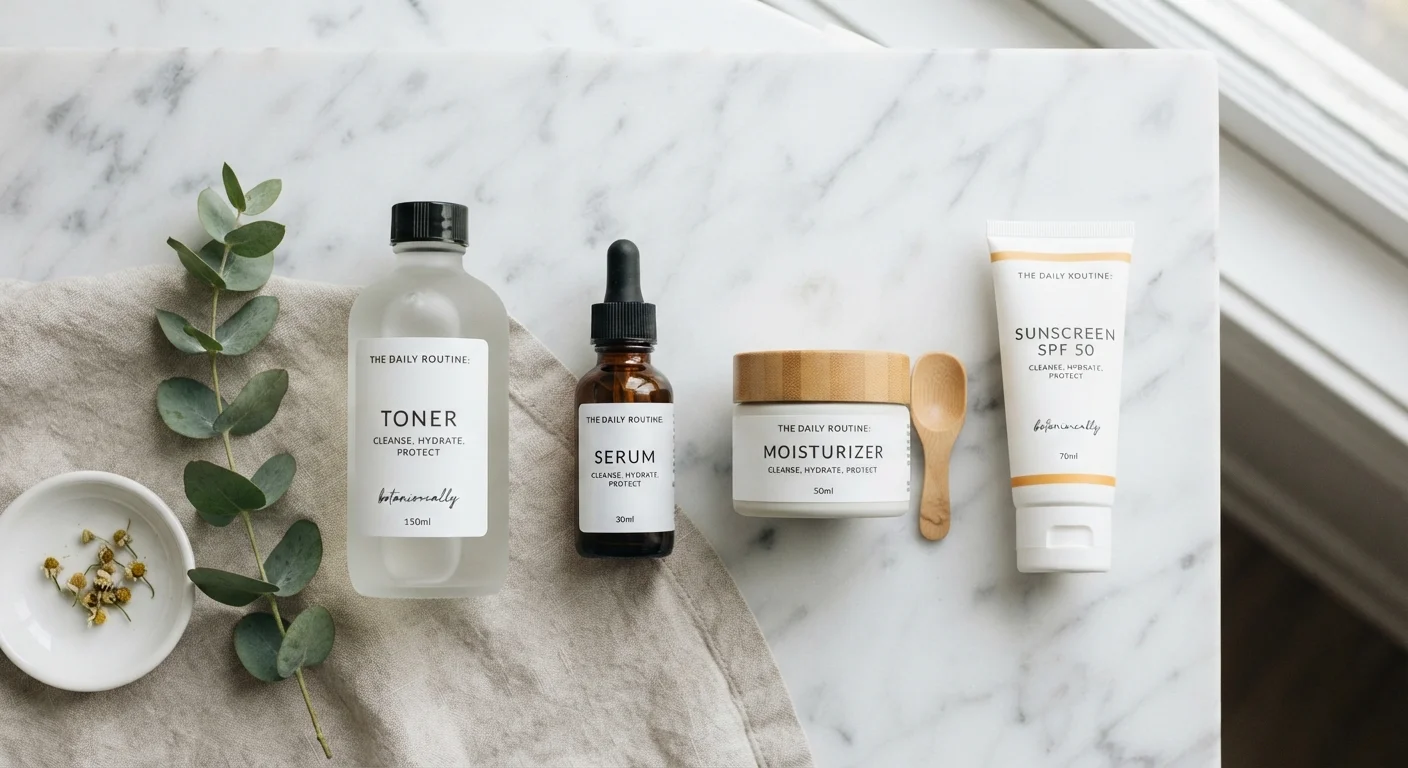
Why Product Order Actually Matters
The order in which you apply skincare products isn't a beauty industry myth — it's basic chemistry. Skin has a limited ability to absorb what's placed on it, and heavier products create a physical barrier that lighter ones can't always penetrate afterward. When a thick cream is applied before a vitamin C serum, for instance, the active ingredients in the serum may not reach the skin cells they're meant to work on.
The foundational rule is straightforward: apply from thinnest to thickest consistency, and from water-based to oil-based formulas. This ensures each layer can absorb adequately before the next one is added. For readers building a routine from scratch, our beginner's guide to everyday skincare is a useful starting point before diving into sequencing specifics.
It's also worth knowing that ingredient interactions — not just consistency — can influence the right order. Understanding what's in your products helps clarify these decisions. Our guide to reading ingredient labels can help you decode what you're actually applying.
The 30-Second Rule Is Your Friend
Waiting about 30 to 60 seconds between product layers gives each formula time to partially absorb before the next is applied. This is especially important after applying toners or essences. It doesn't need to be exact — just enough time so the previous layer no longer feels wet or slippery.
What You'll Need Before You Start
You don't need an elaborate lineup to layer correctly. In fact, a streamlined routine applied in the right sequence will generally outperform a longer routine applied haphazardly. Before working through the steps below, gather your products and review the tools and prerequisites listed here.
What you will need
Cleanser
Removes makeup, excess oil, and surface debris before layering any other product.
Toner or Essence
Rebalances skin's pH and preps the surface to better absorb subsequent products.
Targeted Serum
Delivers concentrated active ingredients — such as vitamin C or hyaluronic acid — to address specific skin concerns.
Eye Cream
Provides targeted hydration and treatment to the delicate under-eye area before heavier products.
Moisturizer
Seals in hydration and supports the skin barrier after lighter treatment layers.
Facial Oil
Applied after moisturizer to add an occlusive layer; locks in moisture without disrupting earlier steps.
Broad-Spectrum Sunscreen (SPF 30+)
Applied last in the morning routine to protect skin from UV damage without interfering with other products.
Skin needs also shift over time — what works in your twenties may not be the ideal lineup a decade later. Our article on skincare across the decades gives helpful context for how routines typically evolve.
Order Can Make or Break Efficacy
Applying a heavy moisturizer before a serum can physically prevent active ingredients from reaching the skin. Incorrect sequencing doesn't just reduce effectiveness — in some cases it can cause irritation when certain ingredients are layered without the right buffer. When in doubt, simplify your routine rather than risk combining steps incorrectly.
Following the Steps
Work through each step below in order. The sequence applies to both morning and evening routines, with one key difference: sunscreen is a morning-only final step. In the evening, you can swap in a richer night cream or a retinoid product in place of or alongside your regular moisturizer, based on your skin goals and any guidance from a dermatologist.
Cleanse First
Start every routine — morning or evening — with a clean canvas. Apply your cleanser to damp skin, work it in gently for about 60 seconds, then rinse thoroughly with lukewarm water. Pat dry with a clean towel. Applying any product over residual makeup, sunscreen, or surface oil reduces how well it penetrates.
Apply Toner or Essence (If Using)
Toners and essences are applied to still-slightly-damp or freshly dried skin. They serve different functions — toners primarily rebalance pH, while essences add a first layer of hydration — but both are thin, watery formulas that should come before anything heavier. Apply with clean hands or a cotton pad and allow to absorb. For more on what these products actually do, see our guide to serums, essences, and toners.
Layer Serums Thinnest to Thickest
If you use more than one serum, apply the thinnest, most water-like formula first. A vitamin C serum, for example, is typically lighter than a niacinamide or peptide serum. Press — don't rub — each one gently into the skin and wait 30 to 60 seconds before applying the next. Layering too quickly can cause pilling or dilution of active ingredients.
Apply Eye Cream
Eye creams are typically lighter than facial moisturizers and designed for a thinner, more sensitive area. Apply a small amount using your ring finger — the weakest finger — by gently tapping along the orbital bone, starting from the inner corner outward. Avoid pulling or dragging the skin.
Moisturize to Seal In Earlier Layers
Moisturizer acts as a barrier-supporting layer over everything below it. Apply it while skin still has a slight tacky feel from serums — this helps lock in active ingredients rather than letting them evaporate. Use upward strokes and include the neck if your routine extends there. Both morning and evening routines should include this step.
Add Facial Oil (If Using)
Facial oils are occlusive — they sit on top of the skin and help prevent moisture loss. Because they can block absorption of water-based products, they always go after moisturizer, not before. A few drops warmed between the palms, then pressed gently into the skin, is usually sufficient. Oils are optional and best suited to dry or dehydrated skin types.
Finish With Sunscreen (Morning Routine Only)
Sunscreen is the non-negotiable final step in any morning routine. It should sit on top of all other products — including moisturizer — to remain effective. Apply a generous, even layer to the face and any exposed skin. Wait at least two minutes before applying makeup on top. For a deeper look at why this step matters so consistently, see our article on SPF every day.
Mixing Actives Requires Caution
Not all active ingredients play well together in the same routine. For example, combining certain acids with retinoids in a single session can irritate or sensitize skin. If you use multiple active ingredients, consider alternating them on different nights or consulting a dermatologist about a safe schedule for your skin type.
For a broader look at how layering fits into long-term grooming and skin health, see our comprehensive overview at The Full Picture on Grooming and Skin Health.
This article is for general informational purposes only and does not constitute medical or dermatological advice. Consult a qualified dermatologist or healthcare professional for guidance on skincare concerns specific to your skin type or condition.
The content on this site is for informational purposes only and is not a substitute for professional advice. Always consult a qualified professional for guidance specific to your situation.