

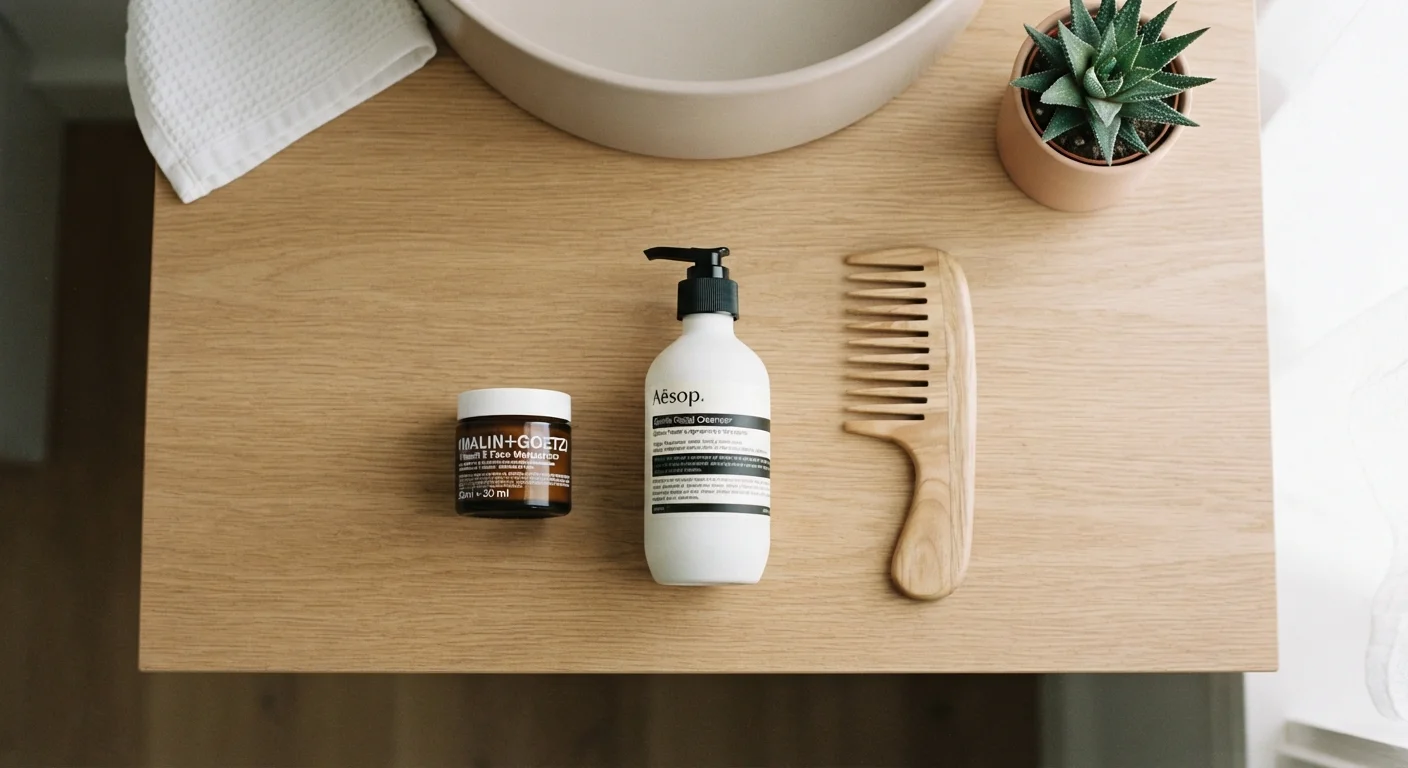
Why Simple Routines Stick — and Elaborate Ones Don't
Most grooming routines fail not because of poor products but because they're designed for an ideal morning that rarely exists. A seven-step regimen works perfectly on a slow Saturday; it collapses entirely on a Tuesday when the commute starts in twenty minutes. The fix isn't discipline — it's design.
Effective low-maintenance grooming is built around a small number of high-leverage habits: actions that deliver the most visible return per minute spent. The goal isn't to look like you spent an hour in front of the mirror. It's to look like you didn't need to. For readers building from the ground up, our guide to starting a grooming routine from scratch covers the foundational framework without unnecessary complexity.
Cleanse your face every morning and evening with a gentle, non-stripping formula.
Twice-daily cleansing removes overnight sebum buildup and evening pollutants without requiring separate products for each concern. A single mild cleanser suited to your skin type does the job more reliably than alternating specialty washes, which can disrupt the skin barrier over time.
Apply a broad-spectrum SPF 30 or higher moisturizer every morning as one combined step.
UV exposure is the leading environmental cause of premature skin aging and is a daily risk year-round, not just in summer. Combining SPF into a moisturizer condenses two essential steps into one, removing the most common barrier to daily sunscreen use: the extra minute it takes.
Trim and file nails on a consistent weekly schedule, not reactively.
Waiting until nails snag or break means more time spent on repair. A brief weekly trim prevents hangnails, breakage, and the unkempt appearance that undermines an otherwise polished look. Consistency also supports cuticle health by never letting edges become overgrown.
Keep a single multitasking hair product that works for your natural texture.
Chasing complex styling routines on busy mornings almost always leads to skipping them entirely. A single product that defines, controls, or adds shine while your hair air-dries cuts decision fatigue and reduces tool dependence, which also reduces heat damage over time.
Schedule facial and beard hair maintenance at regular intervals rather than when it becomes obvious.
Overgrown eyebrows, stubble that crosses into patchy beard territory, or a haircut delayed by four weeks each signals low effort even when the rest of a look is strong. Booking maintenance on a calendar — rather than waiting for a visible trigger — keeps the baseline neat without emergency appointments.
The Core Habits Worth Protecting on a Busy Morning
Not every grooming step carries equal weight. When time is limited, the priority should be skin — specifically cleansing and daily SPF — because those habits compound over time in ways that styling choices don't. Skipping a hair product for a week has no lasting consequence. Skipping sun protection daily for years does.
Night Is the Easiest Time to Invest in Skin
If mornings are too compressed, shift one grooming step to the evening. Cleansing and applying a simple moisturizer at night takes two minutes and works with your skin's natural overnight repair cycle. Many people find evening routines easier to sustain because there's no clock pressure.
For a comprehensive look at how these daily choices interact with long-term skin health, see The Full Picture on Grooming and Skin Health. And if you've wondered whether a minimal approach involves real tradeoffs, The Tradeoffs of Going Minimal With Your Skincare Routine offers an honest assessment.
5 min
Average time for an effective core grooming routine
Dermatologist-recommended minimalist routines — cleanse, moisturize, SPF — are consistently achievable in under five minutes according to skin health guidance from major dermatology organizations.
90%
Of visible skin aging attributed to UV exposure
Research cited by the Skin Cancer Foundation estimates that up to 90% of visible skin aging is caused by sun exposure, reinforcing daily SPF as the highest-value grooming step.
Quick Wins You Can Start Today
Grooming improvements don't require a full routine overhaul. Most of the visible gains come from a handful of targeted changes that take seconds to implement. The quick wins below are specific, immediate, and require no new products or significant time investment.
Nail care is one area where small, consistent effort makes a disproportionate impression. Our practical nail care routine shows how to build this habit sustainably. For those looking to extend the same efficiency thinking to beauty routines, Makeup for Low-Maintenance Mornings takes the same approach to the essentials.
Grooming Is General Self-Care, Not Medical Advice
The habits described in this article are general grooming and wellness practices for healthy adults. They are not a substitute for professional dermatological or medical advice. If you experience persistent skin irritation, hair loss, or other concerns, consult a licensed dermatologist or healthcare provider.
This article is for general informational and educational purposes only. It is not a substitute for professional dermatological or medical advice. Consult a qualified healthcare provider for personal skin, hair, or health concerns.
The content on this site is for informational purposes only and is not a substitute for professional advice. Always consult a qualified professional for guidance specific to your situation.