

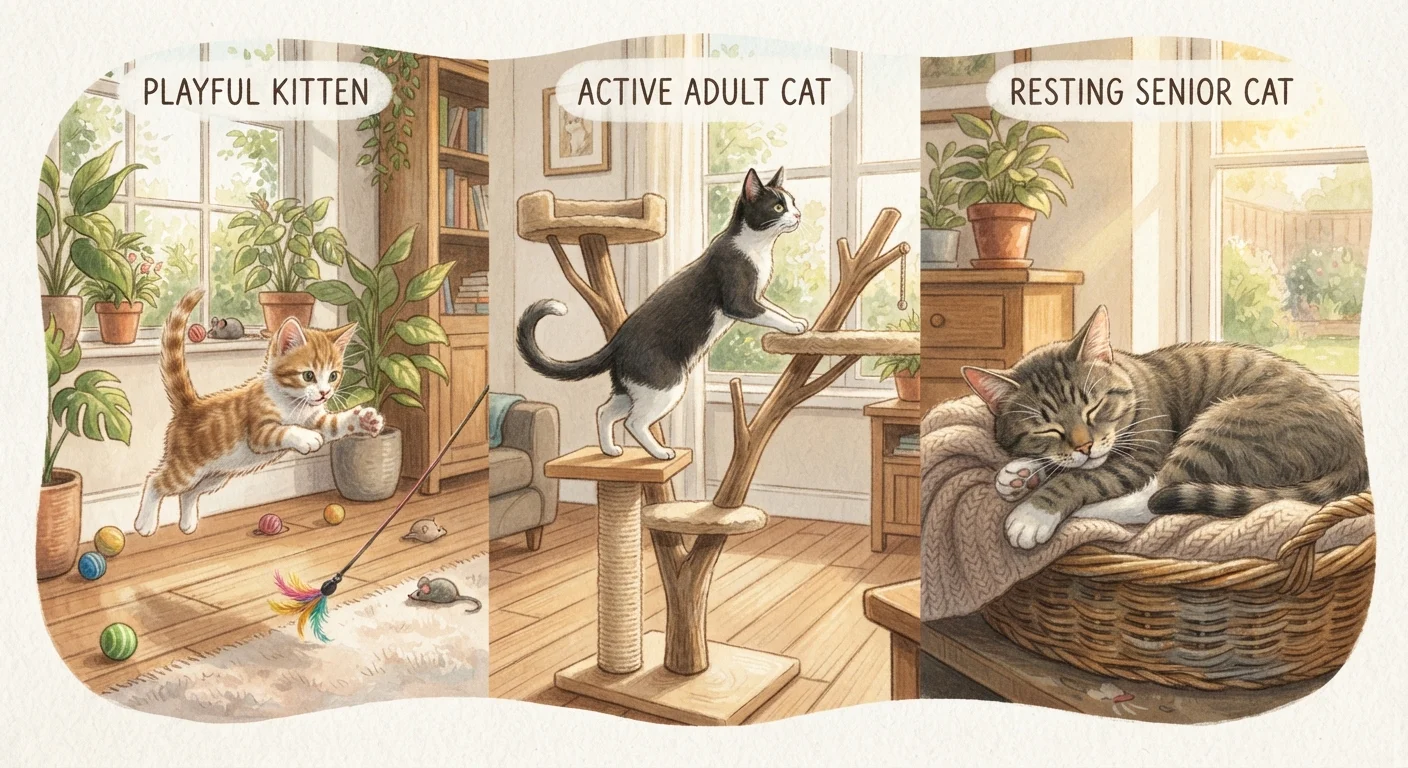
Why Life Stage Matters in Cat Care
Cats don't age in a straight line. A one-year-old cat is roughly equivalent to a young adult human, while a cat reaching fifteen has crossed into what veterinarians consider geriatric territory. Understanding where your cat falls on this continuum helps you anticipate changing nutritional needs, recognize normal behavioral shifts, and schedule the right veterinary care at the right time.
The American Association of Feline Practitioners (AAFP) recognizes six life stages for cats. Each stage carries distinct physical markers and care priorities. This overview walks through each phase so you can make confident, stage-appropriate decisions for your cat's wellbeing.
For a broader look at year-round preventive tasks, see the Cat Owner's Annual Wellness Checklist.
| Number of recognized life stages | 6 (American Association of Feline Practitioners (AAFP)) |
| Kitten stage duration | Birth to 6 months (AAFP Feline Life Stage Guidelines) |
| Age cats are considered senior | 11 years and older (AAFP Feline Life Stage Guidelines) |
| Geriatric threshold | 15+ years (AAFP Feline Life Stage Guidelines) |
| Recommended wellness visit frequency (senior cats) | Every 6 months (General veterinary practice guidance) |
| Common senior health conditions to screen for | Kidney disease, hyperthyroidism, diabetes (Veterinary internal medicine consensus) |
The Six Feline Life Stages
Kitten (Birth – 6 Months)
This is the fastest growth phase in a cat's life. Kittens gain weight rapidly, develop sensory and motor skills, and begin critical socialization windows that shape adult behavior. Core vaccinations, deworming, and early spay or neuter discussions typically occur during this period. For guidance on timing and implications, the spaying and neutering overview covers what vets consider at this stage.
Junior (7 Months – 2 Years)
Cats reach sexual maturity and approach full physical size. Energy levels are high, and play behavior is intense. Nutrition should support continued musculoskeletal development. Behavioral patterns established here often persist into adulthood.
Prime Adult (3 – 6 Years)
Most cats are at peak physical condition during this stage. Routine wellness visits every 12 months are generally appropriate, though your veterinarian may recommend adjustments based on your cat's individual health profile.
Mature Adult (7 – 10 Years)
Metabolism begins to slow. Some cats start to gain weight more easily, while others may lose lean muscle mass. Dental disease, if unaddressed, often becomes more pronounced. Twice-yearly wellness exams may be introduced at this stage.
Senior (11 – 14 Years)
Organ function, joint health, and cognitive sharpness all warrant closer monitoring. Bloodwork panels become especially valuable for catching early signs of kidney disease, thyroid dysfunction, or diabetes — conditions that are common in older cats but manageable when caught early. Understanding your cat's communication can also help you spot changes in wellbeing; reading your cat's body language can reveal subtle shifts in comfort or mood.
Geriatric (15+ Years)
Cats in this stage may experience significant changes in mobility, sensory acuity, and litter box habits. Comfort-focused care, pain management discussions with a veterinarian, and close observation of eating and drinking patterns are essential. The Complete Guide to Feline Preventive Care outlines the full range of health pillars relevant across all stages.
Life stage
A defined phase of a cat's biological development, each characterized by distinct physical, behavioral, and health needs. Veterinary organizations use these stages to guide care recommendations.
Geriatric
A classification for cats aged 15 years and older, denoting the oldest segment of feline life. Geriatric cats often require more frequent monitoring and comfort-focused care.
Lean muscle mass
The portion of a cat's body weight made up of muscle tissue, excluding fat. Maintaining adequate lean muscle mass is important for mobility and overall health, especially in mature and senior cats.
Socialization window
A critical developmental period, typically from two to seven weeks of age in kittens, during which positive exposure to people, animals, and environments shapes long-term behavioral temperament.
Bloodwork panel
A set of laboratory tests performed on a blood sample to assess organ function, blood cell counts, and other health markers. Commonly recommended for senior and geriatric cats.
Cognitive dysfunction
An age-related neurological condition in cats associated with disorientation, changes in sleep patterns, altered social interaction, and loss of learned behaviors. Often compared to dementia in humans.
This article provides general educational information about feline life stages and is not a substitute for professional veterinary advice. Always consult a licensed veterinarian for guidance specific to your cat's health and circumstances.
The content on this site is for informational purposes only and is not a substitute for professional advice. Always consult a qualified professional for guidance specific to your situation.