

Start here
Why a Skincare Routine Matters
Next
Understanding Your Skin Type
Then
The Core Steps: Cleanse, Moisturize, Protect
Apply it
Building a Morning vs. Evening Routine
When you're ready
When to Add More Steps
Why a Skincare Routine Matters
Skin is the body's largest organ and its primary barrier against environmental stressors — UV radiation, pollution, temperature changes, and pathogens. A consistent routine doesn't just affect how skin looks; it supports that protective function. Yet for many people, skincare feels like an intimidating category filled with complicated steps and conflicting advice.
The good news: the foundational science is straightforward. Most dermatologists agree that a simple, consistent routine outperforms an elaborate one that's done sporadically. This guide is designed to cut through the noise and give complete beginners a clear, practical starting point — no overwhelming product lists required.
Start With One Routine, Not Two
If the idea of separate morning and evening routines feels daunting, start with just one — preferably in the evening when you have more time. Cleanser and moisturizer at night is a legitimate, low-pressure entry point. You can add sunscreen in the morning once the habit feels natural.
If you're curious how skincare fits alongside other daily self-care habits, the full picture on grooming and skin health is a useful companion read.
Understanding Your Skin Type
Choosing the right products starts with knowing your skin type. The five commonly recognized categories are: normal (balanced, minimal issues), oily (excess sebum, enlarged pores, prone to shine), dry (tight feeling, flakiness, low sebum production), combination (oily in the T-zone, drier on cheeks), and sensitive (reactive, prone to redness or irritation).
A simple at-home assessment: wash your face with a gentle cleanser, pat dry, and wait one hour without applying anything. Observe how your skin feels. Tightness suggests dry skin; visible shine across the forehead and nose points to oily or combination. Redness or discomfort after washing may indicate sensitivity.
Skin barrier
The outermost layer of skin that acts as a protective shield, keeping moisture in and irritants out. A healthy barrier is the goal of most basic skincare steps.
Humectant
An ingredient that attracts and holds water molecules, helping to keep skin hydrated. Common examples include glycerin and hyaluronic acid.
Emollient
An ingredient that fills gaps in the skin's surface to make it feel smoother and softer. Emollients help lock in the moisture that humectants attract.
Broad-spectrum SPF
A sunscreen that protects against both UVA rays (linked to aging) and UVB rays (linked to burning). 'Broad-spectrum' on the label means both types are covered.
Non-comedogenic
A term used to describe products formulated to avoid clogging pores. Particularly relevant for oily or acne-prone skin types.
Double cleanse
A two-step cleansing method where an oil-based cleanser or micellar water is used first to dissolve sunscreen or makeup, followed by a water-based cleanser to clean the skin itself.
Skin type can shift with seasons, hormones, age, and climate — so it's worth reassessing periodically rather than treating your initial read as permanent.
The Core Steps: Cleanse, Moisturize, Protect
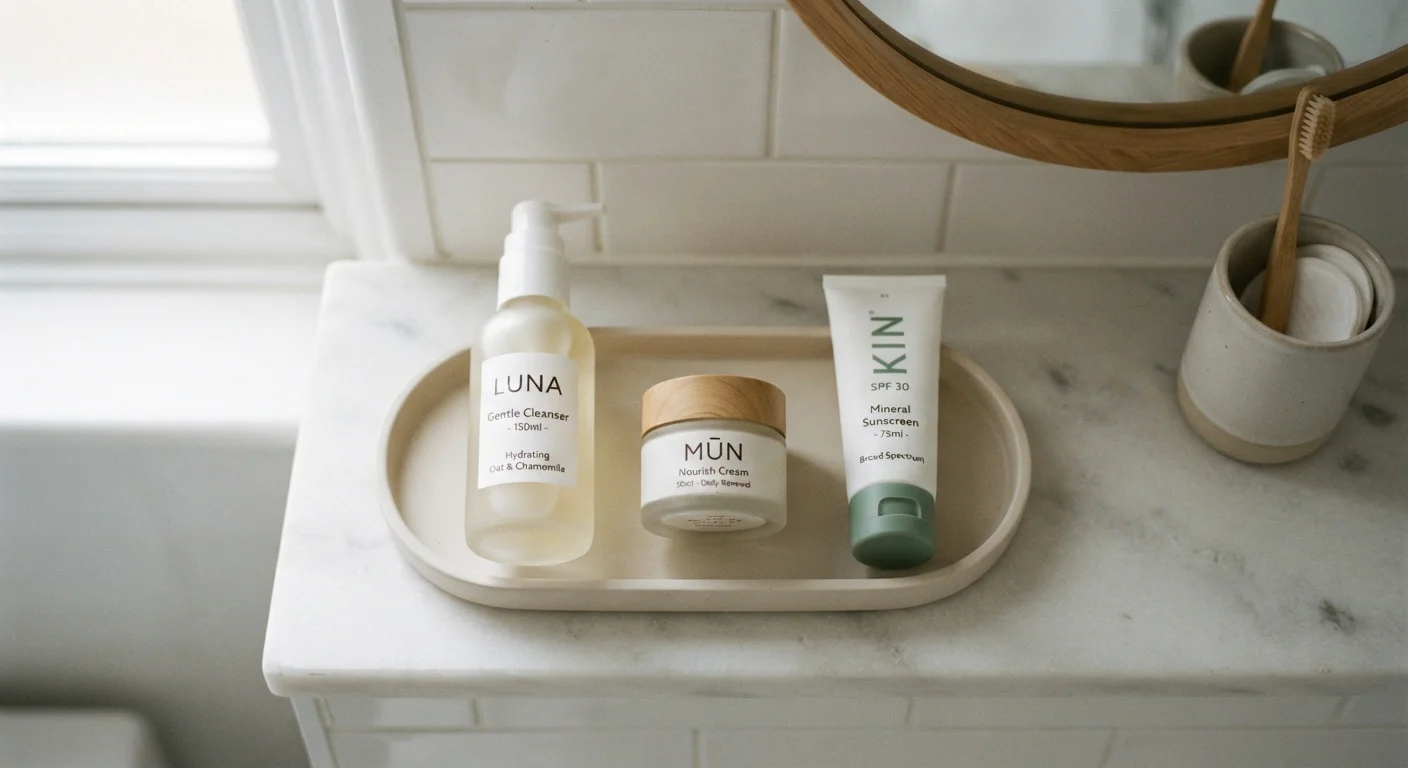
Three steps form the non-negotiable foundation of any routine:
- Cleanse: A gentle, non-comedogenic cleanser removes dirt, excess oil, and environmental residue. Avoid harsh soaps that strip the skin's natural moisture barrier. Twice daily — morning and evening — is the common recommendation, though once in the evening is a reasonable start for very dry or sensitive skin types.
- Moisturize: Moisturizer helps maintain the skin's barrier and prevents transepidermal water loss (TEWL). Look for formulas with humectants like glycerin or hyaluronic acid, which draw moisture into the skin, and emollients that help seal it in. Apply while skin is slightly damp for best absorption.
- Protect: Broad-spectrum sunscreen with at least SPF 30 is the single most evidence-supported tool for preventing premature skin aging. Apply it every morning as the final step. It's the one product most dermatologists universally recommend regardless of skin type.
Building a Morning vs. Evening Routine
Morning and evening routines share the same core steps but serve different goals. In the morning, you're preparing skin to face the day — the focus is protection. In the evening, you're removing the day's buildup and supporting overnight repair.
A simple morning routine:
- Gentle cleanser (or water rinse if skin is very dry)
- Lightweight moisturizer
- Broad-spectrum sunscreen SPF 30+
A simple evening routine:
- Cleanser (double cleanse with a micellar water or cleansing balm first if you wore sunscreen or makeup)
- Moisturizer — can be slightly richer than your daytime formula
Once your routine feels stable, you might consider where makeup fits into your mornings. Our guide to low-maintenance morning makeup shows how skincare and makeup steps work together without adding much time.
Introducing Too Many Products at Once
A common beginner mistake is adding several new products at the same time. If a reaction or breakout occurs, it becomes impossible to identify the cause. Introduce one new product at a time, spaced at least one to two weeks apart, so you can isolate how your skin responds.
When to Add More Steps
After four to six consistent weeks with the core three steps, your skin will give you clearer signals about what — if anything — it needs next. Common additions at this stage include toners, serums, and targeted treatments. These products have specific functions that complement the basics rather than replace them.
Before layering in new products, it helps to understand how order affects absorption. Our article on layering skincare products in the right order covers the general sequencing logic. Similarly, what serums, essences, and toners actually do can help you decide which step genuinely earns a place in your regimen.
It's also worth noting that skin needs shift over time. How skin needs change across the decades is a useful resource once you're comfortable with the basics and ready to think longer-term.
This article is for general informational purposes only and does not constitute medical or dermatological advice. Consult a qualified healthcare or skincare professional for concerns about your specific skin conditions or sensitivities.
Frequently Asked Questions
Most dermatologists suggest giving a new routine at least four to six weeks before evaluating results. Skin cell turnover takes roughly that long, so meaningful changes in texture and tone typically require consistent daily use over that period.
Not necessarily at first. If you're just starting out, a single cleanse-and-moisturize routine is a solid foundation. The main reason to separate AM and PM routines is that sunscreen belongs in the morning, while richer repair-focused products work better overnight.
It's generally better to use a moisturizer formulated specifically for the face. Facial skin is more sensitive and prone to clogged pores, and body lotions often contain fragrances or oils that can cause breakouts on the face.
Broad-spectrum sunscreen is recommended even for predominantly indoor days. UVA rays — the type linked to premature aging — can penetrate glass windows, and incidental sun exposure during commutes and errands adds up over time.
Non-comedogenic means the product is formulated to avoid clogging pores. It's a useful term to look for if you have oily or acne-prone skin, though it's worth noting the term isn't regulated, so individual reactions can still vary.
Signs of a reaction include redness, stinging, unusual breakouts, or persistent itching after applying a product. If you notice these, stop using the product and allow your skin to settle. A patch test on the inner arm before full application can help catch sensitivities early.
The content on this site is for informational purposes only and is not a substitute for professional advice. Always consult a qualified professional for guidance specific to your situation.