

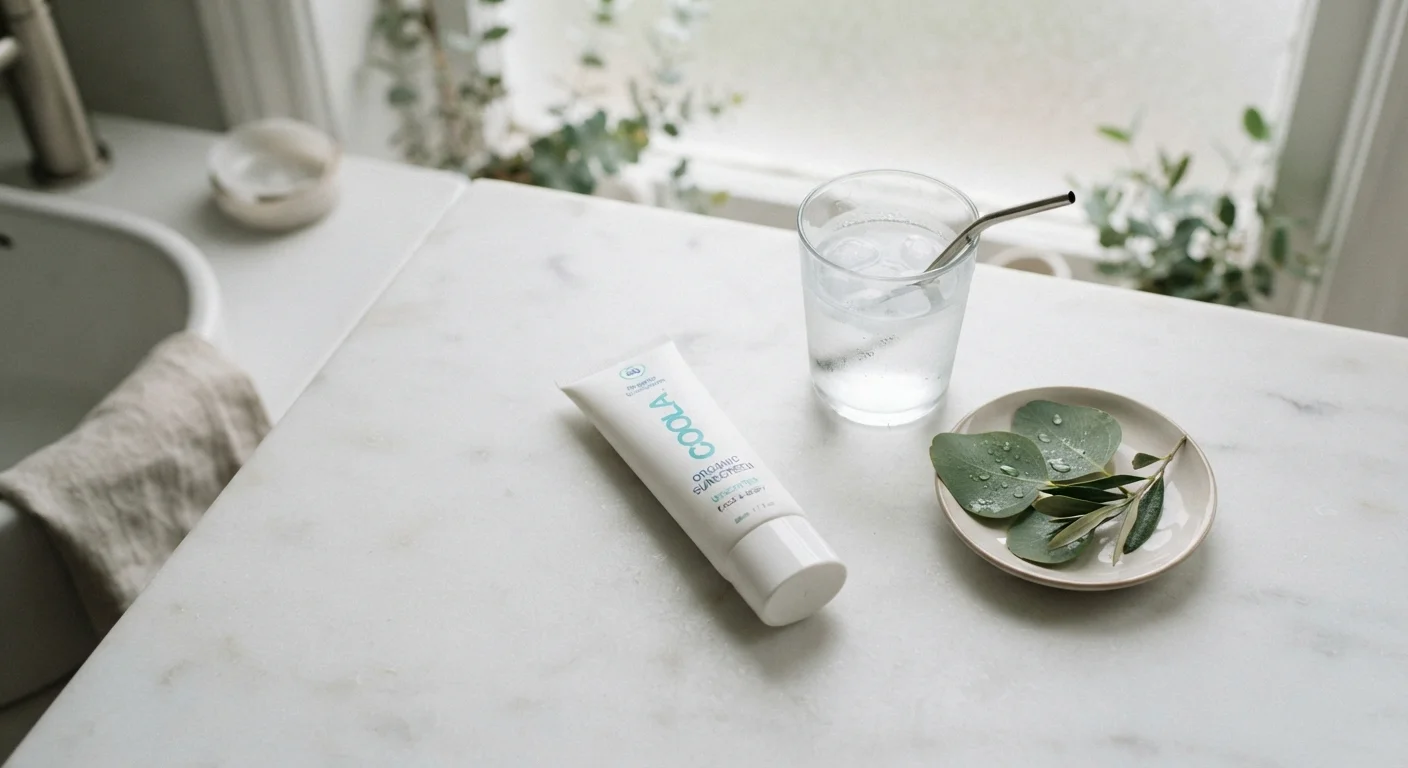
Why UV Exposure Is a Year-Round Concern
Most people reach for sunscreen when they're heading to the beach or pool — and then forget about it the other 300 days of the year. This pattern is precisely why dermatologists consistently cite sun protection as the single most impactful daily skincare habit. UV radiation doesn't take a season off.
Ultraviolet light exists on a spectrum. UVB rays are the ones responsible for visible sunburns; UVA rays are longer-wavelength, penetrate more deeply into the skin, and are present at relatively consistent intensity throughout daylight hours across all seasons. Both types contribute to cumulative skin damage over time — a process that's largely invisible until years later.
Indoors isn't entirely safe either. Standard window glass blocks most UVB radiation but allows UVA rays through, meaning people who work near windows or spend significant time in cars can still accumulate meaningful UV exposure over years. Understanding this helps explain why dermatologists frame sunscreen as a daily non-negotiable, not a warm-weather optional.
UVA vs. UVB: A Quick Reference
UVB rays are shorter-wavelength and are most intense in summer, primarily causing sunburn and playing a role in vitamin D synthesis. UVA rays are longer-wavelength, present year-round at consistent intensity, and can penetrate glass. Both contribute to skin damage over time. Broad-spectrum sunscreens are formulated to address both types.
Decoding SPF Numbers and Broad-Spectrum Labels
The SPF scale is frequently misread as linear — as if SPF 50 is twice as protective as SPF 25. It isn't. SPF 15 blocks about 93% of UVB rays. SPF 30 blocks roughly 97%. SPF 50 reaches about 98%. The differences narrow significantly at higher numbers, which is why dermatologists typically focus on consistent SPF 30+ use rather than chasing the highest available number.
What matters equally — and often gets less attention — is the "broad-spectrum" designation. An SPF rating alone only guarantees UVB protection. A broad-spectrum label, regulated by the FDA, signals that the product also provides meaningful UVA coverage. For daily use, broad-spectrum SPF 30 or higher is the standard dermatologists return to across skin types and ages.
Formulas come in two primary categories: mineral sunscreens, which use zinc oxide or titanium dioxide to physically deflect UV rays, and chemical sunscreens, which absorb UV energy and convert it. Both can be effective; the distinction matters more for personal preference, skin sensitivity, and formulation feel than for efficacy at equivalent SPF levels.
~80%
UV rays that penetrate cloud cover
According to the Skin Cancer Foundation, up to 80% of UV radiation reaches the skin even on overcast or cloudy days.
97%
UVB rays blocked by SPF 30
SPF 30 is the standard dermatologist-recommended minimum for daily use, filtering approximately 97% of incoming UVB rays.
1 in 5
Americans who develop skin cancer by age 70
The American Academy of Dermatology estimates that 1 in 5 Americans will develop skin cancer in their lifetime, with UV exposure as a primary risk factor.
How to Build Sunscreen Into Your Daily Routine
Sunscreen fits at the end of a morning skincare routine — after cleanser, any treatment products, and moisturizer, but before makeup. Applying it as the final skincare layer helps maintain the even film needed for tested protection levels. If you're newer to building a full morning routine, this foundational skincare guide walks through each step in sequence.
The most common application mistake is using too little. The general guideline for the face is about a teaspoon — roughly a nickel-sized amount for most faces — and more generous coverage for any exposed body areas. Thin, hurried application means the actual delivered SPF falls well below the number on the label.
For layering with other active products and serums, product sequencing principles can clarify where each step earns its place. Reapplication every two hours is most relevant during outdoor activity; for predominantly indoor days, morning application is generally considered sufficient.
Make Application Effortless
Keeping sunscreen next to your moisturizer or by your toothbrush reduces the chance of forgetting it. Many people find that treating it as an automatic final morning step — rather than a situational choice — is the most reliable way to build the habit. A formula you enjoy using (texture, finish, scent) significantly improves follow-through.
Sun Protection Across Skin Types and Ages
A persistent myth is that sunscreen is primarily a concern for people with fair skin. Dermatologists are clear on this point: UV radiation affects all skin tones, and cumulative damage accumulates regardless of baseline melanin levels. The presentation and visible timing may differ, but the underlying cellular exposure does not.
Skin also changes with age in ways that make consistent sun protection increasingly relevant. How skin needs shift across decades is worth understanding — early habits compound, and the effects of skipped sunscreen in earlier years often surface decades later.
For anyone exploring a broader skincare framework, it's also useful to distinguish sun protection from habits that can actively work against skin health. Grooming habits dermatologists frequently flag offers a practical counterpoint — what to set aside as much as what to adopt.
This article is for informational purposes only and is not a substitute for professional medical or dermatological advice. Consult a qualified healthcare provider for guidance specific to your skin type or health conditions.
Frequently Asked Questions
Yes. Up to 80% of UV rays can penetrate cloud cover, meaning meaningful exposure still occurs on overcast days. Consistent daily application protects against this cumulative, often invisible exposure.
Broad-spectrum indicates the product has passed FDA testing for both UVA and UVB protection. UVA rays penetrate more deeply into skin and are associated with premature aging, while UVB rays cause sunburn. Broad-spectrum formulas address both.
It can contribute, but most people don't apply makeup in quantities sufficient to reach the tested SPF level. A dedicated sunscreen layer is generally considered more reliable by dermatologists.
If you're sitting near windows, UVA rays can pass through standard glass. For primarily indoor days, morning application is typically adequate. Reapplication matters most during extended outdoor activity.
No. While higher levels of melanin provide some natural UV protection, they do not eliminate risk. People of all skin tones can experience UV-related skin damage, and dermatologists recommend broad-spectrum sunscreen universally.
Sunscreen should go on as the last step of your morning routine, after moisturizer and before makeup. Applying it over other products helps maintain its even coverage across the skin's surface.
The content on this site is for informational purposes only and is not a substitute for professional advice. Always consult a qualified professional for guidance specific to your situation.